THE ADVENTURE COLLECTIVE® · Independent discovery and booking for outdoor travel

Explore the Cu Chi Tunnels on a half-day tour from Ho Chi Minh City. Learn how this underground network functioned during wartime while moving through reconstructed chambers, observation posts and trap demonstrations.
Explore the Cu Chi Tunnels on a half-day tour from Ho Chi Minh City. Learn how this underground network functioned during wartime while moving through reconstructed chambers, observation posts and trap demonstrations.
You step out of an air-conditioned van into a humid sweep of rubber plantations and low jungle; the road back to Ho Chi Minh City recedes and the earth underfoot feels older than the asphalt. The Cu Chi Tunnels open like a history book written below the surface — narrow entrances, camouflaged trap doors and stretches of packed clay that once hid thousands of lives.
Verified experiences and guided adventures in the surrounding area.
Operated by Authentic Hanoi Homestay & Travel · Cu Chi, Ho Chi Minh City
You step out of an air-conditioned van into a humid sweep of rubber plantations and low jungle; the road back to Ho Chi Minh City recedes and the earth underfoot feels older than the asphalt. The Cu Chi Tunnels open like a history book written below the surface — narrow entrances, camouflaged trap doors and stretches of packed clay that once hid thousands of lives.
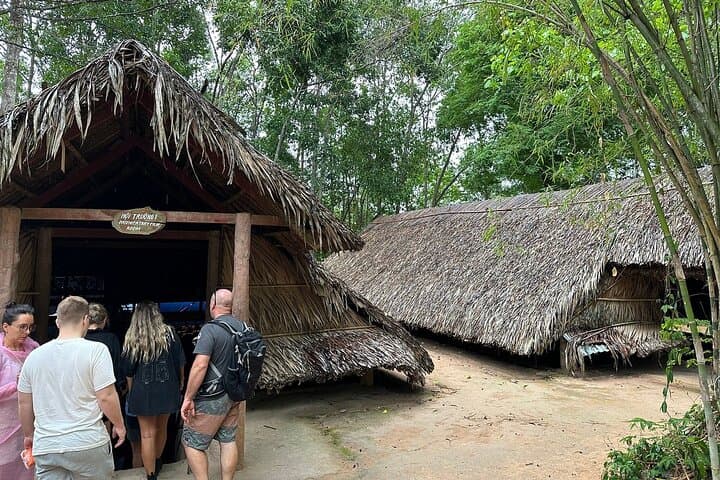
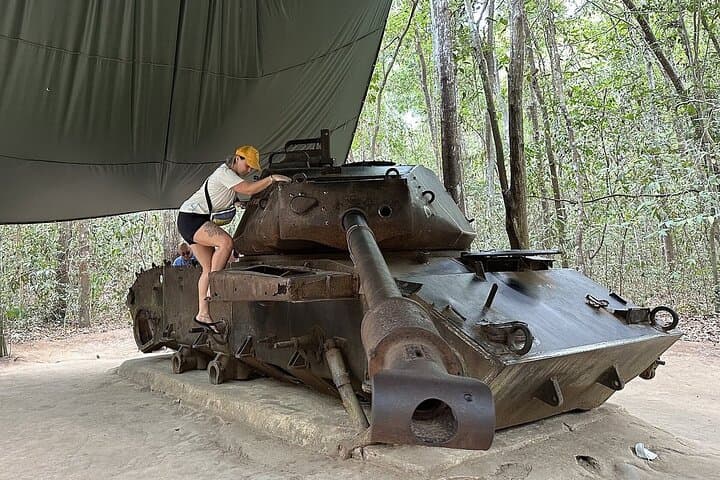
Built and expanded by Viet Cong fighters during prolonged conflict, the tunnel system functioned as living quarters, medical stations, and supply lines. The geology here—red lateritic soils layered over compact clay—made digging possible but also demanded constant maintenance; wooden supports and smoke vents kept underground life viable. Today the site blends wartime relics with rural Vietnamese culture: local guides explain tactics and daily routines, while nearby hamlets keep subsistence farming alive.
On a practical level, tours run about six hours including pickup from District 1, with an English-speaking guide and admission included. Expect a mix of walking, stooping, and optional short crawls through widened, reinforced sections; some areas remain narrow and require careful movement. Bring plenty of water, a camera with a low-light setting, and closed-toe shoes—the trail includes uneven dirt, ladder steps and shaded concrete. Respect memorial signs and avoid touching fragile displays.
Whether you choose the morning or afternoon departure, timing affects light and crowds: mornings are cooler and quieter; afternoons suit travelers with tight schedules. The experience is part history lesson, part field study in survival engineering—direct, tactile and grounded in place.
moderate.
6 hours.
Able to walk on uneven ground, climb short ladders and crouch for brief periods; suitable for most active travelers
The tour runs about six hours total and typically includes round-trip pickup from central Ho Chi Minh City; confirm your pickup time when booking.
There are optional sections widened for visitors; some reconstructed areas still require stooping or short crawls—guides will advise which parts are optional.
The site is educational for older children, but tight spaces and ladders make certain sections unsuitable for very young kids or travelers with mobility issues; notify the operator if you need alternatives.
Basic restrooms and snack stalls are available near the main visitor areas; bottled water is included in the tour’s inclusions.
The tunnels were expanded by Viet Cong units during the mid-20th century to serve as living quarters, command centers and supply routes, shaping local wartime strategy.
The site is preserved as a historical memorial and managed to limit visitor impact—stay on marked paths, avoid touching fragile exhibits and take litter home when possible.
Authentic Hanoi Homestay & Travel operates guided outdoor trips and adventures with an emphasis on safety, stewardship, and memorable experiences.


You step out of an air-conditioned van into a humid sweep of rubber plantations and low jungle; the road back to Ho Chi Minh City recedes and the earth underfoot feels older than the asphalt. The Cu Chi Tunnels open like a history book written below the surface — narrow entrances, camouflaged trap doors and stretches of packed clay that once hid thousands of lives.
You step out of an air-conditioned van into a humid sweep of rubber plantations and low jungle; the road back to Ho Chi Minh City recedes and the earth underfoot feels older than the asphalt. The Cu Chi Tunnels open like a history book written below the surface — narrow entrances, camouflaged trap doors and stretches of packed clay that once hid thousands of lives.
Built and expanded by Viet Cong fighters during prolonged conflict, the tunnel system functioned as living quarters, medical stations, and supply lines. The geology here—red lateritic soils layered over compact clay—made digging possible but also demanded constant maintenance; wooden supports and smoke vents kept underground life viable. Today the site blends wartime relics with rural Vietnamese culture: local guides explain tactics and daily routines, while nearby hamlets keep subsistence farming alive.
On a practical level, tours run about six hours including pickup from District 1, with an English-speaking guide and admission included. Expect a mix of walking, stooping, and optional short crawls through widened, reinforced sections; some areas remain narrow and require careful movement. Bring plenty of water, a camera with a low-light setting, and closed-toe shoes—the trail includes uneven dirt, ladder steps and shaded concrete. Respect memorial signs and avoid touching fragile displays.
Whether you choose the morning or afternoon departure, timing affects light and crowds: mornings are cooler and quieter; afternoons suit travelers with tight schedules. The experience is part history lesson, part field study in survival engineering—direct, tactile and grounded in place.