THE ADVENTURE COLLECTIVE® · Independent discovery and booking for outdoor travel

Ride a classic Jeep from central Ho Chi Minh City to the Cu Chi Tunnels for a compact, half-day mix of history and hands-on exploration. Learn how the tunnel network functioned, try a short crawl (optional), and return to the city the same afternoon.
Ride a classic Jeep from central Ho Chi Minh City to the Cu Chi Tunnels for a compact, half-day mix of history and hands-on exploration. Learn how the tunnel network functioned, try a short crawl (optional), and return to the city the same afternoon.
The Jeep rattles out of District 1 before the city’s heat fully sets in, tires kicking up red dust as palm lines thin into rice paddies. Within an hour the air changes—less honking, more cicadas—and the low berms of the Cu Chi landscape come into view. You step from a restored US Army jeep and follow a guide into a network of narrow passageways that once hid an underground way of life.
Verified experiences and guided adventures in the surrounding area.
Operated by Asia Travel Links · Ho Chi Minh City, Ho Chi Minh
The Jeep rattles out of District 1 before the city’s heat fully sets in, tires kicking up red dust as palm lines thin into rice paddies. Within an hour the air changes—less honking, more cicadas—and the low berms of the Cu Chi landscape come into view. You step from a restored US Army jeep and follow a guide into a network of narrow passageways that once hid an underground way of life.
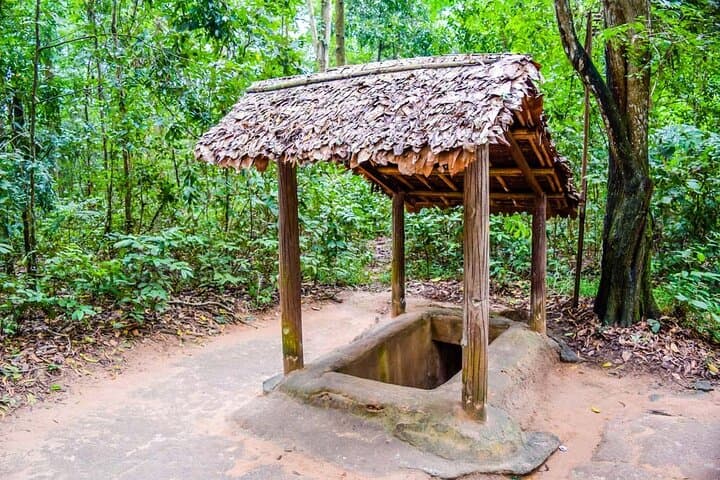
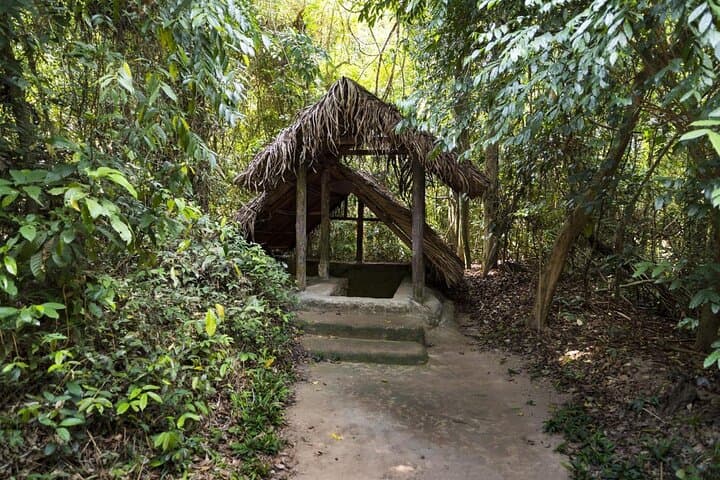
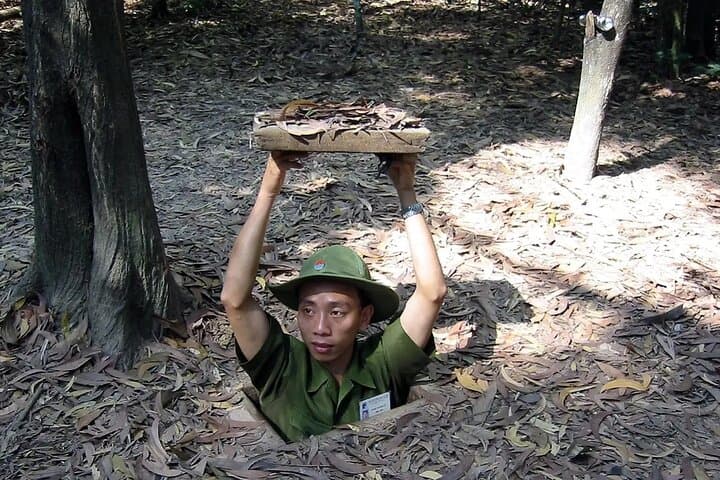
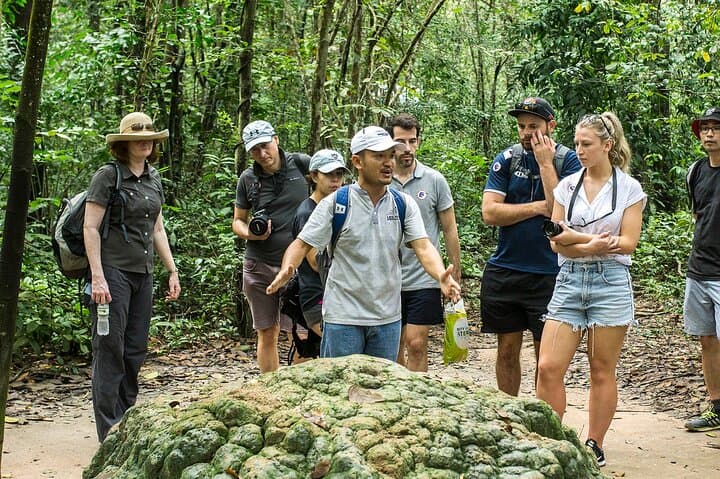
The tunnels are part of a larger wartime system used by the Viet Cong during the 1940s–1970s. Carved into the alluvial soils of the Saigon plain, the network includes living chambers, storage pits, traps and concealed firing positions. Local guides frame the sites with both military detail and village-level stories: how supplies moved, how makeshift kitchens operated, and how villagers adapted crops and water sources to survive under pressure.
Geology here favors dense clay and compacted loam that made digging feasible; culturally, the site is a reminder of resilience and contested memory, preserved for education and tourism. Nearby Mushroom Farm offers a quick look at contemporary rural enterprise if you choose the optional stop.
Practical guidance: tunnels are tight and sometimes damp—wear closed-toe shoes and lightweight, quick-dry clothing. The half-day format returns you to Ho Chi Minh City by afternoon, making this an efficient historical excursion. Bring water, sunscreen and a camera; be prepared to stoop and climb short ladders. Note medical restrictions (pregnancy, spinal or heart conditions) and that entry fees and hotel pickup for Districts 1 and 3 are usually included.
easy.
4 hours.
Suitable for people in average physical condition who can crouch and climb short ladders; minimal sustained exertion.
Crawl sections are short and optional at many displays—most visitors spend just a few minutes inside the narrow tunnel exhibits.
Pickup and drop-off are commonly included for hotels in Districts 1 and 3 of Ho Chi Minh City; confirm your pickup point when booking.
Many operators use restored US Army-style Jeeps for the ride; they’re primarily for atmosphere and short transfers to the site.
Children can visit, but parents should evaluate tight spaces—some operators restrict tunnel access by age or require supervision.
The Cu Chi network expanded over decades as a guerrilla stronghold and logistics corridor; today it’s preserved as a museum and education site that interprets wartime civilian and military life.
Visitor numbers and foot traffic are managed at core sites to protect fragile tunnel segments; stick to marked paths and follow guide instructions to minimize impact.
Asia Travel Links operates guided outdoor trips and adventures with an emphasis on safety, stewardship, and memorable experiences.
The Jeep rattles out of District 1 before the city’s heat fully sets in, tires kicking up red dust as palm lines thin into rice paddies. Within an hour the air changes—less honking, more cicadas—and the low berms of the Cu Chi landscape come into view. You step from a restored US Army jeep and follow a guide into a network of narrow passageways that once hid an underground way of life.
The Jeep rattles out of District 1 before the city’s heat fully sets in, tires kicking up red dust as palm lines thin into rice paddies. Within an hour the air changes—less honking, more cicadas—and the low berms of the Cu Chi landscape come into view. You step from a restored US Army jeep and follow a guide into a network of narrow passageways that once hid an underground way of life.
The tunnels are part of a larger wartime system used by the Viet Cong during the 1940s–1970s. Carved into the alluvial soils of the Saigon plain, the network includes living chambers, storage pits, traps and concealed firing positions. Local guides frame the sites with both military detail and village-level stories: how supplies moved, how makeshift kitchens operated, and how villagers adapted crops and water sources to survive under pressure.
Geology here favors dense clay and compacted loam that made digging feasible; culturally, the site is a reminder of resilience and contested memory, preserved for education and tourism. Nearby Mushroom Farm offers a quick look at contemporary rural enterprise if you choose the optional stop.
Practical guidance: tunnels are tight and sometimes damp—wear closed-toe shoes and lightweight, quick-dry clothing. The half-day format returns you to Ho Chi Minh City by afternoon, making this an efficient historical excursion. Bring water, sunscreen and a camera; be prepared to stoop and climb short ladders. Note medical restrictions (pregnancy, spinal or heart conditions) and that entry fees and hotel pickup for Districts 1 and 3 are usually included.