THE ADVENTURE COLLECTIVE® · Independent discovery and booking for outdoor travel

Walk through a compact underground town that functioned as kitchens, hospitals and command centers during the Vietnam War. This half-day tour from Ho Chi Minh City pairs a short documentary, reconstructed tunnel sections and local snacks with practical, hands-on history.
Walk through a compact underground town that functioned as kitchens, hospitals and command centers during the Vietnam War. This half-day tour from Ho Chi Minh City pairs a short documentary, reconstructed tunnel sections and local snacks with practical, hands-on history.
You step out of an air-conditioned minivan onto dusty red earth and the hum of cicadas; the entrance gate to the Cu Chi Tunnels lies just beyond a line of low, hawthorn-like scrub and rubber trees. A short documentary sets the tone, then the site opens into a maze of reconstructed shafts, widened crawlways and displays that give scale to a subterranean village.
Verified experiences and guided adventures in the surrounding area.
Operated by Viet Nam Tours · Ho Chi Minh City, Ho Chi Minh
You step out of an air-conditioned minivan onto dusty red earth and the hum of cicadas; the entrance gate to the Cu Chi Tunnels lies just beyond a line of low, hawthorn-like scrub and rubber trees. A short documentary sets the tone, then the site opens into a maze of reconstructed shafts, widened crawlways and displays that give scale to a subterranean village.
The tunnels are part of a sprawling network—often cited at more than 250 km—excavated and expanded by Viet Cong fighters to serve as kitchens, hospitals, sleeping quarters and command centers. The flat, alluvial landscape around Cu Chi is agricultural: cassava fields, rice paddies and occasional rubber groves, where soil varies from sandy loam to lateritic red that held up under years of tunneling. Cultural touches—rice-paper demonstrations, the guava-sweet tapioca snack and strong tea—connect the facts to daily life underground.
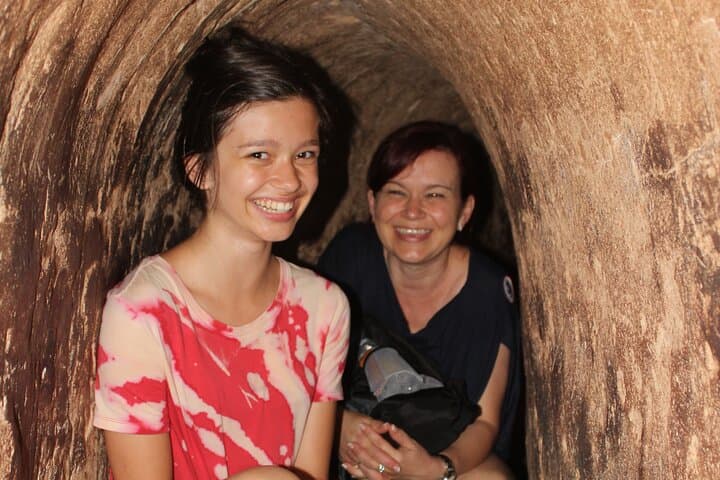
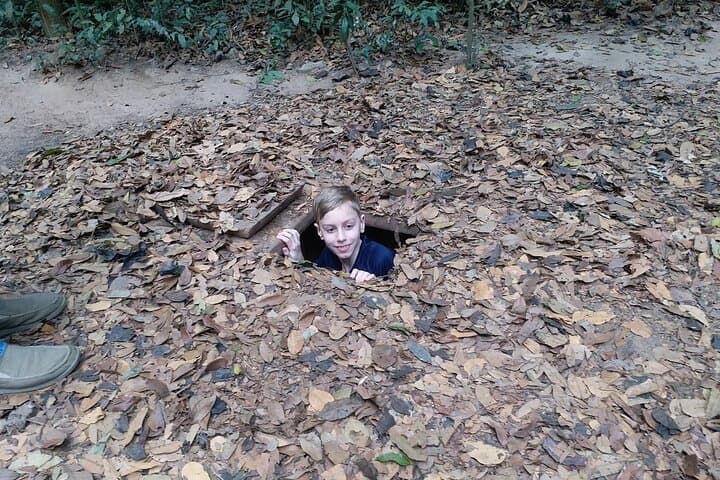
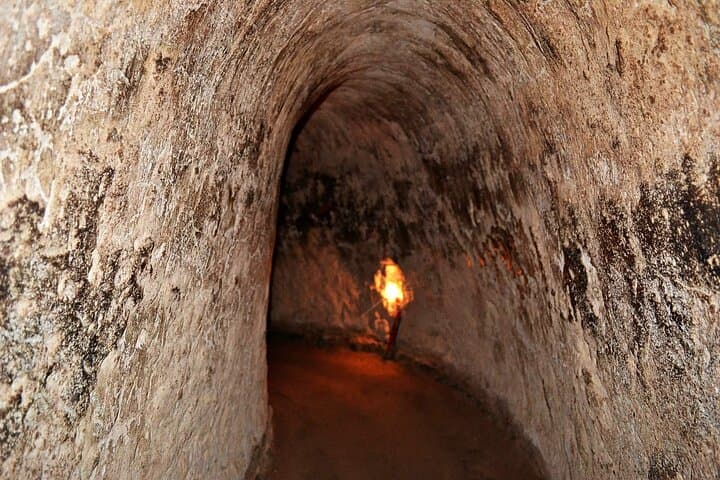
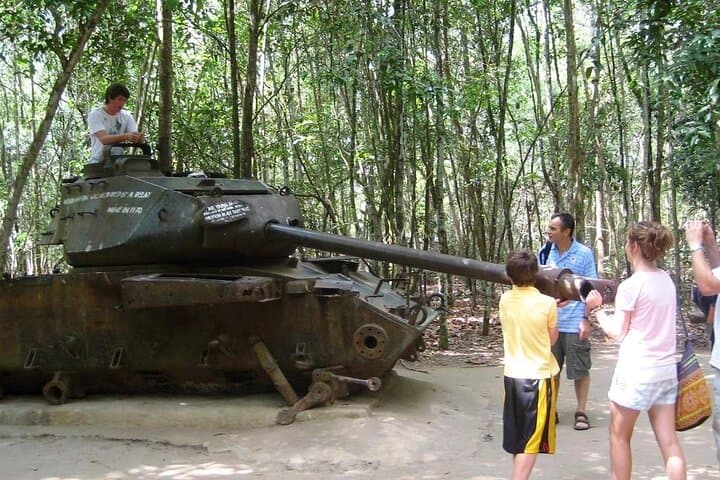
Expect a mix of museum-style exhibits and hands-on elements: trap-door replicas, handmade booby-traps (displayed safely), and short, low-light crawl sections reconstructed for visitors. Guides add context about tactics, household improvisation and the social fabric that made the tunnels a functioning community.
Practical guidance: plan for a 5–6 hour outing including transport from District 1; wear sturdy closed-toe shoes, bring sun protection and water, and avoid narrow crawlways if you have mobility issues or claustrophobia. Photography is allowed in most outdoor areas but respect memorial displays and do not touch fragile relics. The site balances education with preservation—stay on marked paths and follow the guide’s instructions for a safe, informative visit.
easy.
6 hours.
Suitable for most fitness levels; involves walking, some stooping and short stairs.
Expect about 60–90 minutes each way depending on traffic; many tours include hotel pickup and drop-off from District 1.
Some sections are original, but most visitor routes are widened or reconstructed to allow safe public access; guides will point out authentic sections and restored areas.
Yes—children can attend, but narrow crawl spaces are optional and not recommended for very young kids or those with mobility limits.
A light snack (tapioca and tea) and bottled water are typically included on small-group tours; full meals are not usually provided.
The Cu Chi network was expanded during the 1940s–1970s to serve as a living underground village and military base; it became strategically significant during the Vietnam War for guerrilla operations.
The site manages visitor flow to protect fragile areas—stay on marked paths, avoid taking artifacts and follow local guide instructions to minimize impact.
Viet Nam Tours operates guided outdoor trips and adventures with an emphasis on safety, stewardship, and memorable experiences.
You step out of an air-conditioned minivan onto dusty red earth and the hum of cicadas; the entrance gate to the Cu Chi Tunnels lies just beyond a line of low, hawthorn-like scrub and rubber trees. A short documentary sets the tone, then the site opens into a maze of reconstructed shafts, widened crawlways and displays that give scale to a subterranean village.
You step out of an air-conditioned minivan onto dusty red earth and the hum of cicadas; the entrance gate to the Cu Chi Tunnels lies just beyond a line of low, hawthorn-like scrub and rubber trees. A short documentary sets the tone, then the site opens into a maze of reconstructed shafts, widened crawlways and displays that give scale to a subterranean village.
The tunnels are part of a sprawling network—often cited at more than 250 km—excavated and expanded by Viet Cong fighters to serve as kitchens, hospitals, sleeping quarters and command centers. The flat, alluvial landscape around Cu Chi is agricultural: cassava fields, rice paddies and occasional rubber groves, where soil varies from sandy loam to lateritic red that held up under years of tunneling. Cultural touches—rice-paper demonstrations, the guava-sweet tapioca snack and strong tea—connect the facts to daily life underground.
Expect a mix of museum-style exhibits and hands-on elements: trap-door replicas, handmade booby-traps (displayed safely), and short, low-light crawl sections reconstructed for visitors. Guides add context about tactics, household improvisation and the social fabric that made the tunnels a functioning community.
Practical guidance: plan for a 5–6 hour outing including transport from District 1; wear sturdy closed-toe shoes, bring sun protection and water, and avoid narrow crawlways if you have mobility issues or claustrophobia. Photography is allowed in most outdoor areas but respect memorial displays and do not touch fragile relics. The site balances education with preservation—stay on marked paths and follow the guide’s instructions for a safe, informative visit.