THE ADVENTURE COLLECTIVE® · Independent discovery and booking for outdoor travel

Crawl into history on a half-day tour of the Cu Chi Tunnels, the underground network that shaped wartime strategy near Ho Chi Minh City. Expect narrow passages, wartime exhibits, and practical tips for navigating the site safely.
Crawl into history on a half-day tour of the Cu Chi Tunnels, the underground network that shaped wartime strategy near Ho Chi Minh City. Expect narrow passages, wartime exhibits, and practical tips for navigating the site safely.
You step off the air-conditioned van and into heat that the rubber trees seem to hold; the jungle presses in with the low hum of cicadas and the sharp scent of disturbed earth. A short walk leads to a camouflaged trap door and a corridor that narrows quickly—this is not a scenic stroll but a lesson in survival, engineered below the surface.
Verified experiences and guided adventures in the surrounding area.
Operated by Amara Tours Vietnam · Cu Chi, Ho Chi Minh City
You step off the air-conditioned van and into heat that the rubber trees seem to hold; the jungle presses in with the low hum of cicadas and the sharp scent of disturbed earth. A short walk leads to a camouflaged trap door and a corridor that narrows quickly—this is not a scenic stroll but a lesson in survival, engineered below the surface.
The Cu Chi system is a deliberate underground city: more than 250 km of tunnels, dug and expanded by Viet Cong fighters during the Vietnam War. The local red-clay and lateritic soils made stealth possible—three to four meters of topsoil could absorb bombs and even the weight above a tank. Small exhibitions display improvised weapons and the Hoang Cam stove, while nearby bomb craters and preserved battlefield artifacts tell a blunt history of hardship and ingenuity.
Culturally, the site blends solemn remembrance with living memory; guides—often veterans or local historians—explain daily life underground, from sleeping quarters to field hospitals. The surrounding district is agricultural, and you’ll encounter roadside stalls selling tapioca and local coffee after your visit.
Practical guidance: the half-day tour runs about 5–6 hours including transfers from Ho Chi Minh City. Prepare for tight, low tunnels (many have widened sections for visitors); wear closed-toe shoes and light, long clothing to avoid bites and scratches. Bring sun protection and refillable water; the site has shaded rest areas but limited amenities. Travelers with claustrophobia, back issues, or cardiovascular concerns should opt for surface exhibits and films. For photographers, the lighting is stark—use a wide-angle lens and fast ISO.
moderate.
5–6 hours.
Moderate fitness: you should be able to crouch and walk over uneven ground for short periods
The shared half-day tour is about 5–6 hours total, typically including hotel pickup/drop-off from Ho Chi Minh City, a short film, museum displays, guided tunnel exploration, and entrance fees.
Most visitors can access widened tunnel sections, but people with claustrophobia, back or heart conditions, or pregnant travelers are advised to avoid crawling sections and instead view surface exhibits.
Many operators offer optional shooting at a nearby range; it’s often an extra activity not required for the tunnel visit and has age and safety restrictions.
Basic facilities and souvenir stalls are available, plus shaded rest areas; food and full restroom services are limited compared with city standards.
The tunnels were expanded by Viet Cong fighters into a vast subterranean network used for shelter, communication, and logistics during the Vietnam War; they exemplify wartime ingenuity in constrained environments.
Visitor traffic is managed to protect fragile sections; stick to marked paths, avoid littering, and support local vendors who promote site preservation.
Amara Tours Vietnam operates guided outdoor trips and adventures with an emphasis on safety, stewardship, and memorable experiences.



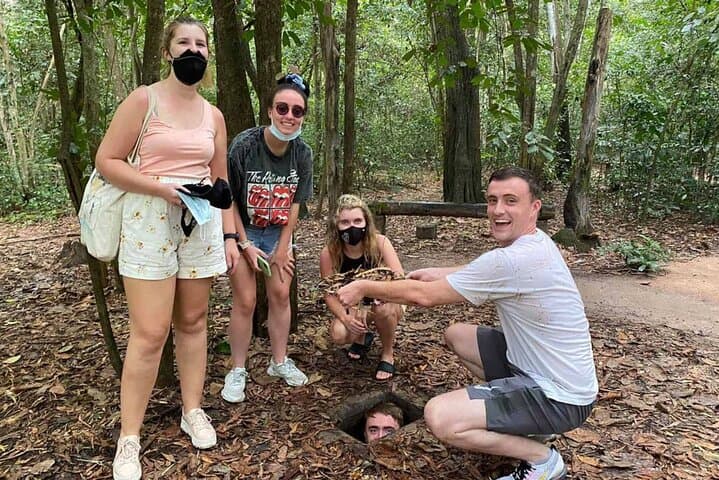
You step off the air-conditioned van and into heat that the rubber trees seem to hold; the jungle presses in with the low hum of cicadas and the sharp scent of disturbed earth. A short walk leads to a camouflaged trap door and a corridor that narrows quickly—this is not a scenic stroll but a lesson in survival, engineered below the surface.
You step off the air-conditioned van and into heat that the rubber trees seem to hold; the jungle presses in with the low hum of cicadas and the sharp scent of disturbed earth. A short walk leads to a camouflaged trap door and a corridor that narrows quickly—this is not a scenic stroll but a lesson in survival, engineered below the surface.
The Cu Chi system is a deliberate underground city: more than 250 km of tunnels, dug and expanded by Viet Cong fighters during the Vietnam War. The local red-clay and lateritic soils made stealth possible—three to four meters of topsoil could absorb bombs and even the weight above a tank. Small exhibitions display improvised weapons and the Hoang Cam stove, while nearby bomb craters and preserved battlefield artifacts tell a blunt history of hardship and ingenuity.
Culturally, the site blends solemn remembrance with living memory; guides—often veterans or local historians—explain daily life underground, from sleeping quarters to field hospitals. The surrounding district is agricultural, and you’ll encounter roadside stalls selling tapioca and local coffee after your visit.
Practical guidance: the half-day tour runs about 5–6 hours including transfers from Ho Chi Minh City. Prepare for tight, low tunnels (many have widened sections for visitors); wear closed-toe shoes and light, long clothing to avoid bites and scratches. Bring sun protection and refillable water; the site has shaded rest areas but limited amenities. Travelers with claustrophobia, back issues, or cardiovascular concerns should opt for surface exhibits and films. For photographers, the lighting is stark—use a wide-angle lens and fast ISO.