THE ADVENTURE COLLECTIVE® · Independent discovery and booking for outdoor travel

Walk where wartime ingenuity shaped a hidden city beneath the soil. This half-day trip to the Cu Chi Tunnels combines a 90-minute transfer from Ho Chi Minh City with guided tunnel access, wartime exhibits, and local snacks that connect you to Vietnam’s recent history.
Walk where wartime ingenuity shaped a hidden city beneath the soil. This half-day trip to the Cu Chi Tunnels combines a 90-minute transfer from Ho Chi Minh City with guided tunnel access, wartime exhibits, and local snacks that connect you to Vietnam’s recent history.
You step out of an air-conditioned van into humid, low-lying scrub; the forest smells of wet earth and wood smoke, and a quiet seems to hold the place together. The concrete bunkers and narrow tunnel mouths at Ben Dinh sit like scars in a landscape that once hid a hidden city beneath its surface.
Verified experiences and guided adventures in the surrounding area.
Operated by mekong cruises tours · Cu Chi, Ho Chi Minh City
You step out of an air-conditioned van into humid, low-lying scrub; the forest smells of wet earth and wood smoke, and a quiet seems to hold the place together. The concrete bunkers and narrow tunnel mouths at Ben Dinh sit like scars in a landscape that once hid a hidden city beneath its surface.
The Cu Chi network began as simple burrows and expanded into a 250‑km labyrinth used by Viet Cong fighters during the Indochina and Vietnam wars. Geologically the area is flat alluvium—easy to dig yet prone to collapse—which helped guerrilla engineers design multi-level galleries, camouflaged trapdoors, and shallow kitchens close to the surface.
Local culture is present in small rituals: the tea and cassava offered to visitors recall wartime rations, and the guides—often descendants of those who lived here—speak in plain, measured stories that emphasize survival and community resilience more than glorified battle.
Practically, the half-day excursion is compact: about a 60 km transfer from central Ho Chi Minh City (≈1.5 hours each way), a guided walkthrough of displays, a short optional tunnel crawl, and time at the shooting range if you choose. Expect dirt paths, a few stairs, low light in demonstration tunnels, and crowded peak-hour periods. Bring comfortable, closed-toe shoes, sun protection, and a small pack for water and camera. Be prepared for tight spaces if you try the crawl—there’s no obligation.
The experience balances tangible history with straightforward logistics: arrive early to avoid crowds, follow guides’ instructions for safety, and treat the site with respect—this is a preserved place of memory as much as a visitor attraction.
easy.
6 hours (including transport).
Suitable for most fitness levels; requires short walks and optional low‑crawl mobility
Expect roughly 60–90 minutes each way depending on traffic; the tour operates as a half-day with most time spent at the site.
There is an optional short tunnel crawl at demonstration sections designed for visitors—it's tight but short; those uncomfortable with enclosed spaces can observe instead.
The tour often offers a shooting range segment for an extra fee or as an optional add-on; check the itinerary and local regulations before booking.
Yes—families are common. Infants must sit on laps during transport; parents should supervise children around displays and optional tunnel areas.
The Cu Chi tunnels were expanded by Viet Cong fighters from basic hideouts into interconnected living quarters, command posts, and supply routes integral to guerrilla operations during the mid-20th century wars.
High visitor numbers require careful path management—stay on designated trails, avoid touching historic exhibits, and dispose of waste properly to protect this fragile site.
mekong cruises tours operates guided outdoor trips and adventures with an emphasis on safety, stewardship, and memorable experiences.

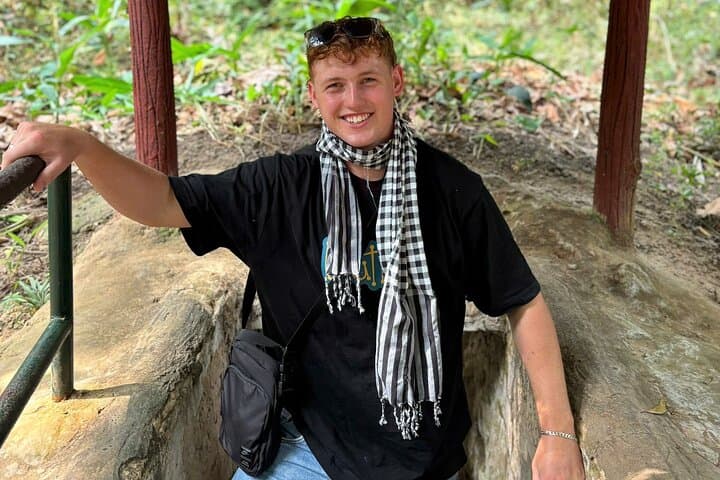
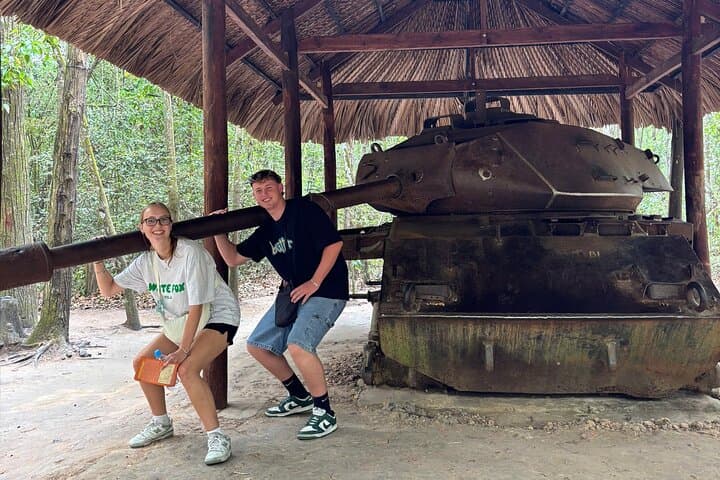
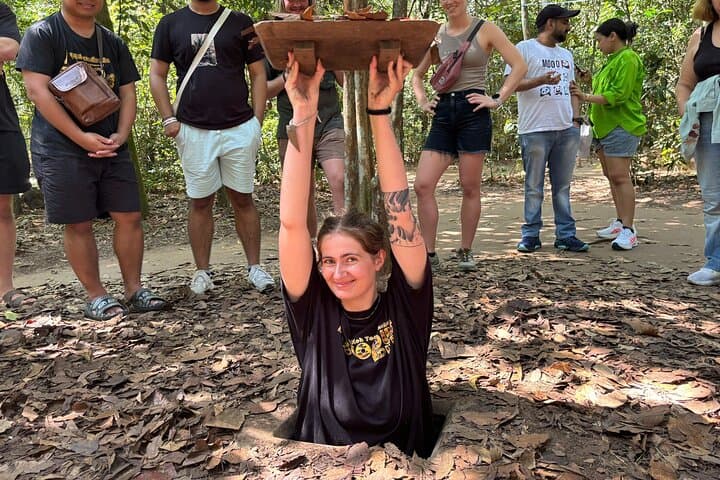
You step out of an air-conditioned van into humid, low-lying scrub; the forest smells of wet earth and wood smoke, and a quiet seems to hold the place together. The concrete bunkers and narrow tunnel mouths at Ben Dinh sit like scars in a landscape that once hid a hidden city beneath its surface.
You step out of an air-conditioned van into humid, low-lying scrub; the forest smells of wet earth and wood smoke, and a quiet seems to hold the place together. The concrete bunkers and narrow tunnel mouths at Ben Dinh sit like scars in a landscape that once hid a hidden city beneath its surface.
The Cu Chi network began as simple burrows and expanded into a 250‑km labyrinth used by Viet Cong fighters during the Indochina and Vietnam wars. Geologically the area is flat alluvium—easy to dig yet prone to collapse—which helped guerrilla engineers design multi-level galleries, camouflaged trapdoors, and shallow kitchens close to the surface.
Local culture is present in small rituals: the tea and cassava offered to visitors recall wartime rations, and the guides—often descendants of those who lived here—speak in plain, measured stories that emphasize survival and community resilience more than glorified battle.
Practically, the half-day excursion is compact: about a 60 km transfer from central Ho Chi Minh City (≈1.5 hours each way), a guided walkthrough of displays, a short optional tunnel crawl, and time at the shooting range if you choose. Expect dirt paths, a few stairs, low light in demonstration tunnels, and crowded peak-hour periods. Bring comfortable, closed-toe shoes, sun protection, and a small pack for water and camera. Be prepared for tight spaces if you try the crawl—there’s no obligation.
The experience balances tangible history with straightforward logistics: arrive early to avoid crowds, follow guides’ instructions for safety, and treat the site with respect—this is a preserved place of memory as much as a visitor attraction.