THE ADVENTURE COLLECTIVE® · Independent discovery and booking for outdoor travel

In one long, revealing day you’ll move from the claustrophobic Cu Chi Tunnels to the vivid midday prayers of Cao Dai and the sky-crossing cable car to Ba Den Mountain. Expect history, ritual, and wide views—plus practical tips to make the most of an 11‑hour circuit.
In one long, revealing day you’ll move from the claustrophobic Cu Chi Tunnels to the vivid midday prayers of Cao Dai and the sky-crossing cable car to Ba Den Mountain. Expect history, ritual, and wide views—plus practical tips to make the most of an 11‑hour circuit.
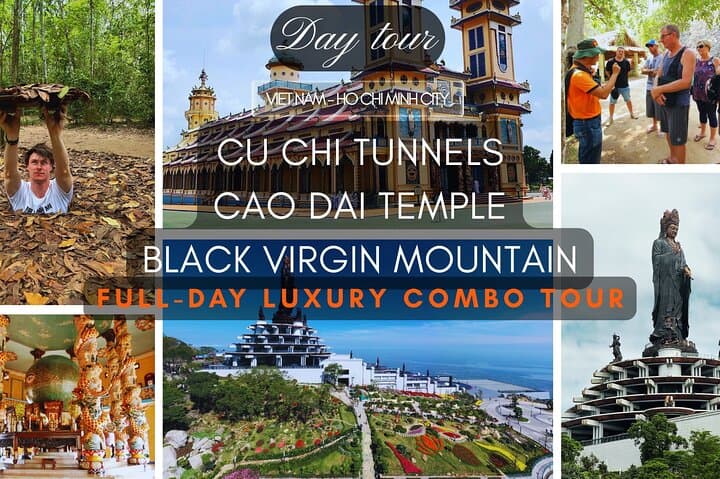
The day begins before dawn in Ho Chi Minh City: a coach eases out of the city and rice paddies blur into low hills, the air warm and humid. At Cu Chi the ground seems ordinary until the earth gives way to an elaborate human-made underworld—narrow shafts, secret trapdoors and low, earthen tunnels that once sheltered fighters. Crawling even a short 100‑meter section changes your sense of scale; the tunnel presses in like a living memory while steaming cassava and hot tea taste unexpectedly like history.
Verified experiences and guided adventures in the surrounding area.
Operated by KIM TRAVEL · Ho Chi Minh City, Ho Chi Minh
The day begins before dawn in Ho Chi Minh City: a coach eases out of the city and rice paddies blur into low hills, the air warm and humid. At Cu Chi the ground seems ordinary until the earth gives way to an elaborate human-made underworld—narrow shafts, secret trapdoors and low, earthen tunnels that once sheltered fighters. Crawling even a short 100‑meter section changes your sense of scale; the tunnel presses in like a living memory while steaming cassava and hot tea taste unexpectedly like history.
By midday the tour moves to Tay Ninh’s Cao Dai Holy See, where color and ritual meet. The midday prayer is theatrical and precise: rows of white-robed worshippers, brass gongs and organ music around the all-seeing Divine Eye. The faith, founded in the 1920s, blends symbols from Buddhism, Christianity, Taoism and Confucianism in a single, modern shrine.
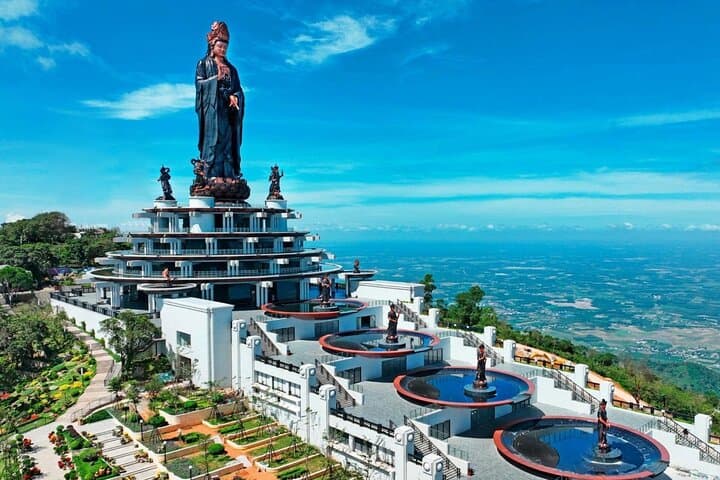
The afternoon climbs toward Ba Den (Black Virgin) Mountain—an isolated massif rising nearly 1,000 meters. A cable car crosses forested slopes and fields, delivering views that stretch toward the Cambodia border and to the bronze Buddha statue at the summit.
Practical guide: this is an 11-hour loop with moderate walking and standing; bring modest clothing for the temple, closed-toe shoes for the tunnels, and cash for optional cable car tickets. Expect humidity, intermittent sun and the chance to opt out of the 100‑meter crawl. The itinerary blends wartime history, living religion and a short alpine pass—efficient, varied, and firmly rooted in southern Vietnam’s landscape and stories.
easy.
10–11 hours.
Normal fitness for walking, short standing periods, and an optional crouched tunnel crawl; suitable for most travelers
The crawl is optional; shorter, safer sections and demonstration tunnels are available—discuss limits with your guide and skip if it causes distress.
Photography is often restricted during the core parts of the service—observe signage and follow the guide’s directions to avoid disruption.
Cable car tickets to Ba Den are typically an optional extra and paid on-site; check with the operator at booking for current pricing.
Yes—children are welcome but must be supervised, and small children may be unable to safely participate in the tunnel crawl.
Cu Chi’s tunnels were expanded and used by Viet Cong forces during the Vietnam War; Cao Dai originated in Tay Ninh province in the 1920s as a syncretic religion blending several eastern and western traditions.
Sites receive heavy visitor traffic—stay on marked paths, avoid touching artifacts, and carry out litter; supporting local guides helps fund preservation efforts.
KIM TRAVEL operates guided outdoor trips and adventures with an emphasis on safety, stewardship, and memorable experiences.
The day begins before dawn in Ho Chi Minh City: a coach eases out of the city and rice paddies blur into low hills, the air warm and humid. At Cu Chi the ground seems ordinary until the earth gives way to an elaborate human-made underworld—narrow shafts, secret trapdoors and low, earthen tunnels that once sheltered fighters. Crawling even a short 100‑meter section changes your sense of scale; the tunnel presses in like a living memory while steaming cassava and hot tea taste unexpectedly like history.
The day begins before dawn in Ho Chi Minh City: a coach eases out of the city and rice paddies blur into low hills, the air warm and humid. At Cu Chi the ground seems ordinary until the earth gives way to an elaborate human-made underworld—narrow shafts, secret trapdoors and low, earthen tunnels that once sheltered fighters. Crawling even a short 100‑meter section changes your sense of scale; the tunnel presses in like a living memory while steaming cassava and hot tea taste unexpectedly like history.
By midday the tour moves to Tay Ninh’s Cao Dai Holy See, where color and ritual meet. The midday prayer is theatrical and precise: rows of white-robed worshippers, brass gongs and organ music around the all-seeing Divine Eye. The faith, founded in the 1920s, blends symbols from Buddhism, Christianity, Taoism and Confucianism in a single, modern shrine.
The afternoon climbs toward Ba Den (Black Virgin) Mountain—an isolated massif rising nearly 1,000 meters. A cable car crosses forested slopes and fields, delivering views that stretch toward the Cambodia border and to the bronze Buddha statue at the summit.
Practical guide: this is an 11-hour loop with moderate walking and standing; bring modest clothing for the temple, closed-toe shoes for the tunnels, and cash for optional cable car tickets. Expect humidity, intermittent sun and the chance to opt out of the 100‑meter crawl. The itinerary blends wartime history, living religion and a short alpine pass—efficient, varied, and firmly rooted in southern Vietnam’s landscape and stories.