THE ADVENTURE COLLECTIVE® · Independent discovery and booking for outdoor travel

Ride an army jeep to the Cu Chi Tunnels and step into the underground world that shaped modern Vietnam. This hands-on tour mixes wartime history, local food, and field demonstrations with practical access for most travelers.
Ride an army jeep to the Cu Chi Tunnels and step into the underground world that shaped modern Vietnam. This hands-on tour mixes wartime history, local food, and field demonstrations with practical access for most travelers.
Morning light cuts through the sugarcane as a vintage army jeep bumps onto the dirt road toward Cu Chi, a landscape that still feels alert from its past. Riders peer through open frames at rice paddies and roadside markets, the engine's rumble matching the cadence of a place that once moved stealthily below ground.
Verified experiences and guided adventures in the surrounding area.
Operated by Viup Travel · Cu Chi District, Ho Chi Minh
Morning light cuts through the sugarcane as a vintage army jeep bumps onto the dirt road toward Cu Chi, a landscape that still feels alert from its past. Riders peer through open frames at rice paddies and roadside markets, the engine's rumble matching the cadence of a place that once moved stealthily below ground.
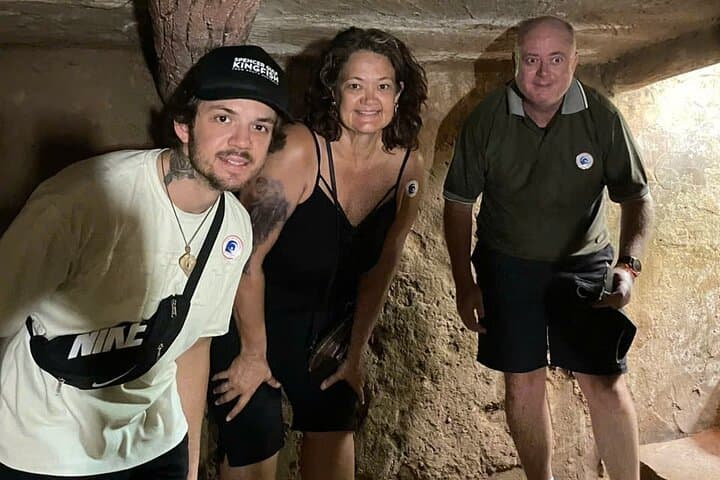
The Cu Chi Tunnels are a network of narrow passageways used by the Viet Cong during the Indochina and Vietnam Wars. Carved from lateritic soil, the tunnels exploit hard-packed clay layers that hold narrow chambers and concealed trapdoors. Guides describe daily routines, hidden kitchens, and field hospitals; historical artifacts and reconstructed trap systems illustrate both ingenuity and hardship. Local villages nearby keep traditional crafts and foodways alive, and a stop for beef hotpot provides a direct taste of regional cuisine.
Visitors should expect tight, low passages in the museum section and accessible, widened tunnels at the main sites; the experience emphasizes interpretation over rigorous caving. The site is exposed to tropical weather—sun can be demanding, and sudden showers are common—so plan timing accordingly. Wear sturdy closed-toe shoes, bring insect repellent, and keep a small daypack for water and sunscreen. Photography is allowed in most areas, but respect signage around preserved exhibits. Tours by jeep shorten transfer times and add a rugged, authentic feel, but choose operators who include clear safety briefings and English-speaking guides. A moderate fitness level is helpful for short crawls and uneven steps; those with claustrophobia or spinal issues should skip the underground sections.
moderate.
6 hours.
Moderate fitness recommended — able to walk uneven trails and bend or crouch for short periods
The full tour runs about six hours including transport from Ho Chi Minh City, on-site time, and a lunch stop.
Visitors can enter widened, reconstructed tunnels; original narrow passageways are mostly closed for preservation and safety.
Older children who can follow instructions and tolerate low light and tight spaces can join; very young children should avoid crawling sections.
Yes — the tour typically includes bottled water and a traditional beef hotpot lunch, with options available for dietary requests when notified in advance.
The tunnels were developed and expanded by local guerrilla forces during the mid-20th century, serving as living quarters, supply routes, and defensive systems during prolonged conflicts.
Site managers balance access with preservation by limiting original tunnel access and encouraging visitors to stay on marked paths to reduce erosion and damage.
Viup Travel operates guided outdoor trips and adventures with an emphasis on safety, stewardship, and memorable experiences.

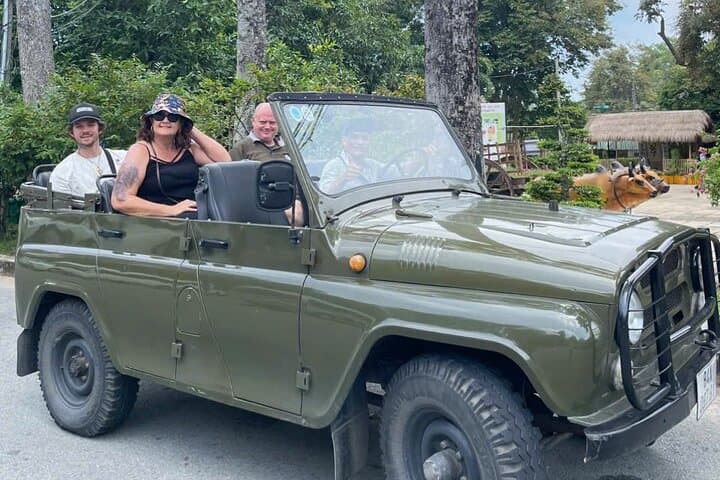

Morning light cuts through the sugarcane as a vintage army jeep bumps onto the dirt road toward Cu Chi, a landscape that still feels alert from its past. Riders peer through open frames at rice paddies and roadside markets, the engine's rumble matching the cadence of a place that once moved stealthily below ground.
Morning light cuts through the sugarcane as a vintage army jeep bumps onto the dirt road toward Cu Chi, a landscape that still feels alert from its past. Riders peer through open frames at rice paddies and roadside markets, the engine's rumble matching the cadence of a place that once moved stealthily below ground.
The Cu Chi Tunnels are a network of narrow passageways used by the Viet Cong during the Indochina and Vietnam Wars. Carved from lateritic soil, the tunnels exploit hard-packed clay layers that hold narrow chambers and concealed trapdoors. Guides describe daily routines, hidden kitchens, and field hospitals; historical artifacts and reconstructed trap systems illustrate both ingenuity and hardship. Local villages nearby keep traditional crafts and foodways alive, and a stop for beef hotpot provides a direct taste of regional cuisine.
Visitors should expect tight, low passages in the museum section and accessible, widened tunnels at the main sites; the experience emphasizes interpretation over rigorous caving. The site is exposed to tropical weather—sun can be demanding, and sudden showers are common—so plan timing accordingly. Wear sturdy closed-toe shoes, bring insect repellent, and keep a small daypack for water and sunscreen. Photography is allowed in most areas, but respect signage around preserved exhibits. Tours by jeep shorten transfer times and add a rugged, authentic feel, but choose operators who include clear safety briefings and English-speaking guides. A moderate fitness level is helpful for short crawls and uneven steps; those with claustrophobia or spinal issues should skip the underground sections.