THE ADVENTURE COLLECTIVE® · Independent discovery and booking for outdoor travel

Ride a Super Jeep from Jökulsárlón onto Vatnajökull, then follow a guide into ephemeral blue ice caves. This 2–4 hour excursion blends off-road scenery, glacial geology, and intense photographic opportunities.
Ride a Super Jeep from Jökulsárlón onto Vatnajökull, then follow a guide into ephemeral blue ice caves. This 2–4 hour excursion blends off-road scenery, glacial geology, and intense photographic opportunities.
Morning light hits the black sand at Jökulsárlón and the glacier’s blue heart seems to glow from within — a low, electric color that pulls the eye across the lagoon. You climb into a Super Jeep with a small group, tires crunching on rough tracks as the vehicle noses onto the glacier’s forefield, and the world narrows to wind, ice, and the guide’s steady voice.
Verified experiences and guided adventures in the surrounding area.
Operated by Blue Iceland - Ice Caving and Hiking · Jökulsárlón, South Iceland
Morning light hits the black sand at Jökulsárlón and the glacier’s blue heart seems to glow from within — a low, electric color that pulls the eye across the lagoon. You climb into a Super Jeep with a small group, tires crunching on rough tracks as the vehicle noses onto the glacier’s forefield, and the world narrows to wind, ice, and the guide’s steady voice.
Vatnajökull is Iceland’s largest ice cap, covering roughly 8% of the country; the blue caves are transient rooms carved by meltwater and pressure, reshaped each season. Local fishing towns like Höfn supply the seafood culture of the southeast, and nearby lava fields and glacial rivers show the region’s violent geologic history — volcano under ice, ice over fire.
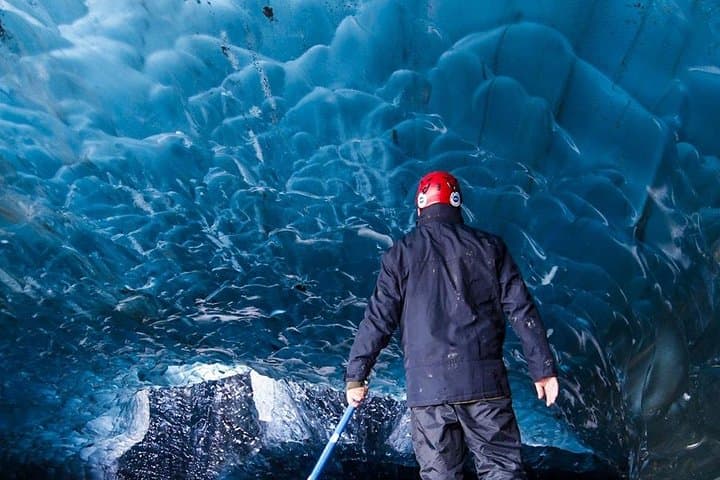
Guides read the glacier like a map: they pick safe caves, fit crampons, and lead short, careful walks into chambers that amplify color and silence. Photography is a major draw; light filters through dense ice creating saturated blues and deep shadows.
Practical note: tours depart from Jökulsárlón (typically 9:30 am and 2 pm), run about 2–4 hours including a scenic off-road drive, and require warm, waterproof layers and sturdy boots. Conditions change quickly; caves can close with thaw or storm, so book with operators who cancel for safety and carry travel insurance. Hydrate, protect camera gear from spray, and follow guide instructions — these caves are fragile and temporary, and your low-impact behavior helps preserve them for the next group.
moderate.
2–4 hours.
Suitable for most fitness levels; requires short off-road hikes and stable footing on ice and scree.
Most departures meet at Jökulsárlón (Glacier Lagoon); check your booking for exact meeting coordinates and arrival time.
Guides assess conditions and age suitability — many operators allow children but require close supervision and appropriate footwear.
Winter months typically offer the most stable, photogenic blue caves, but availability depends on weather and glacier conditions.
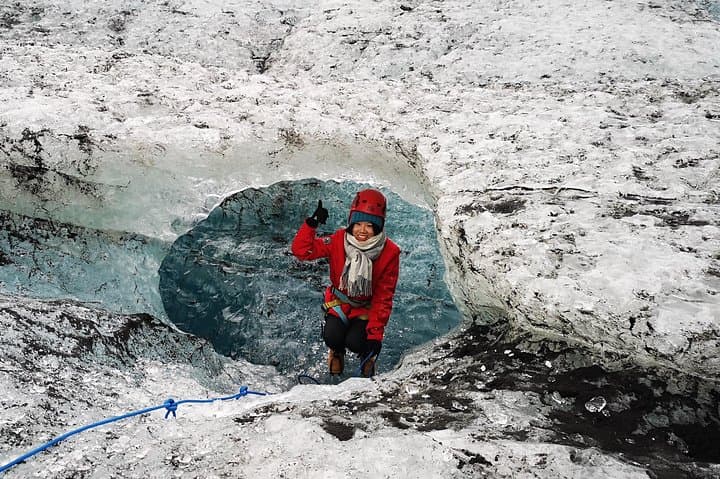
No technical experience is required; guides provide helmets, crampons, and instruction for short, guided walks.
Vatnajökull has shaped southeast Iceland for millennia; its ice and the volcanic activity beneath it have produced the region’s dramatic glacial landscapes and dynamic caves.
Ice caves are ephemeral and sensitive; stick to guided routes, avoid carving or removing ice, and carry out all waste to minimize impact.
Blue Iceland - Ice Caving and Hiking operates guided outdoor trips and adventures with an emphasis on safety, stewardship, and memorable experiences.


Morning light hits the black sand at Jökulsárlón and the glacier’s blue heart seems to glow from within — a low, electric color that pulls the eye across the lagoon. You climb into a Super Jeep with a small group, tires crunching on rough tracks as the vehicle noses onto the glacier’s forefield, and the world narrows to wind, ice, and the guide’s steady voice.
Morning light hits the black sand at Jökulsárlón and the glacier’s blue heart seems to glow from within — a low, electric color that pulls the eye across the lagoon. You climb into a Super Jeep with a small group, tires crunching on rough tracks as the vehicle noses onto the glacier’s forefield, and the world narrows to wind, ice, and the guide’s steady voice.
Vatnajökull is Iceland’s largest ice cap, covering roughly 8% of the country; the blue caves are transient rooms carved by meltwater and pressure, reshaped each season. Local fishing towns like Höfn supply the seafood culture of the southeast, and nearby lava fields and glacial rivers show the region’s violent geologic history — volcano under ice, ice over fire.
Guides read the glacier like a map: they pick safe caves, fit crampons, and lead short, careful walks into chambers that amplify color and silence. Photography is a major draw; light filters through dense ice creating saturated blues and deep shadows.
Practical note: tours depart from Jökulsárlón (typically 9:30 am and 2 pm), run about 2–4 hours including a scenic off-road drive, and require warm, waterproof layers and sturdy boots. Conditions change quickly; caves can close with thaw or storm, so book with operators who cancel for safety and carry travel insurance. Hydrate, protect camera gear from spray, and follow guide instructions — these caves are fragile and temporary, and your low-impact behavior helps preserve them for the next group.