THE ADVENTURE COLLECTIVE® · Independent discovery and booking for outdoor travel

Hover through Athens’ oldest streets on a four‑wheel electric scooter, stopping outside the Acropolis, Ancient Agora, and Pnyx. This two‑hour guided loop through Plaka and Monastiraki mixes easy urban riding with sharp historical context and photo stops.
Hover through Athens’ oldest streets on a four‑wheel electric scooter, stopping outside the Acropolis, Ancient Agora, and Pnyx. This two‑hour guided loop through Plaka and Monastiraki mixes easy urban riding with sharp historical context and photo stops.
You start on a narrow Plaka lane, the scooter humming under your feet, sunlight pooling on cobbled stones as the Acropolis watches from above.
Verified experiences and guided adventures in the surrounding area.
Operated by Moove Athens Tours · Athens, Attica
You start on a narrow Plaka lane, the scooter humming under your feet, sunlight pooling on cobbled stones as the Acropolis watches from above.
The two‑hour loop threads through neighborhoods where 3,000 years of history press close: the Hill of Mars’ baked limestone overlooks, the stony steps of Pnyx where citizens once debated, and the open air of the Ancient Agora with its Temple of Hephaestus visible from the route. The city’s geology—limestone ridges and shallow coastal plain—gives Athens its abrupt, walkable skyline and the compact clusters of ruins that punctuate modern streets.
Guides punctuate the ride with concise histories: that the Odeon of Herodes Atticus dates to 161 AD, that the Roman Agora layered Roman order atop Greek marketplaces, and that Keramikos marks an ancient potters’ quarter. Local culture surfaces in Monastiraki’s market calls, cafés in Thissio, and the stray cats lounging on sun‑warmed stones.
Practically, the tour is city riding—helmeted, low speed, frequent stops for photos and short talks outside archaeological sites. Expect tight pedestrian traffic in Plaka and Monastiraki; follow your guide, yield to foot traffic, and keep to the scooter’s easy, four‑wheel stability. Bottled water and helmets are provided; mornings and late afternoons deliver cooler air and softer light for photos.
Bring comfortable shoes, a charged phone for photos, and a readiness to switch between slow urban riding and short, informative stops that stitch modern Athens to its ancient past.
easy.
2 hours.
Suitable for most fitness levels; ability to stand briefly and mount the scooter is required
No; the electric four‑wheel scooters are stable and the guide provides brief orientation—this tour is suitable for first‑time riders.
No; the tour stops outside major sites for photo opportunities and commentary, but entrance fees and independent visits are not included.
Infants and small children can be in a stroller prior to the tour but policies vary—check the operator for age and seating rules.
Tours run in light rain but heavy weather may lead to cancellation—confirm details with the operator and check the 24‑hour cancellation policy.
Athens’ layers date from Neolithic settlements through Classical democracy to Roman and Byzantine periods; many tour stops preserve this continuous urban history.
Stay on public paths and behind barriers to protect fragile ruins; using electric scooters reduces local emissions, but keep noise low and dispose of waste responsibly.
Moove Athens Tours operates guided outdoor trips and adventures with an emphasis on safety, stewardship, and memorable experiences.
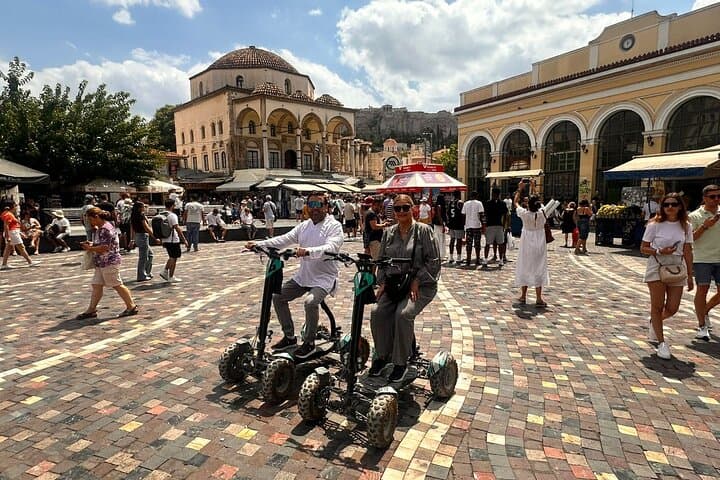
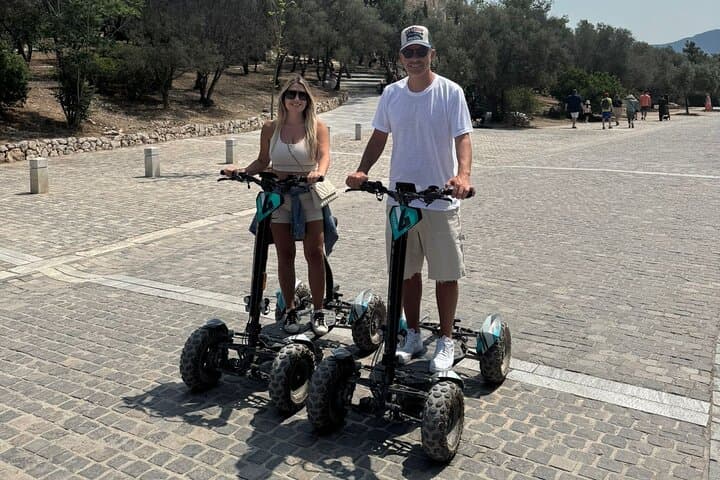
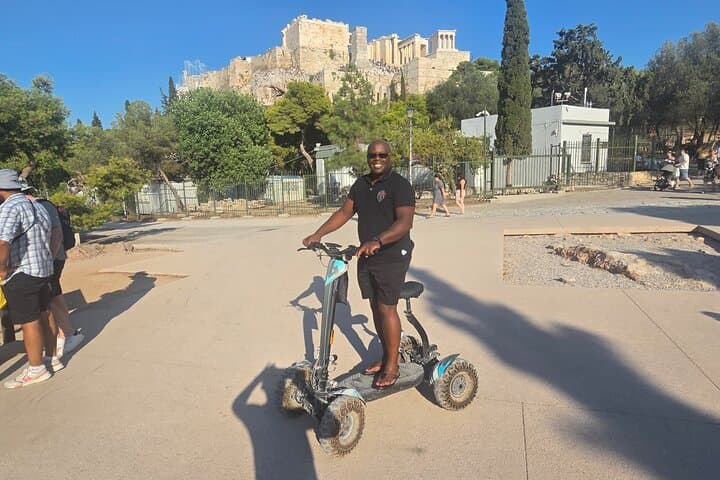
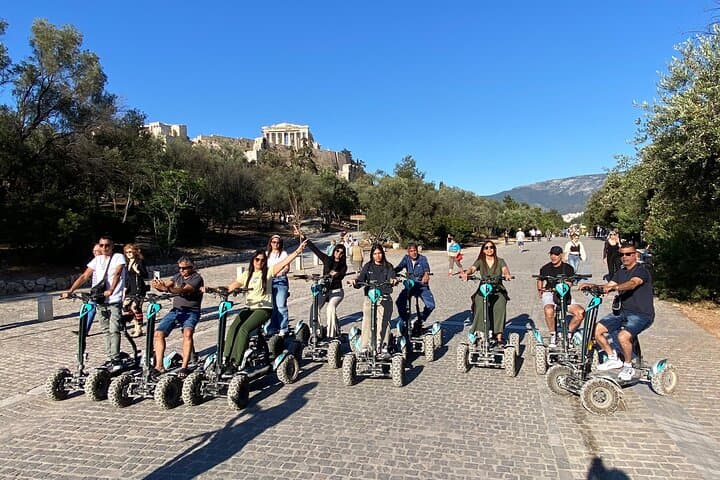
You start on a narrow Plaka lane, the scooter humming under your feet, sunlight pooling on cobbled stones as the Acropolis watches from above.
You start on a narrow Plaka lane, the scooter humming under your feet, sunlight pooling on cobbled stones as the Acropolis watches from above.
The two‑hour loop threads through neighborhoods where 3,000 years of history press close: the Hill of Mars’ baked limestone overlooks, the stony steps of Pnyx where citizens once debated, and the open air of the Ancient Agora with its Temple of Hephaestus visible from the route. The city’s geology—limestone ridges and shallow coastal plain—gives Athens its abrupt, walkable skyline and the compact clusters of ruins that punctuate modern streets.
Guides punctuate the ride with concise histories: that the Odeon of Herodes Atticus dates to 161 AD, that the Roman Agora layered Roman order atop Greek marketplaces, and that Keramikos marks an ancient potters’ quarter. Local culture surfaces in Monastiraki’s market calls, cafés in Thissio, and the stray cats lounging on sun‑warmed stones.
Practically, the tour is city riding—helmeted, low speed, frequent stops for photos and short talks outside archaeological sites. Expect tight pedestrian traffic in Plaka and Monastiraki; follow your guide, yield to foot traffic, and keep to the scooter’s easy, four‑wheel stability. Bottled water and helmets are provided; mornings and late afternoons deliver cooler air and softer light for photos.
Bring comfortable shoes, a charged phone for photos, and a readiness to switch between slow urban riding and short, informative stops that stitch modern Athens to its ancient past.