THE ADVENTURE COLLECTIVE® · Independent discovery and booking for outdoor travel

A 15-day overland crossing from Marrakech into Morocco’s southern ergs and regs, combining dune bivouacs, oasis visits and cultural stops like Tamegroute. Expect long walking days, remote camps, and deep insights into Berber and Sahrawi life.
A 15-day overland crossing from Marrakech into Morocco’s southern ergs and regs, combining dune bivouacs, oasis visits and cultural stops like Tamegroute. Expect long walking days, remote camps, and deep insights into Berber and Sahrawi life.
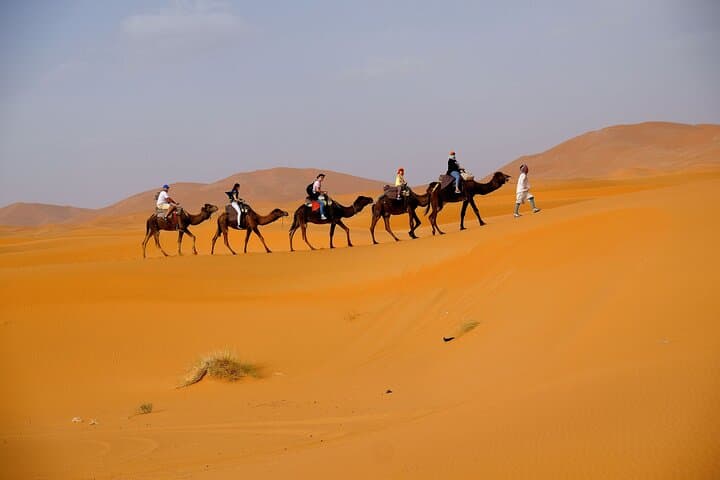
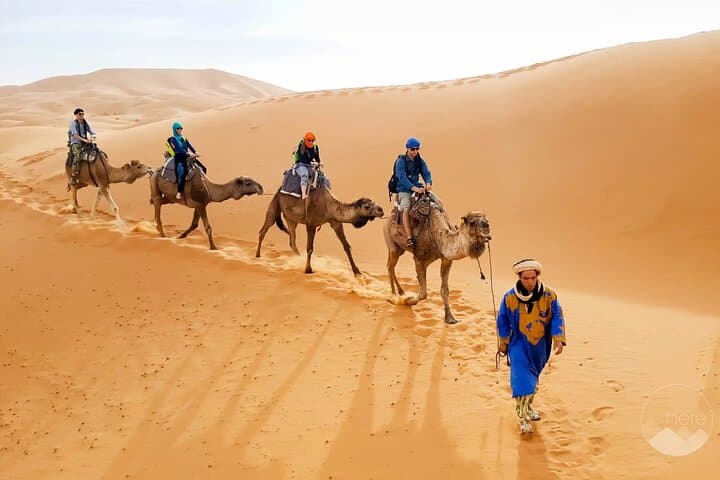
Dawn arrives over Marrakech and the city’s ochre walls shrink behind you as the road unspools toward open sand. By the third day the palms thin, tracks erase themselves and the dunes begin to move — a living landscape that will test your rhythm and patience. Wind sculpts the sand into ridges that seem to push you onward; tamarisk groves offer sudden shade like reluctant companions.
Verified experiences and guided adventures in the surrounding area.
Operated by Sunny Morocco · Marrakech, Marrakech-Safi
Dawn arrives over Marrakech and the city’s ochre walls shrink behind you as the road unspools toward open sand. By the third day the palms thin, tracks erase themselves and the dunes begin to move — a living landscape that will test your rhythm and patience. Wind sculpts the sand into ridges that seem to push you onward; tamarisk groves offer sudden shade like reluctant companions.
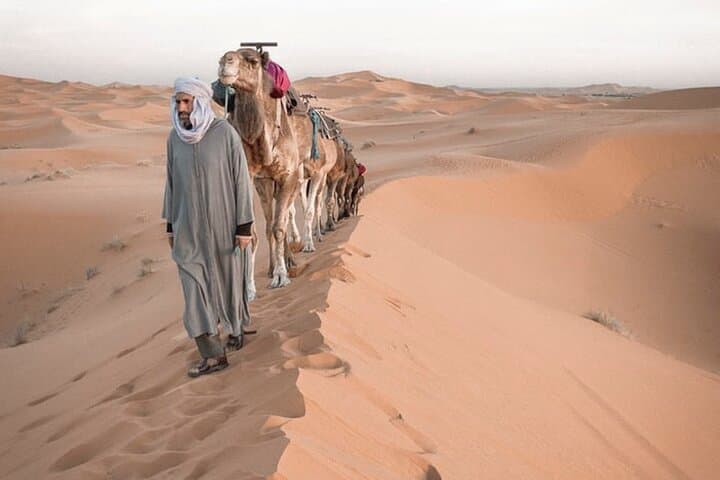
This route traces centuries-old caravan corridors once used for salt and dates, crossing zones where volcanic plateaus give way to regs (stony deserts) and vast ergs (sand seas). The journey passes kasbahs and khettaras, and stops at Tamegroute — known for its pottery and a centuries-old Quranic library — connecting modern travelers to Amazigh (Berber) hospitality and Sahrawi traditions.
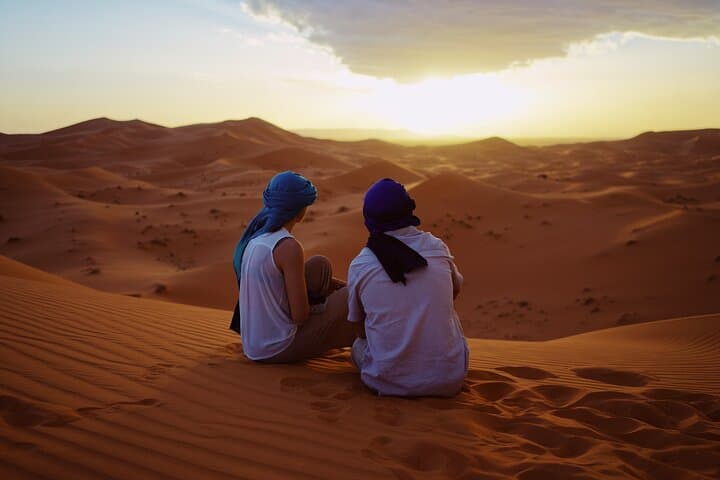
Expect long days between bivouacs, nights under a broad sky, and simple communal meals prepared around a campfire. Terrain varies from firm reg that allows steady walking to soft dunes requiring more energy; mornings are best for moving and photography, while sunsets reveal color that shifts the dune’s personality.
Practical guidance: pack layers for hot days and cold nights, carry 3–4 liters of water daily, and use high-traction footwear for mixed sand and rocky ground. Choose a guide experienced in desert navigation and verify evacuation plans. Respect local customs—ask before photographing people—and limit single-use plastics. If you’re in moderate to strong shape and comfortable with multi-day remote travel, this expedition delivers deep desert immersion with culturally rich stops, balanced by practical logistics and safety measures.
challenging.
15 days.
Good endurance for consecutive long days walking or riding; able to carry a 8–12 kg daypack and tolerate basic camp conditions
Expect long travel days with some walking on soft sand; a moderate to high fitness level is recommended and prior multi-day hiking experience helps.
Overnight stays are in desert bivouacs—shared tents or traditional Berber-style shelters—with basic bedding; a warm sleeping bag is advised for cold nights.
Guides supply water at camps and refill points, but you should carry a personal reservoir and purification tablets as backup.
Not recommended for pregnant travelers or very young children due to remote conditions and long daily distances; check operator policies for age limits.
The route follows ancient trans-Saharan caravan trails linking oases and kasbahs; local communities retain Amazigh and Sahrawi cultural practices tied to desert life.
The Saharan environment is fragile—stay on established tracks, minimize water waste, and support local guides to keep tourism low-impact.
Sunny Morocco operates guided outdoor trips and adventures with an emphasis on safety, stewardship, and memorable experiences.
Dawn arrives over Marrakech and the city’s ochre walls shrink behind you as the road unspools toward open sand. By the third day the palms thin, tracks erase themselves and the dunes begin to move — a living landscape that will test your rhythm and patience. Wind sculpts the sand into ridges that seem to push you onward; tamarisk groves offer sudden shade like reluctant companions.
Dawn arrives over Marrakech and the city’s ochre walls shrink behind you as the road unspools toward open sand. By the third day the palms thin, tracks erase themselves and the dunes begin to move — a living landscape that will test your rhythm and patience. Wind sculpts the sand into ridges that seem to push you onward; tamarisk groves offer sudden shade like reluctant companions.
This route traces centuries-old caravan corridors once used for salt and dates, crossing zones where volcanic plateaus give way to regs (stony deserts) and vast ergs (sand seas). The journey passes kasbahs and khettaras, and stops at Tamegroute — known for its pottery and a centuries-old Quranic library — connecting modern travelers to Amazigh (Berber) hospitality and Sahrawi traditions.
Expect long days between bivouacs, nights under a broad sky, and simple communal meals prepared around a campfire. Terrain varies from firm reg that allows steady walking to soft dunes requiring more energy; mornings are best for moving and photography, while sunsets reveal color that shifts the dune’s personality.
Practical guidance: pack layers for hot days and cold nights, carry 3–4 liters of water daily, and use high-traction footwear for mixed sand and rocky ground. Choose a guide experienced in desert navigation and verify evacuation plans. Respect local customs—ask before photographing people—and limit single-use plastics. If you’re in moderate to strong shape and comfortable with multi-day remote travel, this expedition delivers deep desert immersion with culturally rich stops, balanced by practical logistics and safety measures.