THE ADVENTURE COLLECTIVE® · Independent discovery and booking for outdoor travel

A six-day caravan-style trek from Marrakech into the Drâa Valley and Erg Bouzian. Cross Saghro’s passes, sleep in desert bivouacs and walk ancient routes that meet palms, kasbahs and open dunes.
A six-day caravan-style trek from Marrakech into the Drâa Valley and Erg Bouzian. Cross Saghro’s passes, sleep in desert bivouacs and walk ancient routes that meet palms, kasbahs and open dunes.
You leave Marrakech at first light, the Atlas range falling away to ochre plains as the vehicle climbs toward the Saghro massif. By midday the road narrows and the air takes on the dry, metallic scent of desert; tamarisk shadows punctuate the sand and the banded ridges of Djebel Tiffernine climb like old scars in the distance.
Verified experiences and guided adventures in the surrounding area.
Operated by Sunny Morocco · Marrakech, Marrakech-Safi
You leave Marrakech at first light, the Atlas range falling away to ochre plains as the vehicle climbs toward the Saghro massif. By midday the road narrows and the air takes on the dry, metallic scent of desert; tamarisk shadows punctuate the sand and the banded ridges of Djebel Tiffernine climb like old scars in the distance.
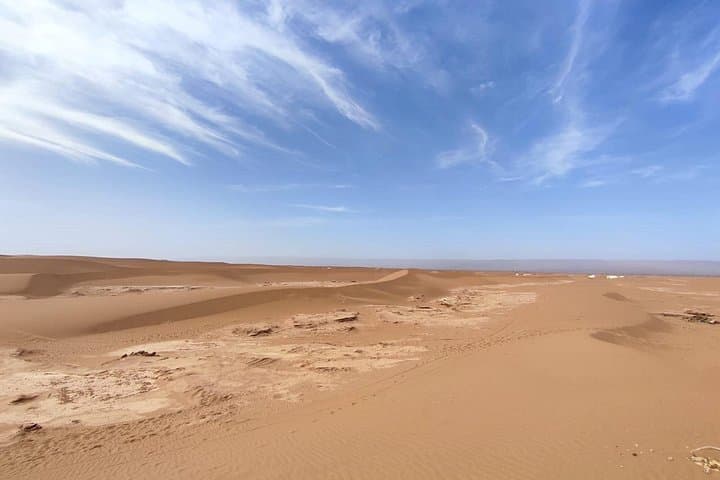
This six-day itinerary follows ancient caravan routes into the Drâa Valley and beyond: ksours (fortified villages) and kasbahs line the palm groves, relics of a time when date trade and mule trains linked Marrakech to the Sahara. Geologically the landscape shifts from rocky hamada and plateaus to wind-sculpted dunes—ergs such as Bouzian—where sand accumulates into wind-ridged waves overnight.
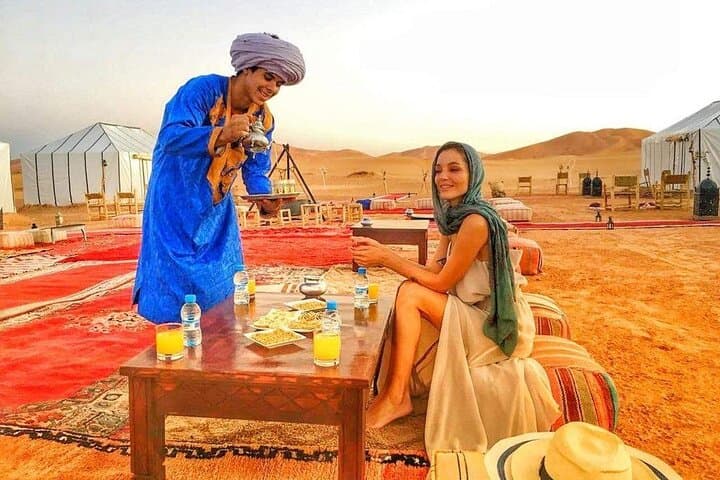
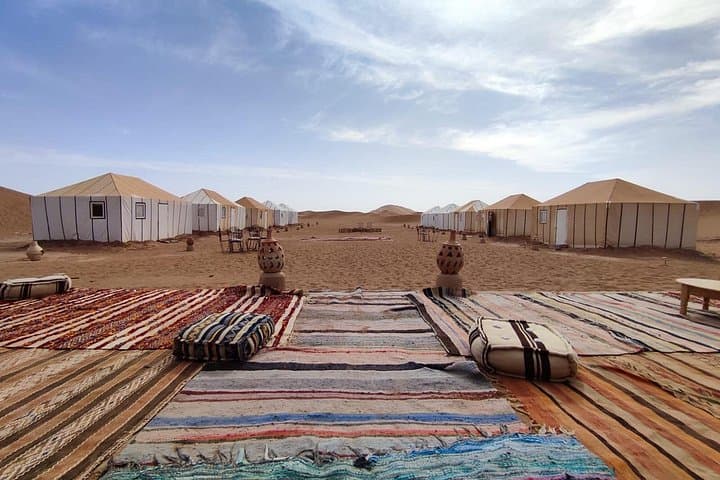
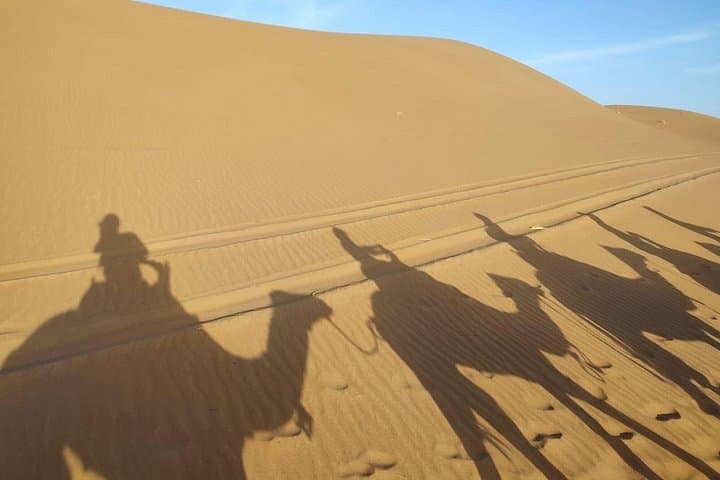
Culturally the trek moves at a human pace: meeting camel handlers, sharing mint tea in bivouac camps, and listening to desert stories around a low fire. Expect basic but sturdy desert bivouacs, locally prepared meals included, and one chance to freshen up in M’Hamid’s palm oasis.
Practical guidance: walk light and layered—temperature swings are large. Carry at least 2–3 liters of water per day and use sun protection; gaiters help keep sand from working into boots on dune crossings. Daily distances are moderate but constant; you should be comfortable hiking 3–6 hours with breaks and uneven footing (sand, gravel, occasional rocky passages). Plan to travel with local guides, accept limited cell service, and keep cash for village purchases and tips. Timing your trip in spring or fall reduces heat stress and increases comfort for long days under an open sky.
moderate.
6 days (approx. daily 3–6 hour walking segments).
Moderate fitness—regular walkers comfortable with multi-day hikes and uneven terrain will be fine; some prior hiking experience helpful.
Daily walking is moderate—expect 3–6 hours on varied surfaces including sand, gravel plateaus and short rocky sections; a moderate fitness level is recommended.
Basic facilities are available at M’Hamid and sometimes at village stops; in the desert you'll use camp latrines and limited washing options—bring biodegradable wipes and a small towel.
Arabic and Tamazight (Berber) are common locally; French is widely used. Dress modestly in villages and ask before photographing people; tipping guides and camel handlers is customary.
Not recommended for travelers with serious heart or spinal conditions, or for pregnant travelers; children should be able to cope with long travel days and basic camp conditions.
The Drâa corridor was a historic trade route linking southern oases to inland markets; kasbahs served as fortified stops and date-storage hubs for caravans.
Travelers should minimize campfire impact, avoid trampling fragile dune vegetation, and pack out all non-biodegradable waste; supporting local guides helps sustain traditional desert livelihoods.
Sunny Morocco operates guided outdoor trips and adventures with an emphasis on safety, stewardship, and memorable experiences.
You leave Marrakech at first light, the Atlas range falling away to ochre plains as the vehicle climbs toward the Saghro massif. By midday the road narrows and the air takes on the dry, metallic scent of desert; tamarisk shadows punctuate the sand and the banded ridges of Djebel Tiffernine climb like old scars in the distance.
You leave Marrakech at first light, the Atlas range falling away to ochre plains as the vehicle climbs toward the Saghro massif. By midday the road narrows and the air takes on the dry, metallic scent of desert; tamarisk shadows punctuate the sand and the banded ridges of Djebel Tiffernine climb like old scars in the distance.
This six-day itinerary follows ancient caravan routes into the Drâa Valley and beyond: ksours (fortified villages) and kasbahs line the palm groves, relics of a time when date trade and mule trains linked Marrakech to the Sahara. Geologically the landscape shifts from rocky hamada and plateaus to wind-sculpted dunes—ergs such as Bouzian—where sand accumulates into wind-ridged waves overnight.
Culturally the trek moves at a human pace: meeting camel handlers, sharing mint tea in bivouac camps, and listening to desert stories around a low fire. Expect basic but sturdy desert bivouacs, locally prepared meals included, and one chance to freshen up in M’Hamid’s palm oasis.
Practical guidance: walk light and layered—temperature swings are large. Carry at least 2–3 liters of water per day and use sun protection; gaiters help keep sand from working into boots on dune crossings. Daily distances are moderate but constant; you should be comfortable hiking 3–6 hours with breaks and uneven footing (sand, gravel, occasional rocky passages). Plan to travel with local guides, accept limited cell service, and keep cash for village purchases and tips. Timing your trip in spring or fall reduces heat stress and increases comfort for long days under an open sky.