THE ADVENTURE COLLECTIVE® · Independent discovery and booking for outdoor travel

Walk a living piece of Inca engineering on the Q'eswachaka day trip — a dramatic, community‑managed grass bridge spanning the Apurímac canyon. This full‑day outing combines cultural ritual, canyon scenery, and a short high‑altitude walk.
Walk a living piece of Inca engineering on the Q'eswachaka day trip — a dramatic, community‑managed grass bridge spanning the Apurímac canyon. This full‑day outing combines cultural ritual, canyon scenery, and a short high‑altitude walk.
You arrive before dawn, the Andes sharpening their ridgelines against a pale sky as the bus climbs out of Cusco. The Apurímac River glints below, a ribbon that seems to dare you to follow it. By mid-morning the narrow valley opens and the hand‑woven span of Q'eswachaka comes into view — a swaying, living bridge made of ichu grass, worked and renewed by Quechua communities for generations.
Verified experiences and guided adventures in the surrounding area.
Operated by Andean Trekking Peru · Cusco, Cusco
You arrive before dawn, the Andes sharpening their ridgelines against a pale sky as the bus climbs out of Cusco. The Apurímac River glints below, a ribbon that seems to dare you to follow it. By mid-morning the narrow valley opens and the hand‑woven span of Q'eswachaka comes into view — a swaying, living bridge made of ichu grass, worked and renewed by Quechua communities for generations.
The bridge sits where engineering and ritual meet. For over five centuries local communities have practiced an annual rebuilding ceremony that preserves pre‑Hispanic rope‑weaving techniques and social bonds. Geologically, the site perches on steep canyon walls carved by the Apurímac, a river that has cut deep gorges through volcanic and metamorphic rock, creating the dramatic drop you look over when crossing. Expect the cultural cadence of the day: elders explaining weaving methods, musicians marking ritual knots, and a strong sense that this is a working heritage, not a museum piece.
Practically, the trip is a long but straightforward day: early pickup, roughly four hours of scenic driving each way, short walks on uneven high‑altitude trails, and a guided crossing of the bridge. Bring sun protection and layers for wind and chill, hydrate for the altitude, and wear sturdy shoes with good grip — the bridge surface is textured but narrow. Respect the community protocols during the rebuilding ceremony, leave no waste, and be ready for photographic panoramas: canyon walls, flamingo‑tinted lakes, and the slow, human rhythm that keeps an Inca technique living today.
easy.
11–12 hours.
Suitable for travelers who can handle a few short, uneven walks at high altitude and long vehicle transfers.
The walk across the bridge is short and suitable for most people, but the day includes travel at high altitude and brief uneven trails—moderate stamina helps.
Yes — the bridge is maintained and rebuilt annually by local communities using traditional techniques; guides manage crossings to ensure safety.
Yes. The itinerary includes multiple stops for panoramic views, the lakes, and the Inca cave — bring a camera and extra batteries.
The tour includes a buffet lunch and bottled water; restroom facilities are basic at rural stops, so plan accordingly.
Q'eswachaka is one of the few remaining pre‑Hispanic suspension bridges preserved through an annual community rebuilding ritual that links several Quechua communities.
Local stewardship is central — visitors should follow community rules, avoid leaving waste, and avoid touching ritual ropes to support the bridge’s cultural and ecological longevity.
Andean Trekking Peru operates guided outdoor trips and adventures with an emphasis on safety, stewardship, and memorable experiences.
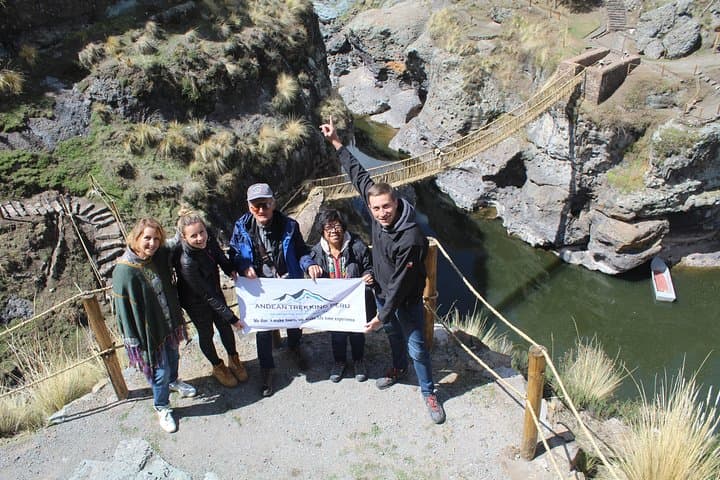
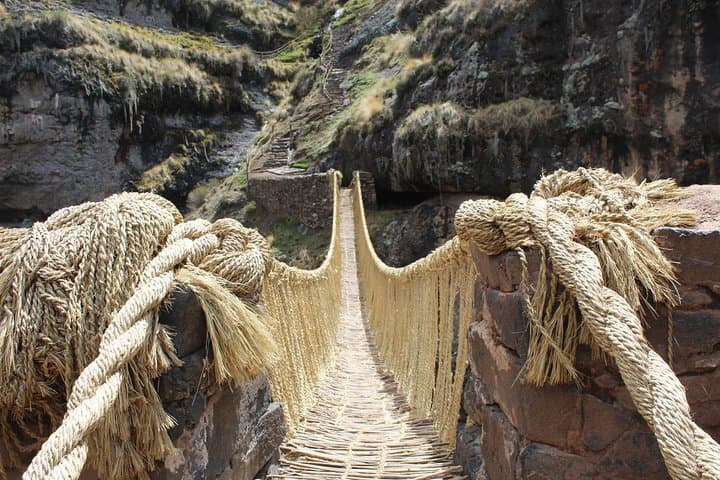
You arrive before dawn, the Andes sharpening their ridgelines against a pale sky as the bus climbs out of Cusco. The Apurímac River glints below, a ribbon that seems to dare you to follow it. By mid-morning the narrow valley opens and the hand‑woven span of Q'eswachaka comes into view — a swaying, living bridge made of ichu grass, worked and renewed by Quechua communities for generations.
You arrive before dawn, the Andes sharpening their ridgelines against a pale sky as the bus climbs out of Cusco. The Apurímac River glints below, a ribbon that seems to dare you to follow it. By mid-morning the narrow valley opens and the hand‑woven span of Q'eswachaka comes into view — a swaying, living bridge made of ichu grass, worked and renewed by Quechua communities for generations.
The bridge sits where engineering and ritual meet. For over five centuries local communities have practiced an annual rebuilding ceremony that preserves pre‑Hispanic rope‑weaving techniques and social bonds. Geologically, the site perches on steep canyon walls carved by the Apurímac, a river that has cut deep gorges through volcanic and metamorphic rock, creating the dramatic drop you look over when crossing. Expect the cultural cadence of the day: elders explaining weaving methods, musicians marking ritual knots, and a strong sense that this is a working heritage, not a museum piece.
Practically, the trip is a long but straightforward day: early pickup, roughly four hours of scenic driving each way, short walks on uneven high‑altitude trails, and a guided crossing of the bridge. Bring sun protection and layers for wind and chill, hydrate for the altitude, and wear sturdy shoes with good grip — the bridge surface is textured but narrow. Respect the community protocols during the rebuilding ceremony, leave no waste, and be ready for photographic panoramas: canyon walls, flamingo‑tinted lakes, and the slow, human rhythm that keeps an Inca technique living today.