THE ADVENTURE COLLECTIVE® · Independent discovery and booking for outdoor travel

Spend a long day driving from Fairbanks across the Arctic Circle, photograph the Trans-Alaska Pipeline, receive an Arctic Circle certificate, and hunt for the Northern Lights with a knowledgeable guide. Practical logistics—hot drinks, sandwiches, and hotel pickup—are included for a focused, full-day adventure.
Spend a long day driving from Fairbanks across the Arctic Circle, photograph the Trans-Alaska Pipeline, receive an Arctic Circle certificate, and hunt for the Northern Lights with a knowledgeable guide. Practical logistics—hot drinks, sandwiches, and hotel pickup—are included for a focused, full-day adventure.
You step onto a highway that feels like the edge of the world: low white birch and black spruce flash past while the guide points toward a small metal sign that marks the Arctic Circle. The bus hums, hot drink in hand, and the landscape opens into tundra — flat, wind-shaped, and honest — with the Trans-Alaska Pipeline running like a raised ribbon through the distance.
Verified experiences and guided adventures in the surrounding area.
Operated by 1st Alaska Outdoor School · Fairbanks, Alaska
You step onto a highway that feels like the edge of the world: low white birch and black spruce flash past while the guide points toward a small metal sign that marks the Arctic Circle. The bus hums, hot drink in hand, and the landscape opens into tundra — flat, wind-shaped, and honest — with the Trans-Alaska Pipeline running like a raised ribbon through the distance.
This route threads together modern engineering and ancient ground. The pipeline is a product of 1970s oil development; beneath your feet the permafrost and gravel pads tell a longer geological story of freeze and thaw. Locally, Athabaskan communities have lived on and traveled these lands for generations; cultural notes on place names and seasonal use are often woven into the guide’s narration.
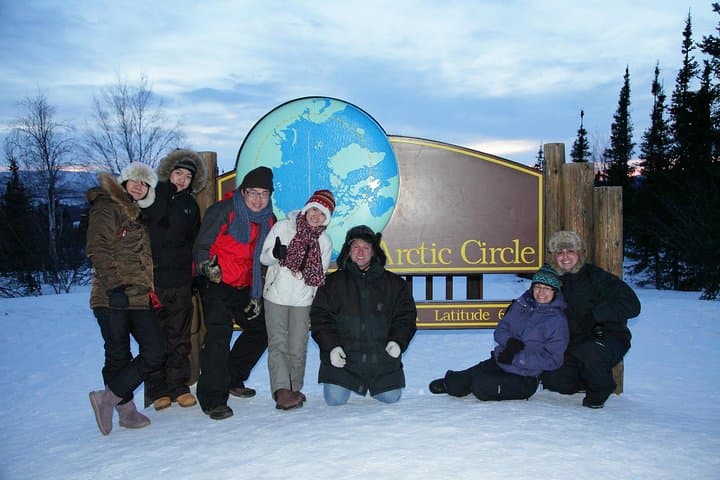
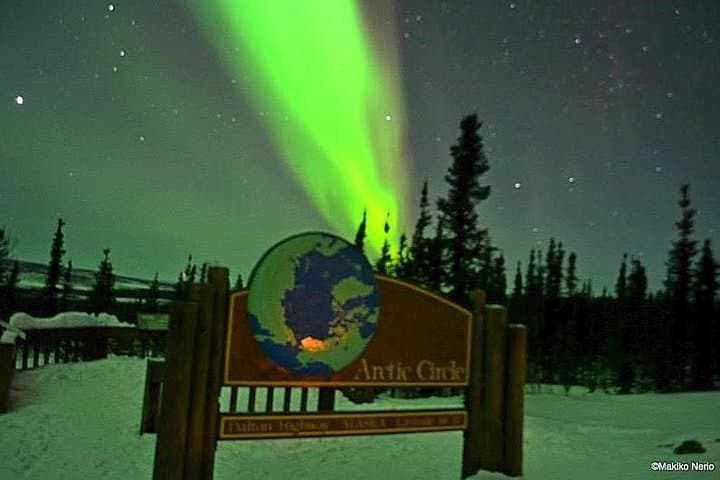
The highlight is a short stop at the Arctic Circle where you can pose for a certificate photo, then walk to the edge of a wide river and feel how the silence changes north of 66°33′N. After dark, the mission is aurora watching: long, patient hours under a sky that can ignite in curtains of green and purple, though sightings depend on solar activity and clear skies.
Practical edge: this is a long, cold day—expect 14 hours including hotel pickup and drop-off, included sandwiches, and narration. Dress in insulated layers, bring a tripod and extra batteries for long exposures, and plan for limited facilities at stops. The Northern Lights are never guaranteed; the operator provides comfort and narrative, but not a spectacle on command. If you want the experience more than a promise, this one delivers the logistics to reach it.
easy.
14 hours.
Suitable for most fitness levels; you'll spend much of the day seated but should be able to handle short walks and standing in cold conditions.
No — the aurora is a natural phenomenon and sightings depend on solar activity and clear skies; the tour maximizes access but cannot guarantee visibility.
Hotel pickup and drop-off are included for most central Fairbanks hotels; confirm your pickup at least 24 hours before departure as guided by the operator.
The excursion is about 14 hours total with significant highway driving to reach the Arctic Circle and return to Fairbanks; bring comfort items for a long day.
Yes — the tour includes short restroom stops and a light meal (sandwich and sweets) plus hot drinks; facilities are basic at remote pullouts.
The route follows land heavily affected by 1970s oil development and pipeline construction; Athabaskan peoples have long histories in the Fairbanks region and maintain cultural ties to the land.
Permafrost and tundra are fragile; stick to established stopping areas, pack out trash, and respect wildlife distances to reduce human impact.
1st Alaska Outdoor School operates guided outdoor trips and adventures with an emphasis on safety, stewardship, and memorable experiences.
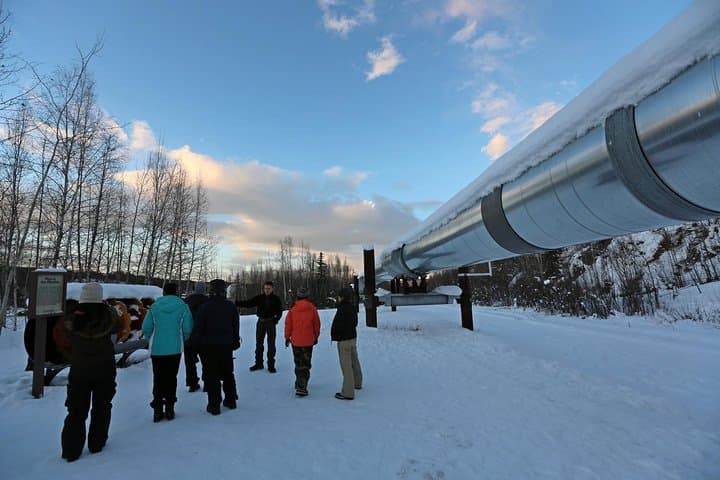
You step onto a highway that feels like the edge of the world: low white birch and black spruce flash past while the guide points toward a small metal sign that marks the Arctic Circle. The bus hums, hot drink in hand, and the landscape opens into tundra — flat, wind-shaped, and honest — with the Trans-Alaska Pipeline running like a raised ribbon through the distance.
You step onto a highway that feels like the edge of the world: low white birch and black spruce flash past while the guide points toward a small metal sign that marks the Arctic Circle. The bus hums, hot drink in hand, and the landscape opens into tundra — flat, wind-shaped, and honest — with the Trans-Alaska Pipeline running like a raised ribbon through the distance.
This route threads together modern engineering and ancient ground. The pipeline is a product of 1970s oil development; beneath your feet the permafrost and gravel pads tell a longer geological story of freeze and thaw. Locally, Athabaskan communities have lived on and traveled these lands for generations; cultural notes on place names and seasonal use are often woven into the guide’s narration.
The highlight is a short stop at the Arctic Circle where you can pose for a certificate photo, then walk to the edge of a wide river and feel how the silence changes north of 66°33′N. After dark, the mission is aurora watching: long, patient hours under a sky that can ignite in curtains of green and purple, though sightings depend on solar activity and clear skies.
Practical edge: this is a long, cold day—expect 14 hours including hotel pickup and drop-off, included sandwiches, and narration. Dress in insulated layers, bring a tripod and extra batteries for long exposures, and plan for limited facilities at stops. The Northern Lights are never guaranteed; the operator provides comfort and narrative, but not a spectacle on command. If you want the experience more than a promise, this one delivers the logistics to reach it.