THE ADVENTURE COLLECTIVE® · Independent discovery and booking for outdoor travel

A full-day, small-group winter excursion from Prague to Saxon and Bohemian Switzerland—walk the famed Bastei Bridge and stand beneath Pravčická brána, Europe’s largest sandstone arch. Practical route notes, terrain cues and winter-specific advice for the active traveler.
A full-day, small-group winter excursion from Prague to Saxon and Bohemian Switzerland—walk the famed Bastei Bridge and stand beneath Pravčická brána, Europe’s largest sandstone arch. Practical route notes, terrain cues and winter-specific advice for the active traveler.
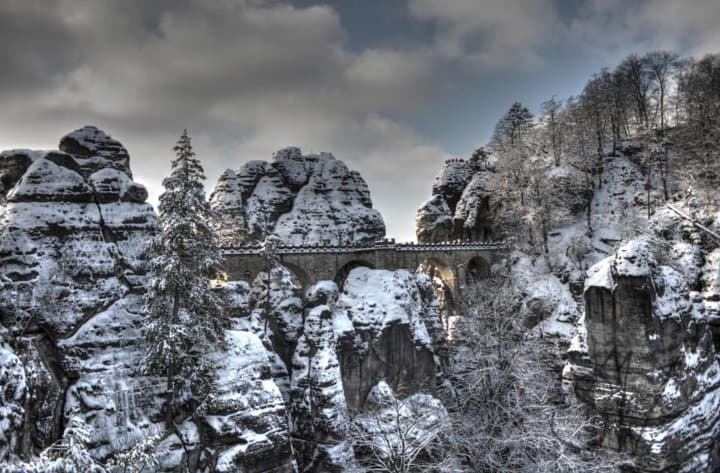
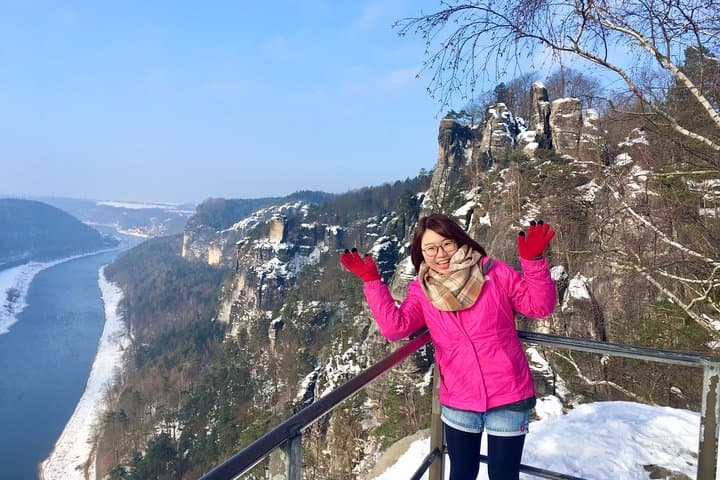
Morning light cuts across the Elbe as your minivan leaves Prague behind, windows frosting at the edges while the driver threads toward the border. By mid-morning you’re above a ribbon of river at Bastei — a sandstone spine of cliffs and arches where wind and ice have carved handholds and ledges that dare you to look down. The bridge feels like a deliberate stitch between rock and view, and the forest around it moves with its own winter pulse.
Verified experiences and guided adventures in the surrounding area.
Operated by Cayman Travel s.r.o. · Hřensko, Ústí nad Labem Region
Morning light cuts across the Elbe as your minivan leaves Prague behind, windows frosting at the edges while the driver threads toward the border. By mid-morning you’re above a ribbon of river at Bastei — a sandstone spine of cliffs and arches where wind and ice have carved handholds and ledges that dare you to look down. The bridge feels like a deliberate stitch between rock and view, and the forest around it moves with its own winter pulse.
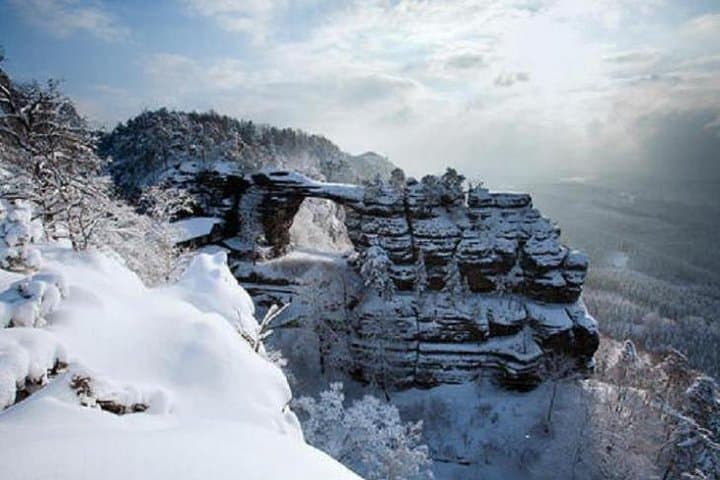
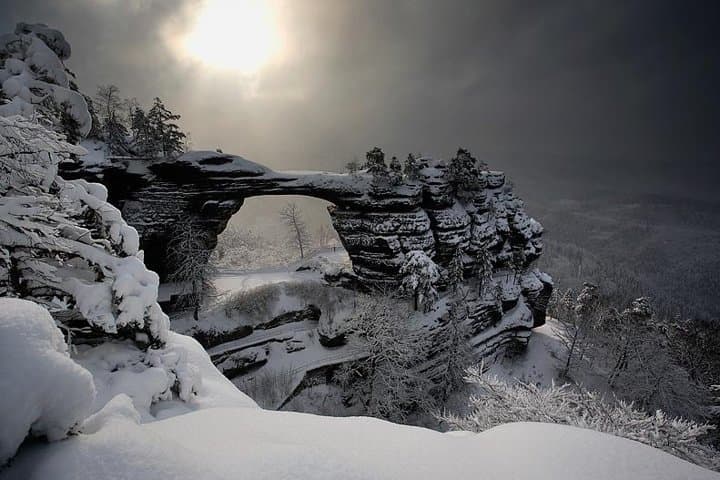
This route threads two connected landscapes: Saxon Switzerland on the German side, with its narrow ravines and stacked sandstone towers, and Českosaské Švýcarsko (Bohemian Switzerland) in the Czech Republic, home to Pravčická brána — Europe’s largest natural sandstone arch. Geologically these formations are part of a Cretaceous sandstone plateau sculpted over millennia by water, frost and gravity; culturally the area has long attracted painters, climbers and Sunday walkers from nearby towns like Děčín and Bad Schandau.
Expect brisk winter walking on packed dirt and hard-packed snow, occasional stair sections and viewpoints accessed by short, maintained trails. The tour includes lunch in Hřensko and guided walking time at both highlights — bring traction for icy patches and layers that manage sweat and wind. Photography windows are ample: sunrise and low winter light give depth to ledges and river bends.
Practical: start early, carry water, and pack a warm midlayer you can shed while climbing. If you have moderate fitness and good footwear, this full-day loop rewards with dramatic cross-border scenery and a clear sense of why these sandstone ramps have been visited for centuries.
moderate.
8–10 hours.
Moderate fitness — comfortable with several short uphill sections, stairs, and full-day walking.
The tour runs about 8–10 hours; pickup is early morning in Prague and you should be back late afternoon, but exact times vary with traffic.
The tour involves walking on uneven terrain and stairs and is best for those with moderate fitness; it’s not recommended for travelers with significant mobility limitations.
Yes — admission to the main sites noted in the itinerary is included as part of the tour package.
Guides are listed as English- or Spanish-speaking; confirm your preferred language during booking.
The region’s sandstone cliffs were shaped in the Cretaceous and have drawn artists and early Romantic travelers since the 18th century; many viewing platforms date to 19th-century tourism development.
Both German and Czech sides are protected parks with trail limits and visitor rules—stay on marked paths, pack out waste, and respect seasonal restrictions to protect fragile sandstone and vegetation.
Cayman Travel s.r.o. operates guided outdoor trips and adventures with an emphasis on safety, stewardship, and memorable experiences.
Morning light cuts across the Elbe as your minivan leaves Prague behind, windows frosting at the edges while the driver threads toward the border. By mid-morning you’re above a ribbon of river at Bastei — a sandstone spine of cliffs and arches where wind and ice have carved handholds and ledges that dare you to look down. The bridge feels like a deliberate stitch between rock and view, and the forest around it moves with its own winter pulse.
Morning light cuts across the Elbe as your minivan leaves Prague behind, windows frosting at the edges while the driver threads toward the border. By mid-morning you’re above a ribbon of river at Bastei — a sandstone spine of cliffs and arches where wind and ice have carved handholds and ledges that dare you to look down. The bridge feels like a deliberate stitch between rock and view, and the forest around it moves with its own winter pulse.
This route threads two connected landscapes: Saxon Switzerland on the German side, with its narrow ravines and stacked sandstone towers, and Českosaské Švýcarsko (Bohemian Switzerland) in the Czech Republic, home to Pravčická brána — Europe’s largest natural sandstone arch. Geologically these formations are part of a Cretaceous sandstone plateau sculpted over millennia by water, frost and gravity; culturally the area has long attracted painters, climbers and Sunday walkers from nearby towns like Děčín and Bad Schandau.
Expect brisk winter walking on packed dirt and hard-packed snow, occasional stair sections and viewpoints accessed by short, maintained trails. The tour includes lunch in Hřensko and guided walking time at both highlights — bring traction for icy patches and layers that manage sweat and wind. Photography windows are ample: sunrise and low winter light give depth to ledges and river bends.
Practical: start early, carry water, and pack a warm midlayer you can shed while climbing. If you have moderate fitness and good footwear, this full-day loop rewards with dramatic cross-border scenery and a clear sense of why these sandstone ramps have been visited for centuries.