THE ADVENTURE COLLECTIVE® · Independent discovery and booking for outdoor travel

Walk Cromer on your own terms: an offline audio tour that layers pier sunrises, lifeboat lore and crab-shop culture into a 45–75 minute coastal stroll. Perfect for history buffs and food-minded walkers.
Walk Cromer on your own terms: an offline audio tour that layers pier sunrises, lifeboat lore and crab-shop culture into a 45–75 minute coastal stroll. Perfect for history buffs and food-minded walkers.
Fog lifts off the North Sea as you step onto Cromer Pier; rails cool under your palm and the town opens like a map of small triumphs—lifeboat flags, crab stalls, the church spire cutting the sky. The audio guides you past the pier’s painted boards, along the Esplanade where beach huts cluster like bright boats, and into streets that still carry the hush of Victorian visitors and the grit left by real sea rescues.
Verified experiences and guided adventures in the surrounding area.
Operated by VoiceMap Audio Tours · Cromer, Norfolk
Fog lifts off the North Sea as you step onto Cromer Pier; rails cool under your palm and the town opens like a map of small triumphs—lifeboat flags, crab stalls, the church spire cutting the sky. The audio guides you past the pier’s painted boards, along the Esplanade where beach huts cluster like bright boats, and into streets that still carry the hush of Victorian visitors and the grit left by real sea rescues.
Cromer’s story is maritime: the decorated lifeboatman Henry Blogg, a booming crab industry, and Victorian fashion that turned a fishing village into a genteel seaside resort. Geology shows too—cliffs of glacial sand reveal fossils and, over centuries, have reshaped the shoreline. The town’s culture mixes working-seafaring roots with an arts scene and a fiercely local food identity built around Cromer crab and fish and chips.
Practically, expect a 45–75 minute walk that’s mostly flat promenade and compact streets; the route is fully self-guided with offline audio and maps. Start at Cromer Pier for the timed voice cues, or pick up the tour at the Visitor Centre. Midday brings the busiest foot traffic; mornings and evenings offer calmer light and better photos. Wear comfortable shoes, bring a charged phone and headphones, and mind tide and cliff-edge signs if you wander toward fossil spots. The app’s offline mode keeps the tour running without signal; it’s stroller- and pet-friendly in most parts, making it an accessible, informative way to discover the town’s layered history and coastal energy.
easy.
45–75 minutes.
Suitable for most fitness levels; mostly flat walking on paved surfaces
The tour begins at Cromer Pier; the app uses GPS to trigger audio segments as you reach mapped points—directions to the start are included.
No—the product provides offline access to audio, maps, and geodata, but download and test before you leave Wi‑Fi.
Much of the Esplanade and town centre is stroller-friendly and suitable for those with limited mobility, though piers and some alleys may have steps—plan accordingly.
You can pause the audio and linger; the self-guided format is flexible so you can extend stops, visit museums, or grab food between segments.
Cromer rose to prominence in the Victorian era as a fashionable seaside resort and is also known for lifeboat hero Henry Blogg and a long tradition of crab fishing.
Coastal erosion and protected bird habitats shape access in spots—follow signage, avoid removing fossils, and stick to marked paths to reduce erosion and disturbance.
VoiceMap Audio Tours operates guided outdoor trips and adventures with an emphasis on safety, stewardship, and memorable experiences.
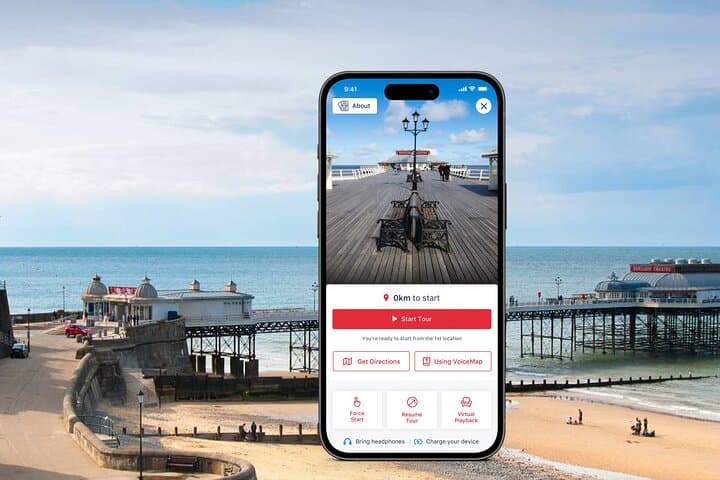
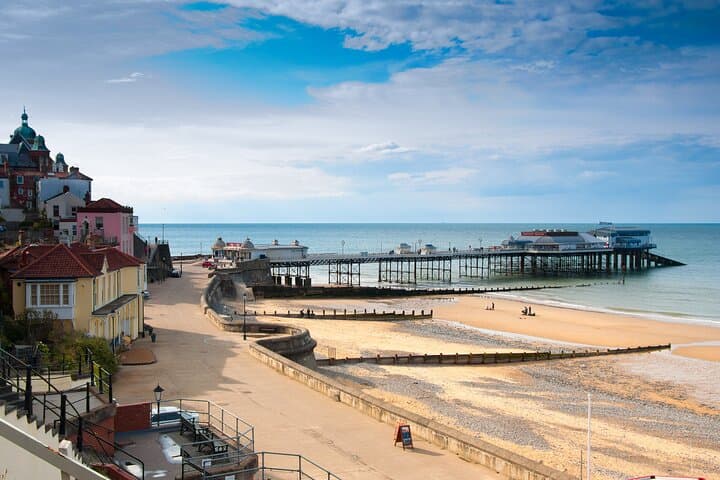
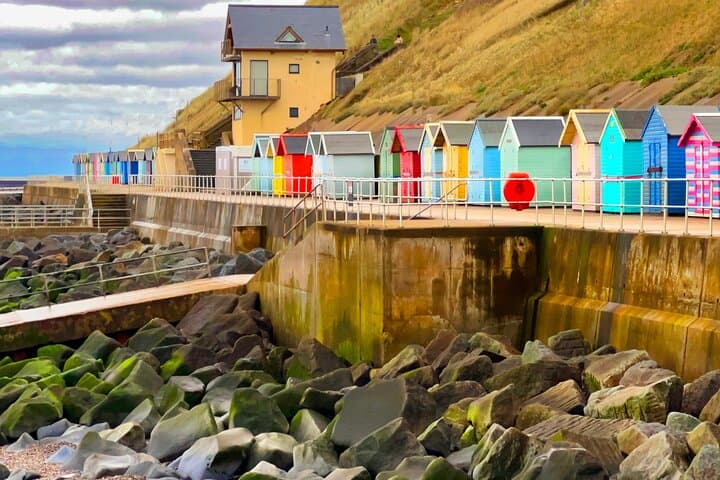
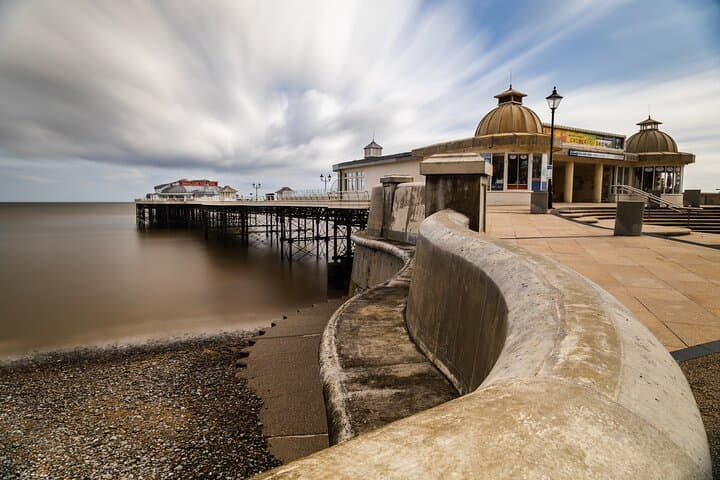
Fog lifts off the North Sea as you step onto Cromer Pier; rails cool under your palm and the town opens like a map of small triumphs—lifeboat flags, crab stalls, the church spire cutting the sky. The audio guides you past the pier’s painted boards, along the Esplanade where beach huts cluster like bright boats, and into streets that still carry the hush of Victorian visitors and the grit left by real sea rescues.
Fog lifts off the North Sea as you step onto Cromer Pier; rails cool under your palm and the town opens like a map of small triumphs—lifeboat flags, crab stalls, the church spire cutting the sky. The audio guides you past the pier’s painted boards, along the Esplanade where beach huts cluster like bright boats, and into streets that still carry the hush of Victorian visitors and the grit left by real sea rescues.
Cromer’s story is maritime: the decorated lifeboatman Henry Blogg, a booming crab industry, and Victorian fashion that turned a fishing village into a genteel seaside resort. Geology shows too—cliffs of glacial sand reveal fossils and, over centuries, have reshaped the shoreline. The town’s culture mixes working-seafaring roots with an arts scene and a fiercely local food identity built around Cromer crab and fish and chips.
Practically, expect a 45–75 minute walk that’s mostly flat promenade and compact streets; the route is fully self-guided with offline audio and maps. Start at Cromer Pier for the timed voice cues, or pick up the tour at the Visitor Centre. Midday brings the busiest foot traffic; mornings and evenings offer calmer light and better photos. Wear comfortable shoes, bring a charged phone and headphones, and mind tide and cliff-edge signs if you wander toward fossil spots. The app’s offline mode keeps the tour running without signal; it’s stroller- and pet-friendly in most parts, making it an accessible, informative way to discover the town’s layered history and coastal energy.