THE ADVENTURE COLLECTIVE® · Independent discovery and booking for outdoor travel

Leave Chania for a private day exploring Arkadi Monastery, the archaeological site of Eleftherna, and the pottery village of Margarites. This 6‑hour route blends tangible history, geology, and traditional Cretan cuisine with accessible walking at each stop.
Leave Chania for a private day exploring Arkadi Monastery, the archaeological site of Eleftherna, and the pottery village of Margarites. This 6‑hour route blends tangible history, geology, and traditional Cretan cuisine with accessible walking at each stop.
You step out of Chania’s bustle and the road pulls you into a different Crete—olive groves and low ridges rolling toward a monastery clinging to history. Arkadi’s sandstone walls rise with a hush; wind threads through bell towers and the place seems to keep the voices of resistance close. The drive continues past terraced fields to Eleftherna, where sun-bleached stone and open archaeological trenches let you trace a city-state’s arc from Dark Ages settlements to Byzantine lanes.
Verified experiences and guided adventures in the surrounding area.
Operated by GS TOURS CHANIA LTD · Chania, Crete
You step out of Chania’s bustle and the road pulls you into a different Crete—olive groves and low ridges rolling toward a monastery clinging to history. Arkadi’s sandstone walls rise with a hush; wind threads through bell towers and the place seems to keep the voices of resistance close. The drive continues past terraced fields to Eleftherna, where sun-bleached stone and open archaeological trenches let you trace a city-state’s arc from Dark Ages settlements to Byzantine lanes.
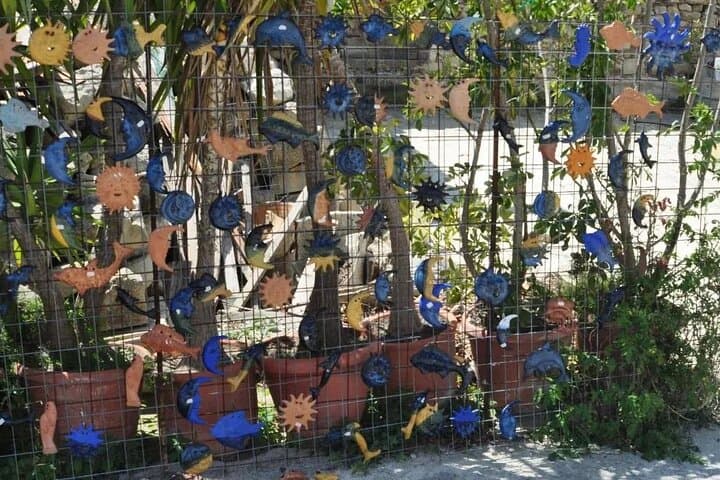
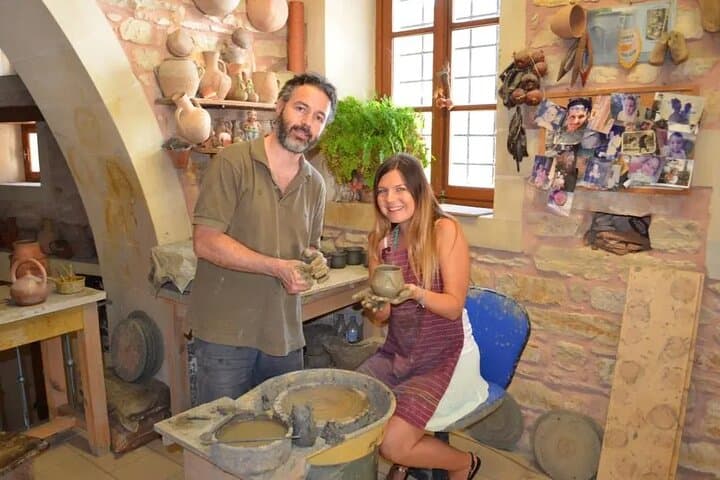
Geology here is limestone and schist, carved by millennia of winter rains into caves and fertile hollows that supported ancient farmers. Margarites, a nearby pottery village, still shapes clay the way locals have for generations—kiln smoke and spinning wheels are part craft, part cultural memory. Rethymno’s coastal plain and the northern spur of Mount Ida give the route variety: sea-breezed towns, inland ridgelines, and quiet chapels.
Practically, expect a full-day private tour (about 6 hours) with short walks at each stop—packed paths, some uneven archaeological surfaces, and stone-paved village lanes. Bring sun protection and sturdy shoes; cameras catch the low-angle afternoon light on carved lintels. Lunch sits at a restaurant offering traditional Cretan dishes and a small folklore collection—tell your guide dietary needs in advance. Mobility is generally easy but the monastery and ruins include steps and rough ground. The itinerary moves at a steady, accessible pace: history, craft, and flavor, with a driver-guide smoothing transitions so you can focus on the sights and stories.
easy.
6 hours.
Suitable for travelers in average physical condition who can walk short uneven sections and climb steps.
This private tour departs from Chania; pickup point is arranged at booking and can be your hotel or a central meeting spot.
Yes—infant seats and stroller access are available, but some stops have steps and uneven surfaces.
Arkadi Monastery admission is included; archaeological site visits are part of the itinerary though specific excavation areas may be viewed from walkways.
Yes—vegetarian, vegan, and gluten‑free options can be provided if indicated when booking.
Arkadi Monastery is a 16th‑century Orthodox complex central to Cretan resistance during 19th‑century conflicts; Eleftherna traces habitation from the Dark Ages through Byzantine periods.
Local communities conserve traditional pottery techniques and olive groves; visitors are encouraged to minimize waste and respect excavation boundaries to protect fragile archaeological contexts.
GS TOURS CHANIA LTD operates guided outdoor trips and adventures with an emphasis on safety, stewardship, and memorable experiences.

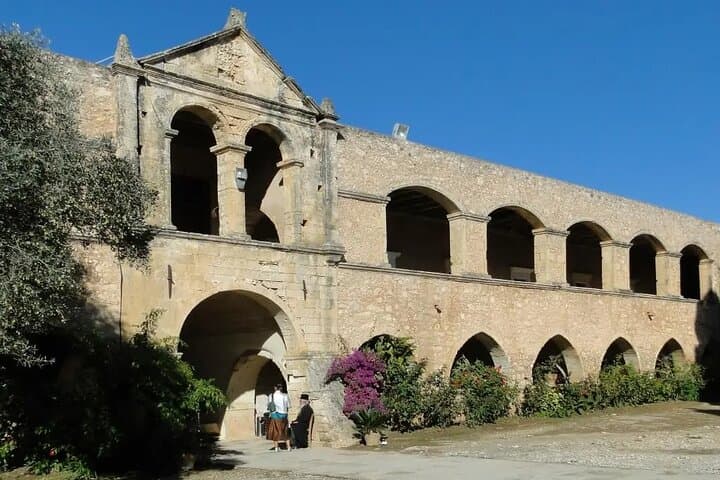
You step out of Chania’s bustle and the road pulls you into a different Crete—olive groves and low ridges rolling toward a monastery clinging to history. Arkadi’s sandstone walls rise with a hush; wind threads through bell towers and the place seems to keep the voices of resistance close. The drive continues past terraced fields to Eleftherna, where sun-bleached stone and open archaeological trenches let you trace a city-state’s arc from Dark Ages settlements to Byzantine lanes.
You step out of Chania’s bustle and the road pulls you into a different Crete—olive groves and low ridges rolling toward a monastery clinging to history. Arkadi’s sandstone walls rise with a hush; wind threads through bell towers and the place seems to keep the voices of resistance close. The drive continues past terraced fields to Eleftherna, where sun-bleached stone and open archaeological trenches let you trace a city-state’s arc from Dark Ages settlements to Byzantine lanes.
Geology here is limestone and schist, carved by millennia of winter rains into caves and fertile hollows that supported ancient farmers. Margarites, a nearby pottery village, still shapes clay the way locals have for generations—kiln smoke and spinning wheels are part craft, part cultural memory. Rethymno’s coastal plain and the northern spur of Mount Ida give the route variety: sea-breezed towns, inland ridgelines, and quiet chapels.
Practically, expect a full-day private tour (about 6 hours) with short walks at each stop—packed paths, some uneven archaeological surfaces, and stone-paved village lanes. Bring sun protection and sturdy shoes; cameras catch the low-angle afternoon light on carved lintels. Lunch sits at a restaurant offering traditional Cretan dishes and a small folklore collection—tell your guide dietary needs in advance. Mobility is generally easy but the monastery and ruins include steps and rough ground. The itinerary moves at a steady, accessible pace: history, craft, and flavor, with a driver-guide smoothing transitions so you can focus on the sights and stories.