THE ADVENTURE COLLECTIVE® · Independent discovery and booking for outdoor travel

Spend a day tracing violin-making lineage in Cremona, then step back to the Roman era at Palazzo Pignano. This private tour pairs guided museum time with archaeological highlights and a luxury transfer.
Spend a day tracing violin-making lineage in Cremona, then step back to the Roman era at Palazzo Pignano. This private tour pairs guided museum time with archaeological highlights and a luxury transfer.
A morning in Cremona begins under the Torrazzo's tall face, the brick tower watching over a square where violins seem to resonate with the footsteps of visitors. You move from the municipal palace into the Stradivari Museum, where rows of bowed instruments carry the weight of craft and centuries; the Po River plain unfurls beyond town, its slow current shaping the lowlands that framed Roman roads and medieval workshops.
Verified experiences and guided adventures in the surrounding area.
Operated by Morandi Tour · Cremona, Lombardy
A morning in Cremona begins under the Torrazzo's tall face, the brick tower watching over a square where violins seem to resonate with the footsteps of visitors. You move from the municipal palace into the Stradivari Museum, where rows of bowed instruments carry the weight of craft and centuries; the Po River plain unfurls beyond town, its slow current shaping the lowlands that framed Roman roads and medieval workshops.
Cremona's history is audible: the luthier tradition that earned UNESCO recognition, the municipal archives, and the Torrazzo clock that marks civic time. Geologically the area is flat alluvium—easy walking but prone to afternoon humidity—while Palazzo Pignano, a short drive northeast, reveals Roman masonry and an excavated marble head of Athena that hints at religious transitions from pagan to Christian practices.
Culturally you'll find torrone and simple trattorie serving local polenta and river fish; artisans continue to repair and play instruments in small workshops. The private format means hotel pickup in a luxury van, calm time to explore with a guide, and a transfer back without logistics stress.
Practical notes: expect several hours on cobblestone and low-grade urban ramps—sturdy walking shoes and a light rain layer are advisable. Bring ID for museum access, euros for lunch and sweets, and charge your phone for photos. Peak visits happen mid-morning; arriving early in the square gives clearer light and quieter museum rooms. This is an accessible, culturally rich day that blends precise craft with visible layers of history and archaeology.
easy.
6–8 hours.
Light walking on flat to gently sloped urban terrain; suitable for most fitness levels
Typical drive time from central Milan to Cremona is about 1–1.5 hours each way depending on traffic; the tour includes hotel pickup and return in a private vehicle.
This private tour description notes guided visits and transfers; confirm whether specific museum admissions are included when booking as policies vary.
Yes—Cremona's center and Palazzo Pignano are stroller-accessible, though cobbles and uneven paths may require a sturdy stroller and occasional lifting.
Yes—the itinerary includes free time for a typical lunch and sampling torrone; guides can recommend or reserve local trattorie on request.
Cremona's luthier schools, most famously Antonio Stradivari in the 17th–18th centuries, established a regional craft lineage; nearby Palazzo Pignano preserves Roman-period remains revealing early settlement on the Po plain.
Local conservation focuses on preserving historical instruments and masonry; visitors should stick to marked paths at archaeological sites and support licensed guides to reduce wear on sensitive areas.
Morandi Tour operates guided outdoor trips and adventures with an emphasis on safety, stewardship, and memorable experiences.
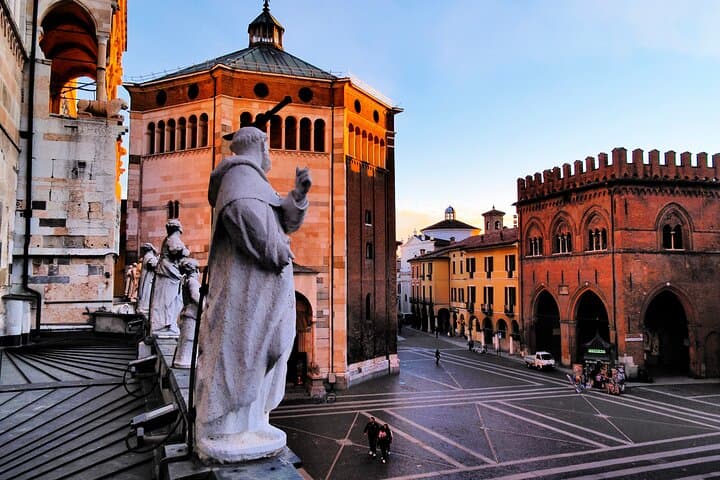
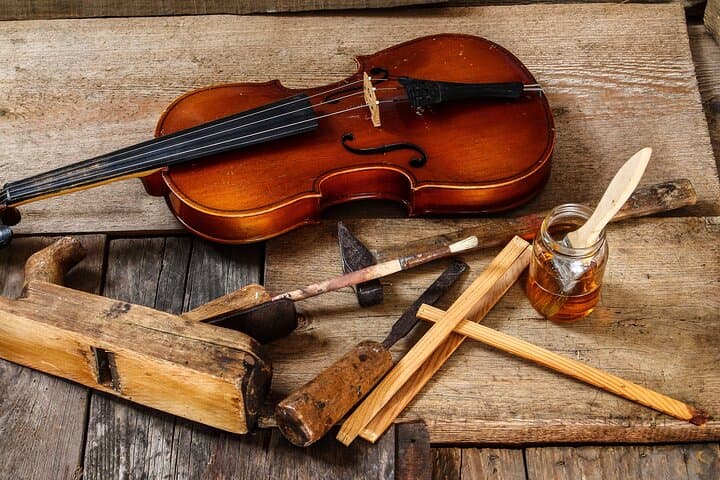
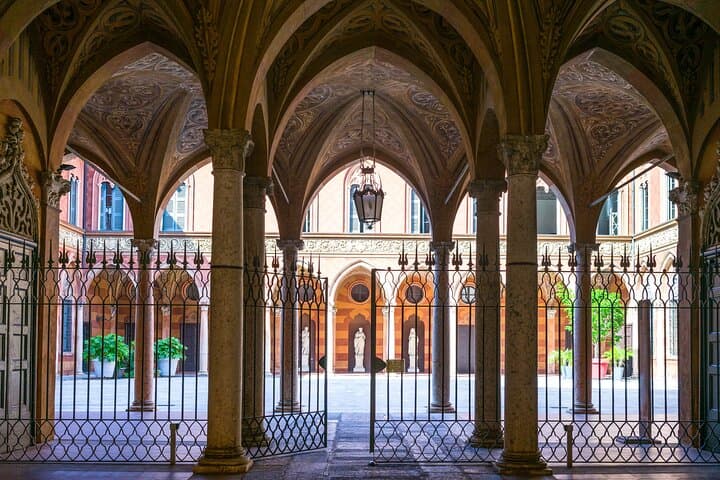
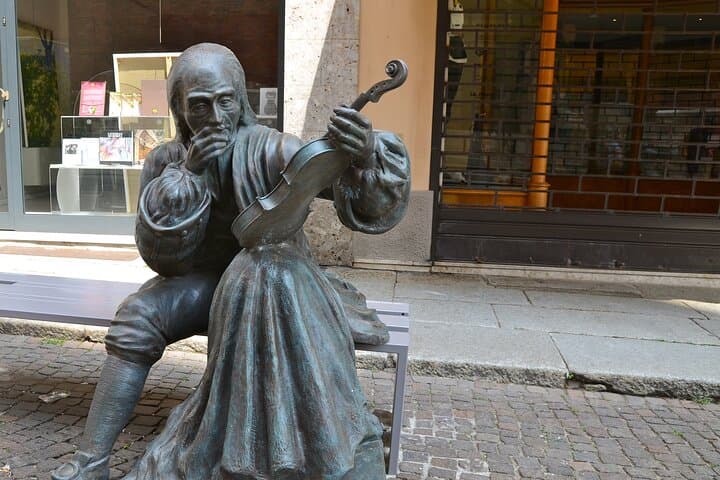
A morning in Cremona begins under the Torrazzo's tall face, the brick tower watching over a square where violins seem to resonate with the footsteps of visitors. You move from the municipal palace into the Stradivari Museum, where rows of bowed instruments carry the weight of craft and centuries; the Po River plain unfurls beyond town, its slow current shaping the lowlands that framed Roman roads and medieval workshops.
A morning in Cremona begins under the Torrazzo's tall face, the brick tower watching over a square where violins seem to resonate with the footsteps of visitors. You move from the municipal palace into the Stradivari Museum, where rows of bowed instruments carry the weight of craft and centuries; the Po River plain unfurls beyond town, its slow current shaping the lowlands that framed Roman roads and medieval workshops.
Cremona's history is audible: the luthier tradition that earned UNESCO recognition, the municipal archives, and the Torrazzo clock that marks civic time. Geologically the area is flat alluvium—easy walking but prone to afternoon humidity—while Palazzo Pignano, a short drive northeast, reveals Roman masonry and an excavated marble head of Athena that hints at religious transitions from pagan to Christian practices.
Culturally you'll find torrone and simple trattorie serving local polenta and river fish; artisans continue to repair and play instruments in small workshops. The private format means hotel pickup in a luxury van, calm time to explore with a guide, and a transfer back without logistics stress.
Practical notes: expect several hours on cobblestone and low-grade urban ramps—sturdy walking shoes and a light rain layer are advisable. Bring ID for museum access, euros for lunch and sweets, and charge your phone for photos. Peak visits happen mid-morning; arriving early in the square gives clearer light and quieter museum rooms. This is an accessible, culturally rich day that blends precise craft with visible layers of history and archaeology.