THE ADVENTURE COLLECTIVE® · Independent discovery and booking for outdoor travel

Make a Venetian bead with a local glass artist, then stroll Murano’s quieter lanes and historic churches. This two-hour blend of hands-on lampwork and cultural walk highlights centuries of glassmaking tradition in the Venice lagoon.
Make a Venetian bead with a local glass artist, then stroll Murano’s quieter lanes and historic churches. This two-hour blend of hands-on lampwork and cultural walk highlights centuries of glassmaking tradition in the Venice lagoon.
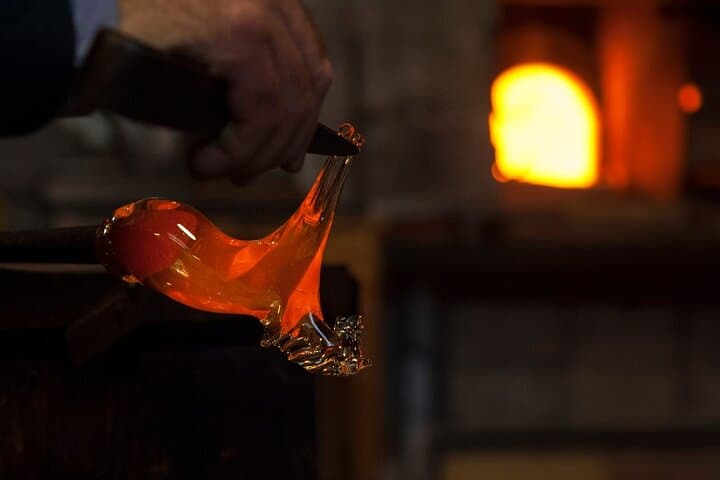
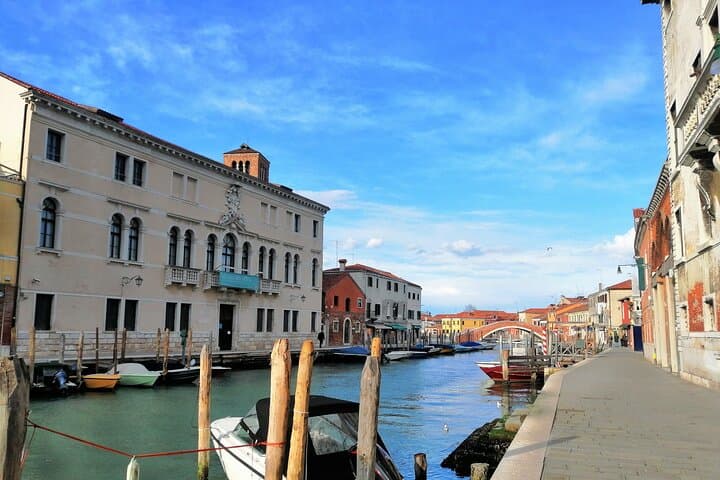
You step off the vaporetto at Murano Faro and the air changes: a faint mineral tang, the distant hiss of a furnace, and glassmakers moving between workshops with purposeful, practiced hands. The island’s narrow lanes open onto canals where small bridges frame windows full of colored goblets and chandeliers — a working place as much as a gallery.
Verified experiences and guided adventures in the surrounding area.
Operated by deTourist Venice Valerio Coppo · Murano, Veneto
You step off the vaporetto at Murano Faro and the air changes: a faint mineral tang, the distant hiss of a furnace, and glassmakers moving between workshops with purposeful, practiced hands. The island’s narrow lanes open onto canals where small bridges frame windows full of colored goblets and chandeliers — a working place as much as a gallery.
Murano’s modern identity grew from a medieval decree that concentrated Venice’s glass industry on the island; one local factory traces operations back to the late 13th century. The geology of the lagoon—sheltered shallow waters and nearby sand deposits—helped support trade routes that brought raw materials and ideas. Cultural threads show in 12th-century Byzantine mosaics inside Murano’s churches and in a 17th-century lampwork technique that survives in studio benches today.
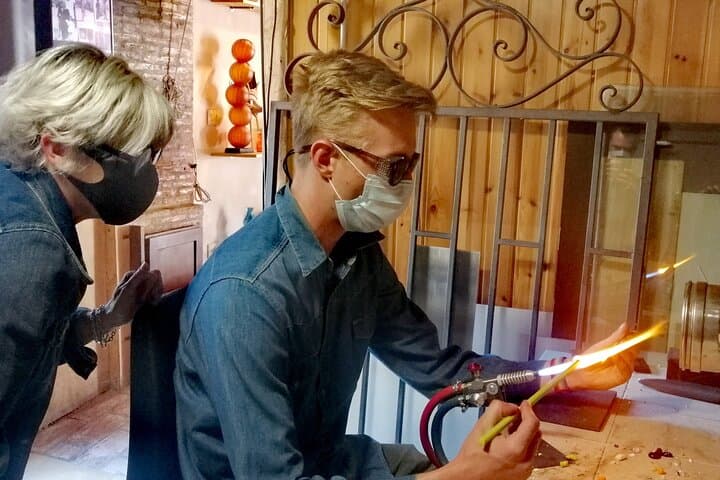
On this two-hour tour you’ll balance observation with practice: a short walking route through lesser-known courtyards and church facades, then a hands-on lampwork session where a local artist guides you to make a Venetian bead. The workshop emphasizes safety and tradition; furnaces and torches are managed under supervision.
Practicalities: meet at Murano Faro waterbus stop; groups are small, up to ten. Wear closed-toe shoes for the workshop and bring a light layer — workshops can be warm while islandside strolls stay breezy. Carry a small amount of cash for souvenirs and expect intermittent crowds on peak summer days. Follow the instructor’s safety briefing, and plan for public-transport timing back to Venice.
easy.
2 hours.
Suitable for all fitness levels; requires standing for short periods during the workshop and walking on cobbled paths.
Meet near the Murano Faro lighthouse waterbus stop — the guide will be visible there about 10 minutes before departure.
Yes; the workshop is led by a local artist and designed for first-timers with guided steps and safety oversight.
The walking portions use some cobbled and narrow lanes; strollers can be used but mobility assistance requests should be noted at booking.
Most church exteriors are visible from public areas; entry to specific museums or paid showrooms may require separate tickets or cover charges.
Murano became the center of Venetian glassmaking after the late 13th century; local furnaces and guild traditions shaped Europe’s decorative-glass trade for centuries.
The Venice lagoon faces pressures from tourism and rising water; support local artisans who use sustainable sourcing and avoid feeding wildlife or littering canals.
deTourist Venice Valerio Coppo operates guided outdoor trips and adventures with an emphasis on safety, stewardship, and memorable experiences.

You step off the vaporetto at Murano Faro and the air changes: a faint mineral tang, the distant hiss of a furnace, and glassmakers moving between workshops with purposeful, practiced hands. The island’s narrow lanes open onto canals where small bridges frame windows full of colored goblets and chandeliers — a working place as much as a gallery.
You step off the vaporetto at Murano Faro and the air changes: a faint mineral tang, the distant hiss of a furnace, and glassmakers moving between workshops with purposeful, practiced hands. The island’s narrow lanes open onto canals where small bridges frame windows full of colored goblets and chandeliers — a working place as much as a gallery.
Murano’s modern identity grew from a medieval decree that concentrated Venice’s glass industry on the island; one local factory traces operations back to the late 13th century. The geology of the lagoon—sheltered shallow waters and nearby sand deposits—helped support trade routes that brought raw materials and ideas. Cultural threads show in 12th-century Byzantine mosaics inside Murano’s churches and in a 17th-century lampwork technique that survives in studio benches today.
On this two-hour tour you’ll balance observation with practice: a short walking route through lesser-known courtyards and church facades, then a hands-on lampwork session where a local artist guides you to make a Venetian bead. The workshop emphasizes safety and tradition; furnaces and torches are managed under supervision.
Practicalities: meet at Murano Faro waterbus stop; groups are small, up to ten. Wear closed-toe shoes for the workshop and bring a light layer — workshops can be warm while islandside strolls stay breezy. Carry a small amount of cash for souvenirs and expect intermittent crowds on peak summer days. Follow the instructor’s safety briefing, and plan for public-transport timing back to Venice.