THE ADVENTURE COLLECTIVE® · Independent discovery and booking for outdoor travel

Spend an afternoon crafting a Turkish mosaic lamp in Chantilly — a focused, hands-on workshop that blends Ottoman glasswork techniques with local studio hospitality. Walk away with your own illuminated piece, Turkish tea, and practical tips for repair and transport.
Spend an afternoon crafting a Turkish mosaic lamp in Chantilly — a focused, hands-on workshop that blends Ottoman glasswork techniques with local studio hospitality. Walk away with your own illuminated piece, Turkish tea, and practical tips for repair and transport.
Step inside a low-lit studio in Chantilly and the first thing you notice is color: shards of glass wink under task lamps, and the scent of steeping tea moves through the room like a cordial invitation.
Verified experiences and guided adventures in the surrounding area.
Step inside a low-lit studio in Chantilly and the first thing you notice is color: shards of glass wink under task lamps, and the scent of steeping tea moves through the room like a cordial invitation.
This hands-on Turkish mosaic lamp workshop pairs methodical craft with relaxed social time — instructors demonstrate cutting, laying, and grouting small tesserae while you design a pattern that catches light differently with every tilt. The technique traces back to Ottoman workshop traditions where lamps were both functional and decorative; here that lineage meets a suburban Virginia context, minutes from Dulles Airport and historic Sully Plantation.
Geologically, northern Virginia's gentle ridges and stream valleys have long provided the clays and minerals used in local ceramics; culturally, the region is a crossroads where immigrant craft traditions animate community studios and markets.
Expect 2–2.5 hours of guided work, Turkish tea, and small sweets. All materials are provided, but patience and a steady hand are your best tools: mosaic assembly rewards slow, deliberate movements. Plan to sit and focus; the lamp requires drying time and careful handling when you carry it home. Photographs are encouraged, and instructors usually offer simple tips for future repairs.
Practical: arrive 10–15 minutes early, wear comfortable clothing that can tolerate a little dust, and bring a small padded bag to protect your finished lamp. If you're traveling with kids, this class welcomes ages 8+, but minors should be supervised during cutting and grouting. Leave with a handmade object and a clearer sense of the craft's history and care.
easy.
2–2.5 hours.
No special fitness required; suitable for most adults and children aged 8+ with supervision
No — instructors guide every step, and the workshop is suitable for beginners and experienced makers alike.
Yes, but allow care: the lamp will be structurally complete; grout may still need 24 hours to fully cure, so transport carefully.
All materials, basic tools,tea and sweets are included; instructors provide shared cutting and grouting equipment.
Children aged 8 and up may participate, but parents should supervise during cutting and grouting portions.
Turkish mosaic lampmaking descends from Ottoman and Levantine glass and tile traditions; Chantilly itself grew as a crossroads in 18th‑century Virginia and now hosts a mix of cultural studios and historic sites.
Workshops often encourage low‑waste practices: save glass offcuts for future projects, use non‑toxic grout when possible, and recycle packaging to minimize studio waste.
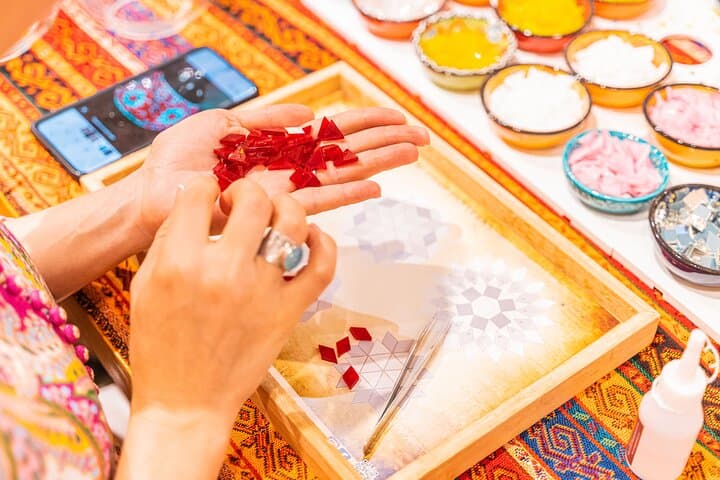
Step inside a low-lit studio in Chantilly and the first thing you notice is color: shards of glass wink under task lamps, and the scent of steeping tea moves through the room like a cordial invitation.
Step inside a low-lit studio in Chantilly and the first thing you notice is color: shards of glass wink under task lamps, and the scent of steeping tea moves through the room like a cordial invitation.
This hands-on Turkish mosaic lamp workshop pairs methodical craft with relaxed social time — instructors demonstrate cutting, laying, and grouting small tesserae while you design a pattern that catches light differently with every tilt. The technique traces back to Ottoman workshop traditions where lamps were both functional and decorative; here that lineage meets a suburban Virginia context, minutes from Dulles Airport and historic Sully Plantation.
Geologically, northern Virginia's gentle ridges and stream valleys have long provided the clays and minerals used in local ceramics; culturally, the region is a crossroads where immigrant craft traditions animate community studios and markets.
Expect 2–2.5 hours of guided work, Turkish tea, and small sweets. All materials are provided, but patience and a steady hand are your best tools: mosaic assembly rewards slow, deliberate movements. Plan to sit and focus; the lamp requires drying time and careful handling when you carry it home. Photographs are encouraged, and instructors usually offer simple tips for future repairs.
Practical: arrive 10–15 minutes early, wear comfortable clothing that can tolerate a little dust, and bring a small padded bag to protect your finished lamp. If you're traveling with kids, this class welcomes ages 8+, but minors should be supervised during cutting and grouting. Leave with a handmade object and a clearer sense of the craft's history and care.