THE ADVENTURE COLLECTIVE® · Independent discovery and booking for outdoor travel

Two hours of rhythm in Cartagena: a welcoming salsa hour followed by high-energy champeta that reveals the city’s Afro-Caribbean roots. Perfect for beginners and curious travelers who want a cultural crash course on the dance floor.
Two hours of rhythm in Cartagena: a welcoming salsa hour followed by high-energy champeta that reveals the city’s Afro-Caribbean roots. Perfect for beginners and curious travelers who want a cultural crash course on the dance floor.
You step into a warm studio minutes from Cartagena’s old city; the Caribbean breeze pushes against the doors and the beat slips into your bones. Instructors call out counts as a cocktail cools your palm, and the room quickly becomes a place where rhythm replaces hesitation.
Verified experiences and guided adventures in the surrounding area.
Operated by Cultura Caribe · Cartagena, Bolívar
You step into a warm studio minutes from Cartagena’s old city; the Caribbean breeze pushes against the doors and the beat slips into your bones. Instructors call out counts as a cocktail cools your palm, and the room quickly becomes a place where rhythm replaces hesitation.
Cartagena’s music springs from port histories—African rhythms arriving with the slave trade, Caribbean grooves, and the urban improvisation that produced champeta in the barrios. Salsa here is seasoned by coastal timing and call-and-response phrasing; champeta is louder, body-forward, and unapologetically joyful.
The workshop runs two hours: a one-hour salsa session that teaches how to hear clave and build basic partner patterns, then an hour of champeta that focuses on hip and torso movement, footwork, and energetic phrasing. Expect reinforced wooden floors, warm temperatures, and a mixed group of travelers and locals. Accessibility is noted; spaces are stroller- and wheelchair-friendly, and hydration is provided.
Practically, wear breathable layers and shoes with smooth soles for pivots; smart-casual dress is requested. Beginners will find the pace encouraging, while dancers with experience can refine timing and styling. Bring ID if you plan to enjoy the included cocktail and a small towel for sweat.
Beyond technique, the class is an entry point into Cartagena’s living culture—ask about local playlists, nearby live bands, and community dance nights to continue practicing. Leave with steps, a refreshed sense of timing, and an ear for the city’s rhythmic heartbeat.
easy.
2 hours.
Light-to-moderate fitness recommended—comfortable for most travelers but expect standing, basic cardio, and repetitive movement.
No—classes are designed for mixed levels with step breakdowns for beginners and variations for experienced dancers.
Yes—organizers note wheelchair accessibility for venues and some transportation options.
Bottled water is provided and one cocktail is included with the session.
Smart-casual comfortable clothes and shoes with smooth soles; avoid heavy boots or slippery flip-flops.
Champeta emerged in Cartagena’s coastal communities as an Afro-Caribbean urban dance drawing from rhythms brought by enslaved Africans and later adapted to local electric guitar and percussion styles.
Respect venue capacity and local neighborhoods by using public transport or walking; minimizing single-use plastics helps protect Cartagena’s coastal environment.
Cultura Caribe operates guided outdoor trips and adventures with an emphasis on safety, stewardship, and memorable experiences.
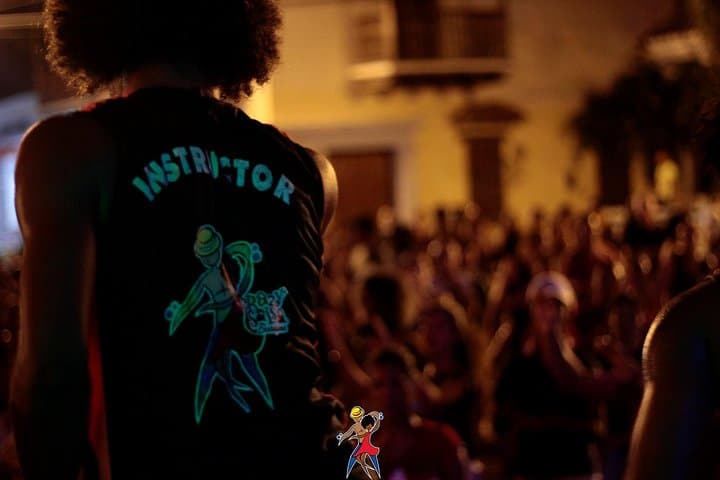
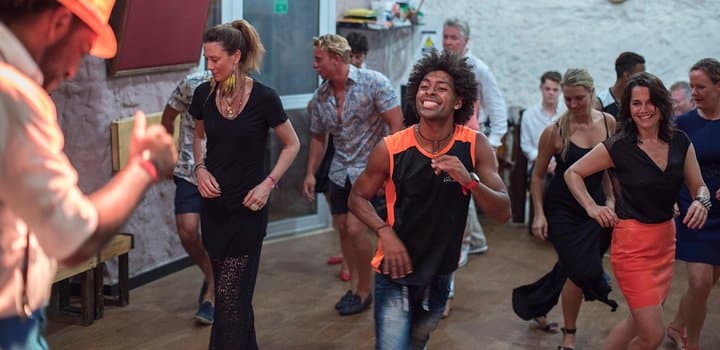
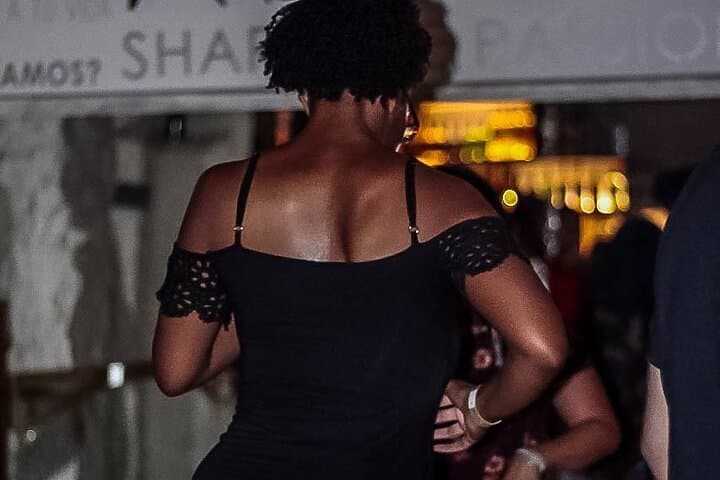
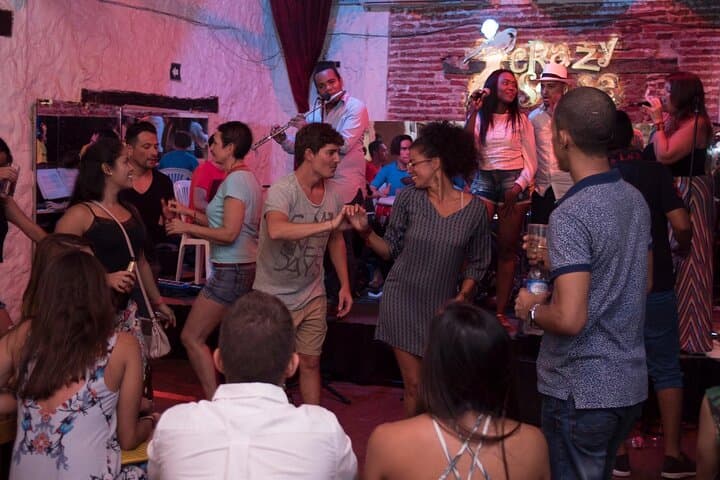
You step into a warm studio minutes from Cartagena’s old city; the Caribbean breeze pushes against the doors and the beat slips into your bones. Instructors call out counts as a cocktail cools your palm, and the room quickly becomes a place where rhythm replaces hesitation.
You step into a warm studio minutes from Cartagena’s old city; the Caribbean breeze pushes against the doors and the beat slips into your bones. Instructors call out counts as a cocktail cools your palm, and the room quickly becomes a place where rhythm replaces hesitation.
Cartagena’s music springs from port histories—African rhythms arriving with the slave trade, Caribbean grooves, and the urban improvisation that produced champeta in the barrios. Salsa here is seasoned by coastal timing and call-and-response phrasing; champeta is louder, body-forward, and unapologetically joyful.
The workshop runs two hours: a one-hour salsa session that teaches how to hear clave and build basic partner patterns, then an hour of champeta that focuses on hip and torso movement, footwork, and energetic phrasing. Expect reinforced wooden floors, warm temperatures, and a mixed group of travelers and locals. Accessibility is noted; spaces are stroller- and wheelchair-friendly, and hydration is provided.
Practically, wear breathable layers and shoes with smooth soles for pivots; smart-casual dress is requested. Beginners will find the pace encouraging, while dancers with experience can refine timing and styling. Bring ID if you plan to enjoy the included cocktail and a small towel for sweat.
Beyond technique, the class is an entry point into Cartagena’s living culture—ask about local playlists, nearby live bands, and community dance nights to continue practicing. Leave with steps, a refreshed sense of timing, and an ear for the city’s rhythmic heartbeat.