THE ADVENTURE COLLECTIVE® · Independent discovery and booking for outdoor travel

Swap daytime reef crowds for a quieter, nocturnal world where octopus and squid hunt under handheld lamps. This guided night snorkel in Cozumel focuses on observation, safety, and minimal disturbance in shallow, reef-fringed waters.
Swap daytime reef crowds for a quieter, nocturnal world where octopus and squid hunt under handheld lamps. This guided night snorkel in Cozumel focuses on observation, safety, and minimal disturbance in shallow, reef-fringed waters.
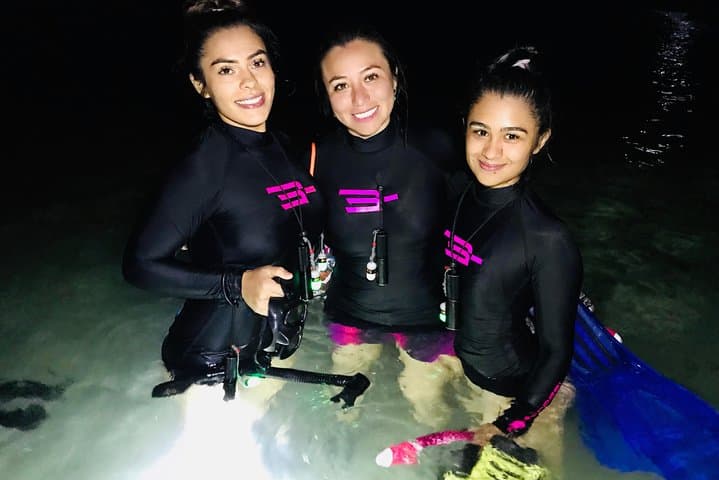
The shore cools and the reef becomes a different world—shadowed coral terraces, a hush of small waves, and the first points of light bobbing as guides scan the shallows. You step off sand into waist-deep water and the team spreads out over an area no larger than two basketball courts; the sea is never deeper than about 2.5 meters here, so the night feels close and immediate.
Verified experiences and guided adventures in the surrounding area.
Operated by Dany Mendoza · San Miguel de Cozumel, Quintana Roo
The shore cools and the reef becomes a different world—shadowed coral terraces, a hush of small waves, and the first points of light bobbing as guides scan the shallows. You step off sand into waist-deep water and the team spreads out over an area no larger than two basketball courts; the sea is never deeper than about 2.5 meters here, so the night feels close and immediate.
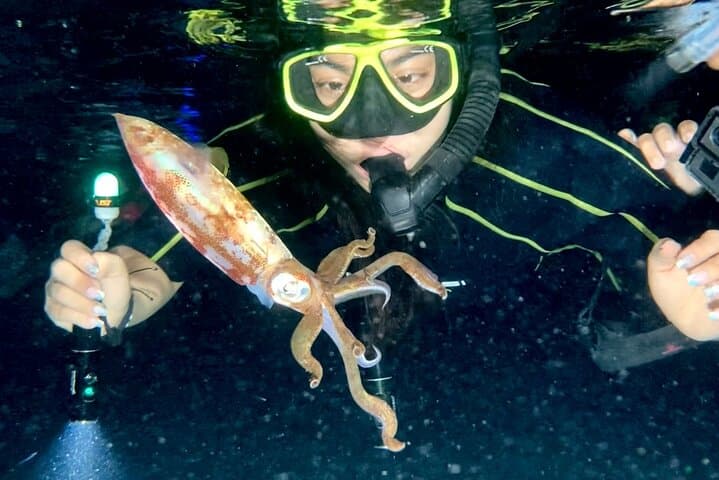
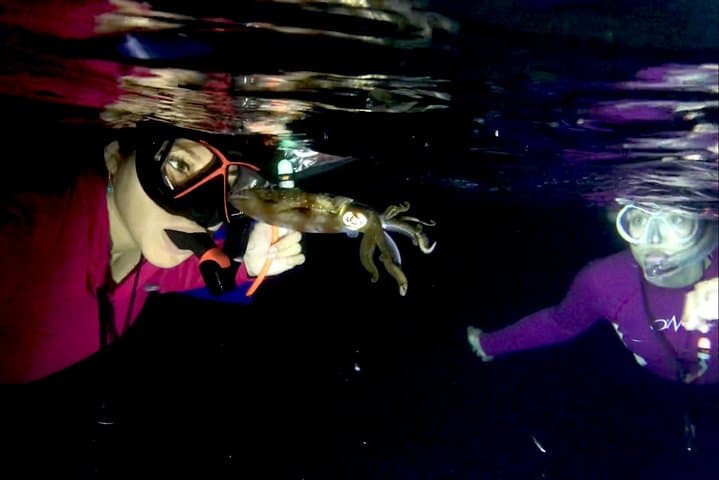
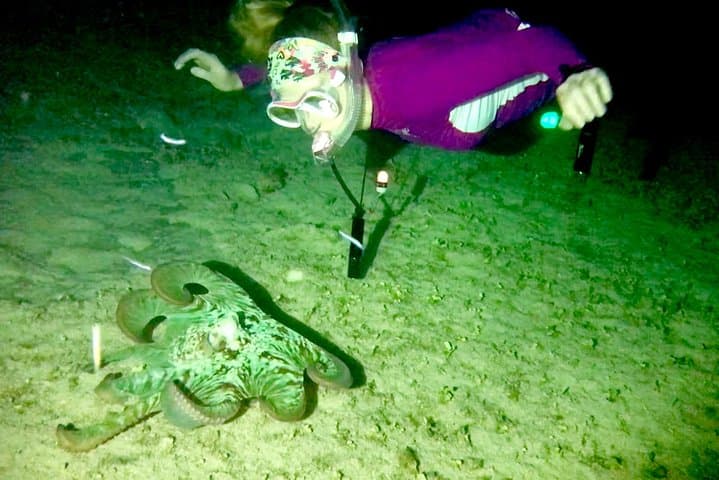
Cozumel sits at the heart of the Mesoamerican Barrier Reef, its limestone foundation hosting coral fingers and crevices where cephalopods hide. Octopuses and squid drive the nighttime show; their camouflage and slow, deliberate hunting create moments of theater that differ from daytime snorkeling. Locals have watched these behaviors for generations, and modern guides bring light and patience rather than disruption.
Geology and biology meet in compact spaces—sand channels, coral ledges and rubble fields—where curious morays, lobsters and sleeping reef fish tuck in for the night and cephalopods emerge. Expect a close-reading of the reef: slow movements, quiet signals, and an emphasis on observation rather than interaction.
Practically, the experience is 90 minutes total with about an hour in the water, lamps provided, and optional life jackets. No advanced certification is required and guides teach in-water communication and positioning. Wear a rash guard or wetsuit for warmth, reef-safe sunscreen, and water shoes. Keep a respectful distance from animals, follow the guide’s instructions, and be prepared to float and swim steadily for the duration—this is low-deep but continuous movement. The result is a focused, unusual night encounter that rewards patience and quiet attention.
moderate.
1–1.5 hours.
Moderate fitness: able to swim or float continuously for about an hour and enter water from shore.
No formal certification is required; guides will show non-swimmers how to float and move. If you feel uncomfortable in the water, request a life jacket.
The maximum depth is about 2.5 meters (8 feet); the group stays within a compact shore area to keep conditions safe and sightings concentrated.
No—guides enforce a strict no-touch policy to protect both visitors and marine life; observation at a respectful distance is required.
You may also spot lobsters, sleeping parrotfish, small moray eels and other reef fish that retreat to crevices at night.
Cozumel’s reefs form part of the Mesoamerican Barrier Reef, a biologically rich system historically navigated by Maya seafarers and local fishers.
Reef-safe practices are emphasized: no touching, no flash photography close to animals, and sunscreen rules to minimize coral impact.
Dany Mendoza operates guided outdoor trips and adventures with an emphasis on safety, stewardship, and memorable experiences.
The shore cools and the reef becomes a different world—shadowed coral terraces, a hush of small waves, and the first points of light bobbing as guides scan the shallows. You step off sand into waist-deep water and the team spreads out over an area no larger than two basketball courts; the sea is never deeper than about 2.5 meters here, so the night feels close and immediate.
The shore cools and the reef becomes a different world—shadowed coral terraces, a hush of small waves, and the first points of light bobbing as guides scan the shallows. You step off sand into waist-deep water and the team spreads out over an area no larger than two basketball courts; the sea is never deeper than about 2.5 meters here, so the night feels close and immediate.
Cozumel sits at the heart of the Mesoamerican Barrier Reef, its limestone foundation hosting coral fingers and crevices where cephalopods hide. Octopuses and squid drive the nighttime show; their camouflage and slow, deliberate hunting create moments of theater that differ from daytime snorkeling. Locals have watched these behaviors for generations, and modern guides bring light and patience rather than disruption.
Geology and biology meet in compact spaces—sand channels, coral ledges and rubble fields—where curious morays, lobsters and sleeping reef fish tuck in for the night and cephalopods emerge. Expect a close-reading of the reef: slow movements, quiet signals, and an emphasis on observation rather than interaction.
Practically, the experience is 90 minutes total with about an hour in the water, lamps provided, and optional life jackets. No advanced certification is required and guides teach in-water communication and positioning. Wear a rash guard or wetsuit for warmth, reef-safe sunscreen, and water shoes. Keep a respectful distance from animals, follow the guide’s instructions, and be prepared to float and swim steadily for the duration—this is low-deep but continuous movement. The result is a focused, unusual night encounter that rewards patience and quiet attention.