THE ADVENTURE COLLECTIVE® · Independent discovery and booking for outdoor travel

Leave the hotel zone behind and tackle two jungle ATV loops that lead to the historic village of El Cedral and a jade-lit cenote. This three-hour family-friendly tour combines off-road thrills, a short cave swim, and a local tequila tasting.
Leave the hotel zone behind and tackle two jungle ATV loops that lead to the historic village of El Cedral and a jade-lit cenote. This three-hour family-friendly tour combines off-road thrills, a short cave swim, and a local tequila tasting.
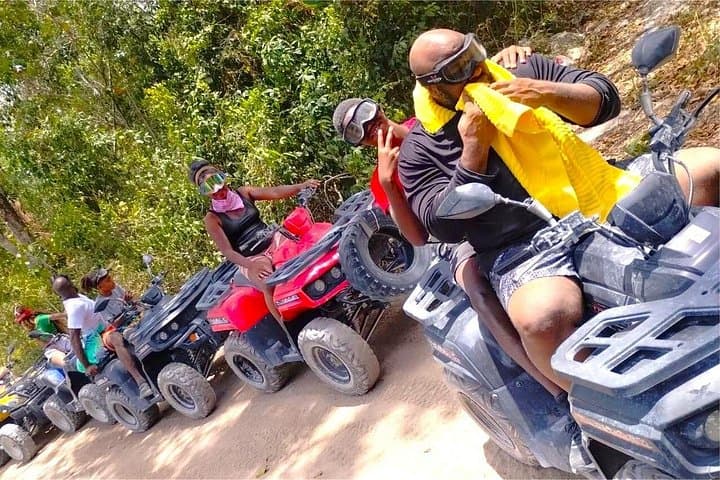
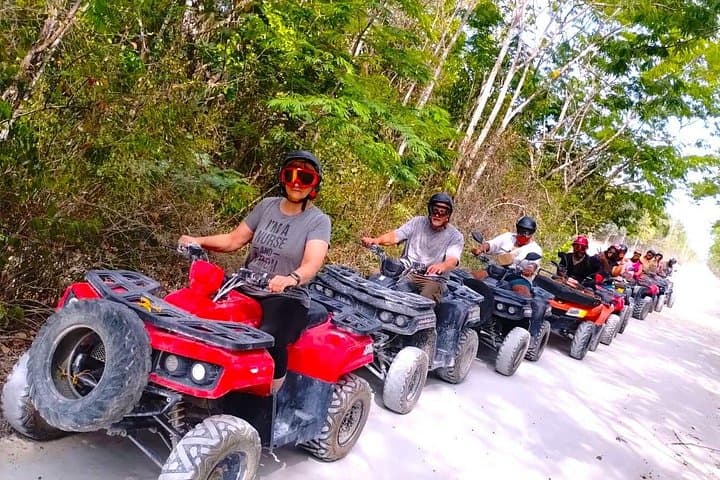
The engine kicks and the jungle answers—sunlight threads through ceiba and gumbo-limbo as twin ATVs chew a narrow trail toward El Cedral. Riders feel the island’s limestone beneath them, the path alternating between hard-packed sand and softer humus where coatis and raccoons slip away into the understory. For three hours participants move from bright coastal scrub into cooler, cave-shadowed pockets where a jade-lit cenote waits.
Verified experiences and guided adventures in the surrounding area.
Operated by Sandiaddventure · San Miguel de Cozumel, Quintana Roo
The engine kicks and the jungle answers—sunlight threads through ceiba and gumbo-limbo as twin ATVs chew a narrow trail toward El Cedral. Riders feel the island’s limestone beneath them, the path alternating between hard-packed sand and softer humus where coatis and raccoons slip away into the understory. For three hours participants move from bright coastal scrub into cooler, cave-shadowed pockets where a jade-lit cenote waits.
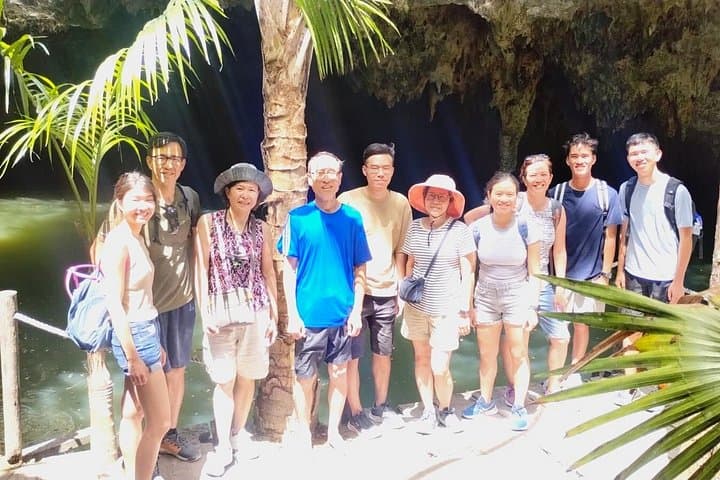
El Cedral is Cozumel’s oldest village: a waystation on routes used by Mayan travelers and later a small colonial parish. The geology here is classic Yucatán karst—limestone dissolved into sinkholes and caverns that channel groundwater into cenotes. Jade Cave (a local name for a small cenote-cavern) offers a swim in emerald water once considered sacred by Maya communities. Cultural notes arrive in small doses—an old church at El Cedral, village life visible from the trail, and a compact tequila tasting that ties modern tradition to agave craft.
Practicalities are straightforward: the tour lasts about three hours, uses guided ATVs (helmets and goggles provided), and includes short hikes and one cenote stop. Expect uneven terrain, dust, and the chance of sudden showers in summer; the guides keep groups small to manage pace and safety. Bring closed-toe shoes, long pants, sun protection, and a refillable water bottle. Move deliberately at the cenote—alkaline cave pools are fragile—and follow guide instructions when entering the water. This ride balances speed and story: it’s both a short, raw brush with Cozumel’s wild side and a practical window into the island’s natural and cultural bones.
moderate.
3 hours.
Good for travelers with moderate fitness; requires basic mobility to mount ATVs, short hikes, and swimming ability for a shallow cenote dip.
No—guides provide a brief orientation and helmets/goggles; novices can manage slower-paced rides with a guide.
Families are welcome but age/weight limits vary—check operator policies; children should be confident riding with a guide or passenger.
Yes—staff monitor water stops and life vests are available if requested; anyone with mobility concerns should notify the guide.
Pickup and drop-off transportation is included; confirm the exact pickup point and time when booking.
El Cedral began as a Mayan ceremonial stop and later became one of Cozumel’s oldest colonial villages, visible today in its ruins and church.
Cenotes and karst aquifers are sensitive—stay on marked trails, avoid introducing pollutants to cave waters, and follow guide leave-no-trace rules.
Sandiaddventure operates guided outdoor trips and adventures with an emphasis on safety, stewardship, and memorable experiences.
The engine kicks and the jungle answers—sunlight threads through ceiba and gumbo-limbo as twin ATVs chew a narrow trail toward El Cedral. Riders feel the island’s limestone beneath them, the path alternating between hard-packed sand and softer humus where coatis and raccoons slip away into the understory. For three hours participants move from bright coastal scrub into cooler, cave-shadowed pockets where a jade-lit cenote waits.
The engine kicks and the jungle answers—sunlight threads through ceiba and gumbo-limbo as twin ATVs chew a narrow trail toward El Cedral. Riders feel the island’s limestone beneath them, the path alternating between hard-packed sand and softer humus where coatis and raccoons slip away into the understory. For three hours participants move from bright coastal scrub into cooler, cave-shadowed pockets where a jade-lit cenote waits.
El Cedral is Cozumel’s oldest village: a waystation on routes used by Mayan travelers and later a small colonial parish. The geology here is classic Yucatán karst—limestone dissolved into sinkholes and caverns that channel groundwater into cenotes. Jade Cave (a local name for a small cenote-cavern) offers a swim in emerald water once considered sacred by Maya communities. Cultural notes arrive in small doses—an old church at El Cedral, village life visible from the trail, and a compact tequila tasting that ties modern tradition to agave craft.
Practicalities are straightforward: the tour lasts about three hours, uses guided ATVs (helmets and goggles provided), and includes short hikes and one cenote stop. Expect uneven terrain, dust, and the chance of sudden showers in summer; the guides keep groups small to manage pace and safety. Bring closed-toe shoes, long pants, sun protection, and a refillable water bottle. Move deliberately at the cenote—alkaline cave pools are fragile—and follow guide instructions when entering the water. This ride balances speed and story: it’s both a short, raw brush with Cozumel’s wild side and a practical window into the island’s natural and cultural bones.