THE ADVENTURE COLLECTIVE® · Independent discovery and booking for outdoor travel

Explore Cozumel’s Aerolito cenote, Plaza del Mestizaje and the San Gervasio Maya sanctuary on a guided half‑day tour that blends geology, history and a tequila tasting. Ideal for travelers seeking cultural context and accessible nature without strenuous hiking.
Explore Cozumel’s Aerolito cenote, Plaza del Mestizaje and the San Gervasio Maya sanctuary on a guided half‑day tour that blends geology, history and a tequila tasting. Ideal for travelers seeking cultural context and accessible nature without strenuous hiking.
You step off the dock into a humid, salt-tinged breeze and the island seems to rearrange itself around you: a limestone forest of low palms, a quiet sinkhole opening like a dark eye, and the squared silhouettes of weathered stone where rituals once took place.
Verified experiences and guided adventures in the surrounding area.
Operated by Flamingos Tour · San Miguel de Cozumel, Quintana Roo
You step off the dock into a humid, salt-tinged breeze and the island seems to rearrange itself around you: a limestone forest of low palms, a quiet sinkhole opening like a dark eye, and the squared silhouettes of weathered stone where rituals once took place.
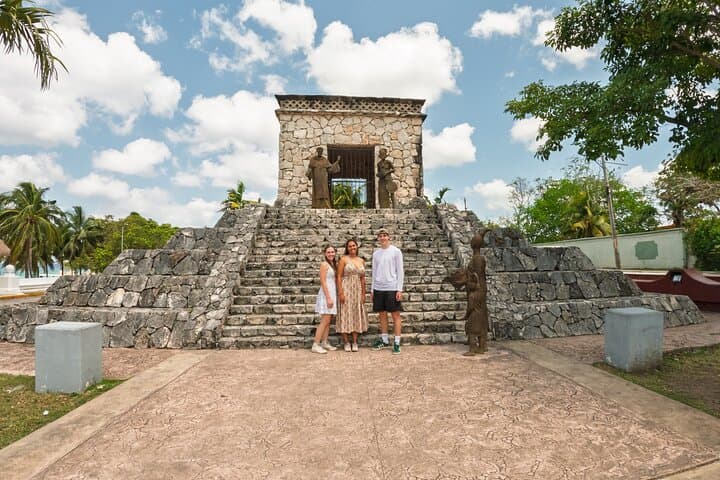
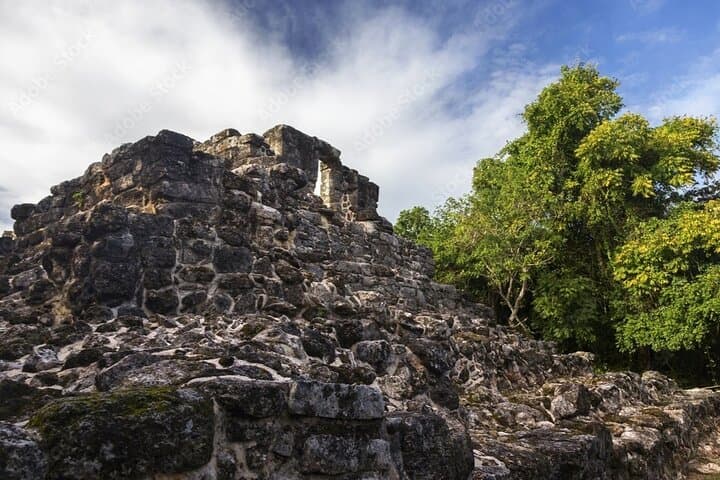
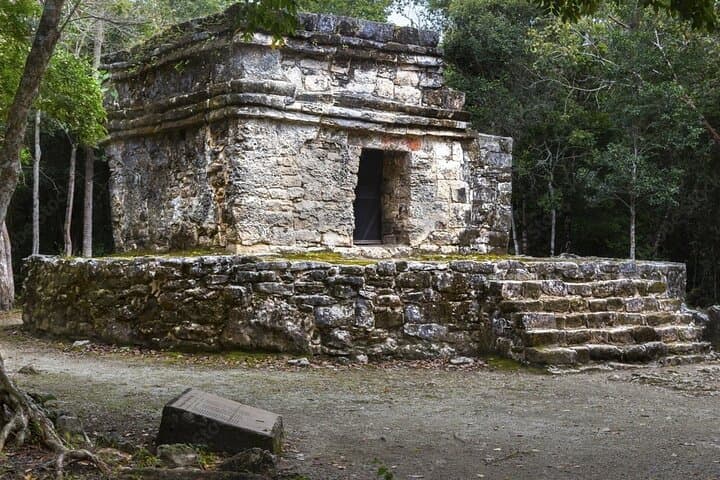
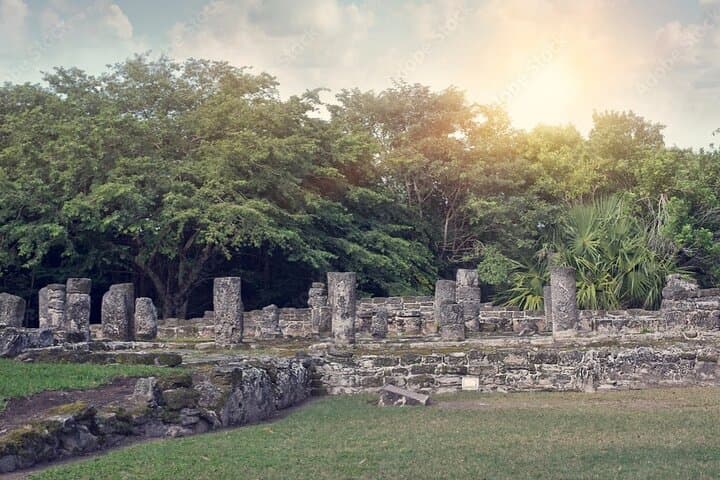
The tour threads three distinct chapters of Cozumel’s story. Geologically, the Aerolito cenote is part of the Yucatán’s karst network—collapsed limestone exposing the groundwater below—where mangrove-tangled inlets feed an underground river system. Culturally, Plaza del Mestizaje presents 20th-century ideas of identity, a public sculpture that frames the island’s colonial and Indigenous history. The final act is San Gervasio, a pre-Columbian pilgrimage complex dedicated to Ixchel, the Maya moon and fertility goddess; its low platforms and sacbe-like pathways reveal how ritual and landscape intersected on this island.
Expect guided interpretation at each stop: environmental notes at the cenote, social history at the plaza, and archaeological context at the ruins. A tequila tasting caps the day—an accessible way to connect agave agriculture and regional craft. Practicalities matter: the excursion runs roughly 3.5–4 hours and includes round-trip transport from the main docks, bottled water and admission. Trails at San Gervasio are short but uneven; the cenote area requires modest scrambling and shade is limited.
Plan for sun protection, insect repellent, swimwear under clothing if you’ll dip at the cenote, and modest behavior in sacred spaces. Move deliberately, leave no trace, and listen—these layered places reward patience with small, clear discoveries.
easy.
3.5–4 hours.
Suitable for most fitness levels; involves short walks on mostly flat ground with occasional uneven surfaces
Access depends on local rules and conditions; some visits permit wading but confirm with the guide—bring swimwear if you hope to enter the water.
The site involves short, mostly flat walks totaling under an hour of walking time during the visit, with some steps and uneven ground.
Bottled water and transportation are included; the tequila tasting is provided at the designated stop as part of the itinerary.
Yes—it's rated easy and suitable for a broad range of ages, but participants should be able to walk short distances and handle some uneven terrain.
San Gervasio was a key pilgrimage center for Maya women who travelled to honor Ixchel; the site’s stone platforms and carved stelae reflect ritual patterns dating before Spanish contact.
Cenotes are part of a fragile freshwater aquifer—avoid chemical sunscreens, dispose of waste properly, and follow local guidance to reduce impact.
Flamingos Tour operates guided outdoor trips and adventures with an emphasis on safety, stewardship, and memorable experiences.
You step off the dock into a humid, salt-tinged breeze and the island seems to rearrange itself around you: a limestone forest of low palms, a quiet sinkhole opening like a dark eye, and the squared silhouettes of weathered stone where rituals once took place.
You step off the dock into a humid, salt-tinged breeze and the island seems to rearrange itself around you: a limestone forest of low palms, a quiet sinkhole opening like a dark eye, and the squared silhouettes of weathered stone where rituals once took place.
The tour threads three distinct chapters of Cozumel’s story. Geologically, the Aerolito cenote is part of the Yucatán’s karst network—collapsed limestone exposing the groundwater below—where mangrove-tangled inlets feed an underground river system. Culturally, Plaza del Mestizaje presents 20th-century ideas of identity, a public sculpture that frames the island’s colonial and Indigenous history. The final act is San Gervasio, a pre-Columbian pilgrimage complex dedicated to Ixchel, the Maya moon and fertility goddess; its low platforms and sacbe-like pathways reveal how ritual and landscape intersected on this island.
Expect guided interpretation at each stop: environmental notes at the cenote, social history at the plaza, and archaeological context at the ruins. A tequila tasting caps the day—an accessible way to connect agave agriculture and regional craft. Practicalities matter: the excursion runs roughly 3.5–4 hours and includes round-trip transport from the main docks, bottled water and admission. Trails at San Gervasio are short but uneven; the cenote area requires modest scrambling and shade is limited.
Plan for sun protection, insect repellent, swimwear under clothing if you’ll dip at the cenote, and modest behavior in sacred spaces. Move deliberately, leave no trace, and listen—these layered places reward patience with small, clear discoveries.