THE ADVENTURE COLLECTIVE® · Independent discovery and booking for outdoor travel

Drive rugged jungle trails from the Mayan village of El Cedral to an emerald cenote on Cozumel. This combined ATV and cenote swim pairs short bursts of technical riding with a refreshing dip in a jade‑colored cavern.
Drive rugged jungle trails from the Mayan village of El Cedral to an emerald cenote on Cozumel. This combined ATV and cenote swim pairs short bursts of technical riding with a refreshing dip in a jade‑colored cavern.
The engine bites and the trail narrows as riders leave the scrub of El Cedral behind and punch into Cozumel’s low jungle. Dust rises, leaves slap the handlebars and the guide threads the single‑track toward a cave whose jade water waits like a cool promise. The ride alternates between bursts of speed on rutted coral soil and slow, technical lines through shaded hammocks—then, suddenly, the trees open onto a sinkhole where freshwater glows green.
Verified experiences and guided adventures in the surrounding area.
Operated by TishaExperience · El Cedral, Quintana Roo
The engine bites and the trail narrows as riders leave the scrub of El Cedral behind and punch into Cozumel’s low jungle. Dust rises, leaves slap the handlebars and the guide threads the single‑track toward a cave whose jade water waits like a cool promise. The ride alternates between bursts of speed on rutted coral soil and slow, technical lines through shaded hammocks—then, suddenly, the trees open onto a sinkhole where freshwater glows green.
Cozumel’s southern interior is built on uplifted Pleistocene coral and porous limestone; cenotes here are collapsed caves that reveal the island’s groundwater. El Cedral itself is one of the island’s oldest Maya sites, historically a seasonal village and ceremonial stop for traders who moved along coastal routes.
Culturally, the route crosses working farmland, scattered Mayan homesteads and remnants of coral‑block roads. Guides point out native hardwoods and explain local uses for plants while emphasizing respect for sacred cenote spaces.
Practical notes: the operation supplies helmets and a safety briefing; expect 2–3 hours on site with about 45–75 minutes of ATV time and a 20–30 minute swim at the cenote. Trails are uneven—mud after rain—and vehicles can get dirty; waterproof bags for phones are useful. Pay the local archaeological tax at check‑in as required. Bring closed‑toe shoes, a swimsuit beneath clothes for a quick jump, sun protection and a small towel. Arrive with a light lunch plan and a charged camera; the jade light in the cavern is best in mid‑day.
moderate.
2–3 hours.
Suitable for most people with basic mobility; riders should be able to steer and brace through bumps and short climbs.
No—guides provide a safety briefing and lead the route; first‑timers are welcome but should follow instructions and ride conservatively.
Yes—there is a supervised swim in the Jade Cavern; bring a swimsuit and towel and be prepared to enter from a small shoreline or steps.
Pickup/transport options vary by booking; many tours offer air‑conditioned transfers from San Miguel for an additional fee—confirm at booking.
Children and travelers with serious back, heart or pregnancy concerns are typically not recommended to ride; operators enforce age/weight limits for safety.
El Cedral was a seasonal Maya village and a crossroads for coastal trade; the island’s cenotes were once freshwater sources and held ritual significance.
Cenote ecosystems are fragile—use biodegradable sunscreen, avoid entering with lotions or oils, and follow guide rules to minimize impact.
TishaExperience operates guided outdoor trips and adventures with an emphasis on safety, stewardship, and memorable experiences.
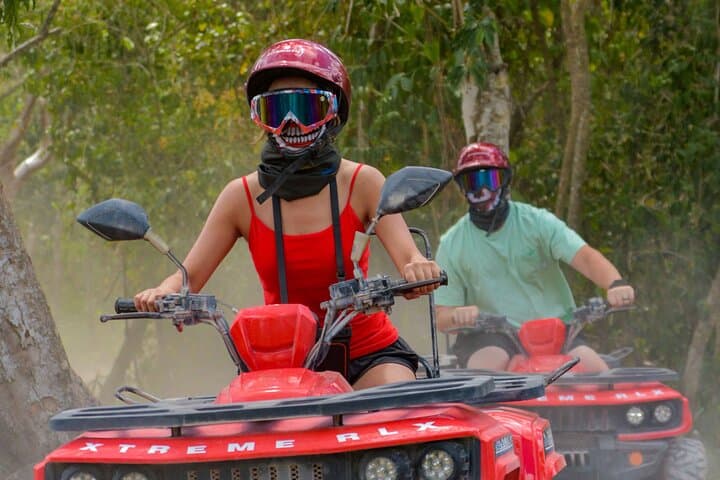
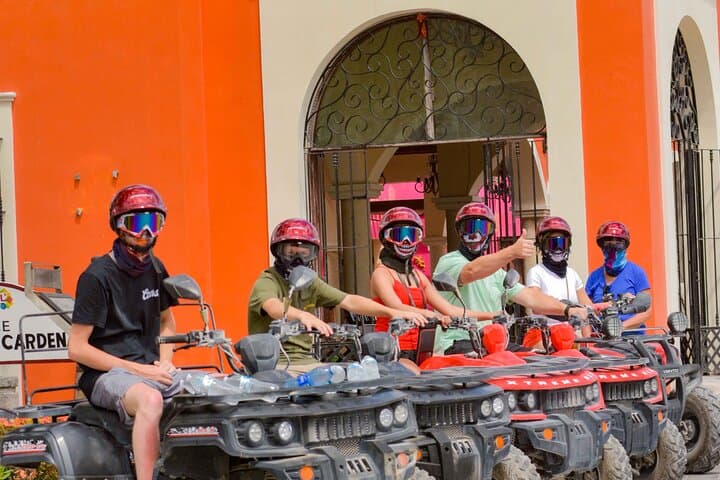
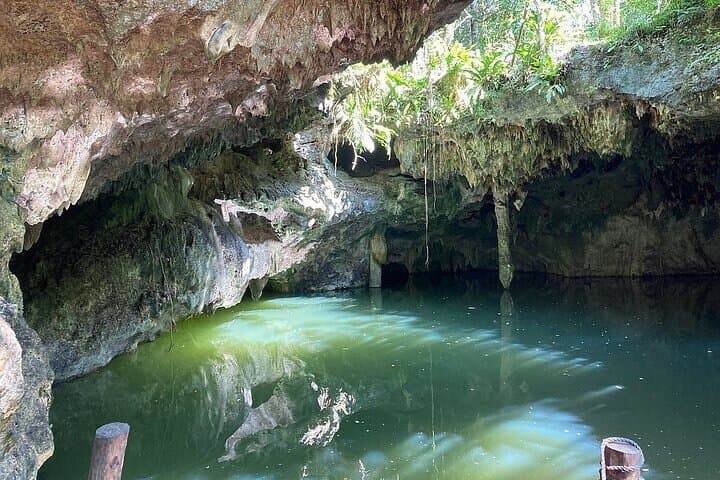
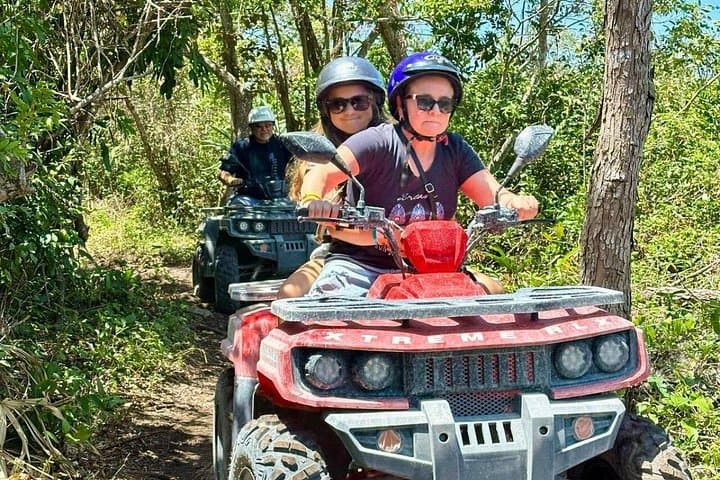
The engine bites and the trail narrows as riders leave the scrub of El Cedral behind and punch into Cozumel’s low jungle. Dust rises, leaves slap the handlebars and the guide threads the single‑track toward a cave whose jade water waits like a cool promise. The ride alternates between bursts of speed on rutted coral soil and slow, technical lines through shaded hammocks—then, suddenly, the trees open onto a sinkhole where freshwater glows green.
The engine bites and the trail narrows as riders leave the scrub of El Cedral behind and punch into Cozumel’s low jungle. Dust rises, leaves slap the handlebars and the guide threads the single‑track toward a cave whose jade water waits like a cool promise. The ride alternates between bursts of speed on rutted coral soil and slow, technical lines through shaded hammocks—then, suddenly, the trees open onto a sinkhole where freshwater glows green.
Cozumel’s southern interior is built on uplifted Pleistocene coral and porous limestone; cenotes here are collapsed caves that reveal the island’s groundwater. El Cedral itself is one of the island’s oldest Maya sites, historically a seasonal village and ceremonial stop for traders who moved along coastal routes.
Culturally, the route crosses working farmland, scattered Mayan homesteads and remnants of coral‑block roads. Guides point out native hardwoods and explain local uses for plants while emphasizing respect for sacred cenote spaces.
Practical notes: the operation supplies helmets and a safety briefing; expect 2–3 hours on site with about 45–75 minutes of ATV time and a 20–30 minute swim at the cenote. Trails are uneven—mud after rain—and vehicles can get dirty; waterproof bags for phones are useful. Pay the local archaeological tax at check‑in as required. Bring closed‑toe shoes, a swimsuit beneath clothes for a quick jump, sun protection and a small towel. Arrive with a light lunch plan and a charged camera; the jade light in the cavern is best in mid‑day.