THE ADVENTURE COLLECTIVE® · Independent discovery and booking for outdoor travel

Walk the famously unbroken sand of Cox's Bazar, where the Bay of Bengal stretches for miles and low tide reveals coral-strewn shelves. This three-day visit pairs shoreline exploration with short cultural side trips to Himchari, Inani and Ramu.
Walk the famously unbroken sand of Cox's Bazar, where the Bay of Bengal stretches for miles and low tide reveals coral-strewn shelves. This three-day visit pairs shoreline exploration with short cultural side trips to Himchari, Inani and Ramu.
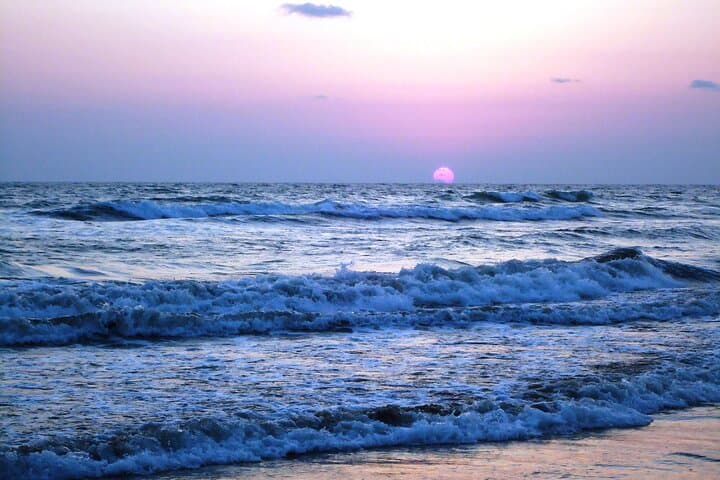
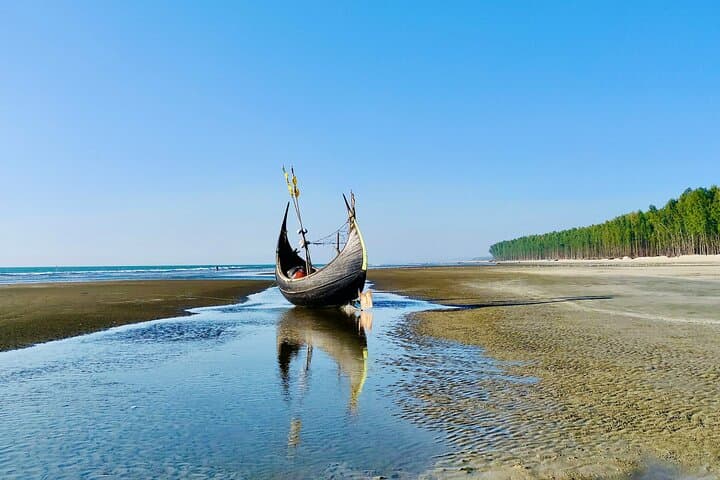
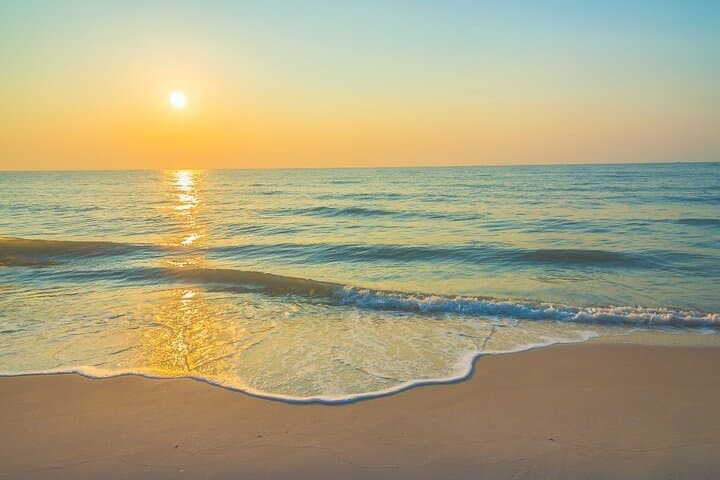
A low sun slants across a broad expanse of sand as the Bay of Bengal breathes salt and warmth onto the shore. Walkers and fishermen mark the horizon like punctuation; the beach spreads open and unbroken for miles, a plain that invites movement and observation. Here, the shoreline keeps going — a corridor of sand where tides write and erase footprints every day.
Verified experiences and guided adventures in the surrounding area.
Operated by ShareTrip Ltd. · Cox's Bazar, Chittagong Division
A low sun slants across a broad expanse of sand as the Bay of Bengal breathes salt and warmth onto the shore. Walkers and fishermen mark the horizon like punctuation; the beach spreads open and unbroken for miles, a plain that invites movement and observation. Here, the shoreline keeps going — a corridor of sand where tides write and erase footprints every day.
Cox's Bazar is a coastal city on Bangladesh’s southeastern edge with a shoreline often described as the world’s longest natural sea beach, running roughly 120 kilometers. Geologically, the sweep is formed by longshore drift and river sediment from nearby estuaries; coral-strewn sections like Inani show the region's marine underpinnings. Culturally, the area blends Bengali coastal communities with Rakhine influences and small Buddhist sites in nearby Ramu.
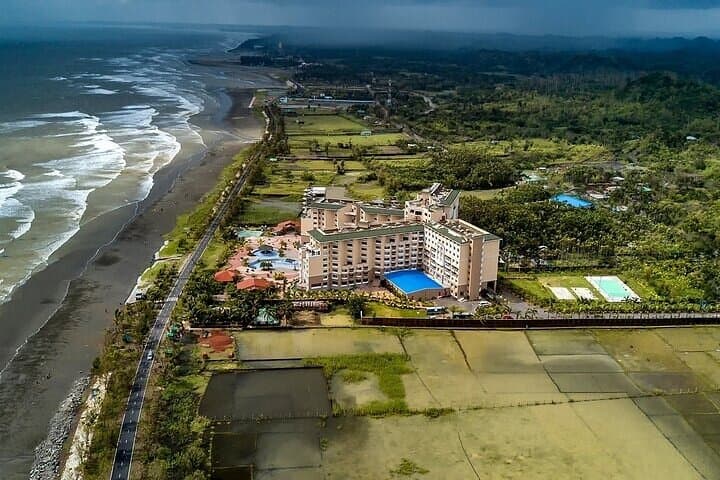
Expect broad, gently sloping sand underfoot, occasional rock shelves at Inani, and steep, vegetated edges near Himchari where small cliffs watch the sea. The beach is excellent for long walks, sunrise photography, simple fishing, and watching local boat traffic. Facilities range from basic stalls to mid-range resorts in Cox’s Bazar town; services thin as you move toward quieter stretches.
Practical notes: travel light for beach walks, carry sun protection and plenty of water, and avoid swimming after dark — currents can be unpredictable. Visit early morning or late afternoon to avoid peak heat and to catch the best light. Respect local fishing operations and protected coral areas; leave no trace on the sand. With basic preparation, the place rewards slow exploration and wide-open views.
moderate.
3 days.
Suitable for travelers with moderate fitness; expect long beach walks on uneven sand and short roadside climbs at viewpoint spots.
The unbroken stretch commonly cited is about 120 kilometers (75 miles) of continuous sandy shoreline, though exact measurements vary by tide and reference point.
Swimming is possible in many spots during daylight, but currents can be unpredictable; swim in populated areas and follow local guidance or lifeguard advice.
Winter (November–February) is the most comfortable with lower humidity and cooler temperatures; however, early morning visits in other seasons can also be pleasant.
Yes — many local operators and multi-day tour packages include transfers to Himchari viewpoints, Inani's coral sections, and cultural visits to Ramu.
The coast has long been a fishing and trade zone linking Bengal to wider Bay of Bengal routes; nearby villages preserve Rakhine cultural elements and Buddhist sites in Ramu.
Coral patches at Inani are sensitive—avoid collecting or stepping on live coral; local groups and authorities encourage leaving marine habitats undisturbed.
ShareTrip Ltd. operates guided outdoor trips and adventures with an emphasis on safety, stewardship, and memorable experiences.
A low sun slants across a broad expanse of sand as the Bay of Bengal breathes salt and warmth onto the shore. Walkers and fishermen mark the horizon like punctuation; the beach spreads open and unbroken for miles, a plain that invites movement and observation. Here, the shoreline keeps going — a corridor of sand where tides write and erase footprints every day.
A low sun slants across a broad expanse of sand as the Bay of Bengal breathes salt and warmth onto the shore. Walkers and fishermen mark the horizon like punctuation; the beach spreads open and unbroken for miles, a plain that invites movement and observation. Here, the shoreline keeps going — a corridor of sand where tides write and erase footprints every day.
Cox's Bazar is a coastal city on Bangladesh’s southeastern edge with a shoreline often described as the world’s longest natural sea beach, running roughly 120 kilometers. Geologically, the sweep is formed by longshore drift and river sediment from nearby estuaries; coral-strewn sections like Inani show the region's marine underpinnings. Culturally, the area blends Bengali coastal communities with Rakhine influences and small Buddhist sites in nearby Ramu.
Expect broad, gently sloping sand underfoot, occasional rock shelves at Inani, and steep, vegetated edges near Himchari where small cliffs watch the sea. The beach is excellent for long walks, sunrise photography, simple fishing, and watching local boat traffic. Facilities range from basic stalls to mid-range resorts in Cox’s Bazar town; services thin as you move toward quieter stretches.
Practical notes: travel light for beach walks, carry sun protection and plenty of water, and avoid swimming after dark — currents can be unpredictable. Visit early morning or late afternoon to avoid peak heat and to catch the best light. Respect local fishing operations and protected coral areas; leave no trace on the sand. With basic preparation, the place rewards slow exploration and wide-open views.