THE ADVENTURE COLLECTIVE® · Independent discovery and booking for outdoor travel

Walk Coventry’s Godiva Quarter with a private guide and move through medieval lanes, civic grandeur, and wartime resilience. This 2.5‑hour private tour mixes architecture, local stories, and practical insights for first‑time visitors.
Walk Coventry’s Godiva Quarter with a private guide and move through medieval lanes, civic grandeur, and wartime resilience. This 2.5‑hour private tour mixes architecture, local stories, and practical insights for first‑time visitors.
You begin at the bronze Lady Godiva, wind tugging at your coat as trams and footsteps thread around Broadgate. The city opens as a sequence of facades: medieval timber-framed alleys, the carved stone of St. Mary’s Guildhall, and the raw profile of Coventry Cathedral’s ruined nave meeting its modern counterpart — each stop a different chapter of the city’s life.
Verified experiences and guided adventures in the surrounding area.
Operated by Opatrip England · Coventry, West Midlands
You begin at the bronze Lady Godiva, wind tugging at your coat as trams and footsteps thread around Broadgate. The city opens as a sequence of facades: medieval timber-framed alleys, the carved stone of St. Mary’s Guildhall, and the raw profile of Coventry Cathedral’s ruined nave meeting its modern counterpart — each stop a different chapter of the city’s life.
Coventry’s story is blunt and layered. A prosperous medieval market town built on cloth and trade, it later pivoted to 19th‑century manufacturing and motor works. The Blitz of 1940 gutted large parts of the center; post‑war planners stitched a modern civic core beside the shell of the old cathedral. Geology here is low, gently rolling Midlands clay — easy underfoot, but historic streets can be uneven.
A local guide threads anecdotes into architecture: the civic pride of Drapers’ Hall, the courtroom histories inside St. Mary’s, and the quieter corners like St. Osburg’s. Culture is present in independent shops on Far Gosford Street and the city’s working‑class grit; the River Sherbourne, mostly culverted through town, still hints at older boundaries.
Practical guidance: expect about 2–2.5 hours on pavement and cobbles with short standing stops; total walking distance roughly 2–3 miles. Wear supportive shoes and bring a rain layer — Coventry weather can change fast. Public transport runs nearby if you need to cut the route short. The tour is private, English‑led, and suited to most mobility levels, but check accessibility details if you require step‑free paths. Bring a charged camera and a curious mindset: the guide’s stories turn façades into places that remember.
easy.
2–2.5 hours.
Basic walking fitness; able to stand and walk for short periods over flat to slightly uneven pavements.
The guided itinerary is 150 minutes and covers roughly 2–3 miles of mostly flat urban streets with several stationary stops lasting a few minutes each.
Admission to interiors is generally not included; the guide provides commentary outside and will advise which sites can be entered on the day and any extra fees required.
Yes — the tour is described as physically easy; it’s private so pace can be adjusted, but check about step‑free access if mobility is limited.
The tour typically starts at the Lady Godiva statue in Broadgate; cancel at least 24 hours in advance for a full refund per the provider’s policy.
Coventry was an important medieval cloth and weaving center, later industrialized in the 19th century; the 1940 Blitz and subsequent rebuilding shaped much of the city’s modern layout.
Historic conservation focuses on preserving key structures like St. Mary’s and parts of the cathedral ruins; visitors are asked to respect interiors, avoid littering, and stay on designated paths.
Opatrip England operates guided outdoor trips and adventures with an emphasis on safety, stewardship, and memorable experiences.

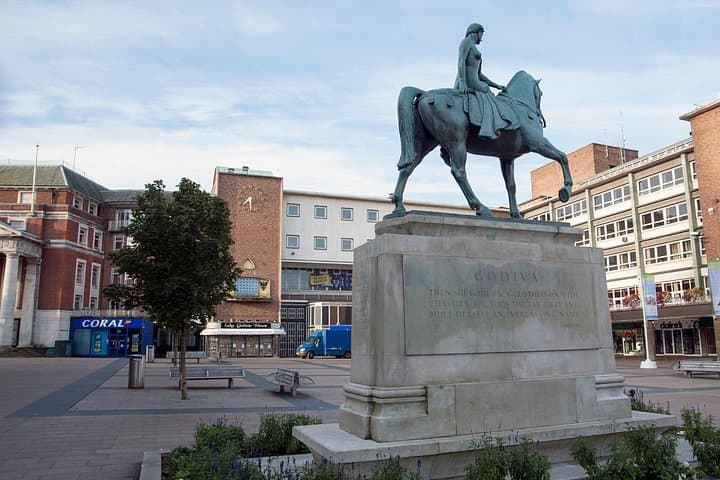
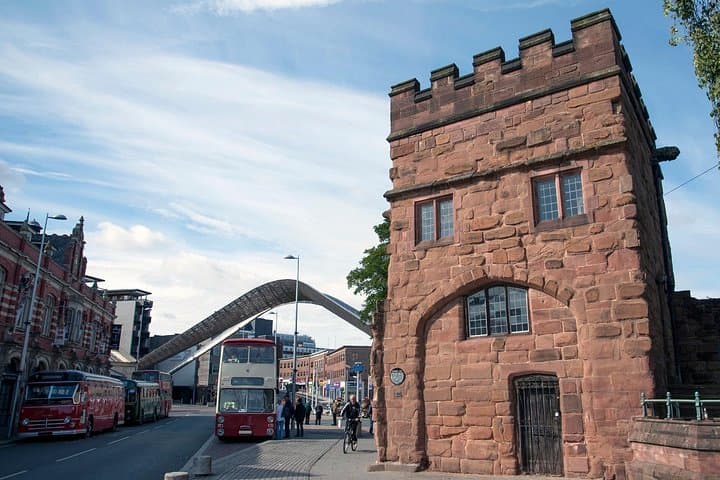
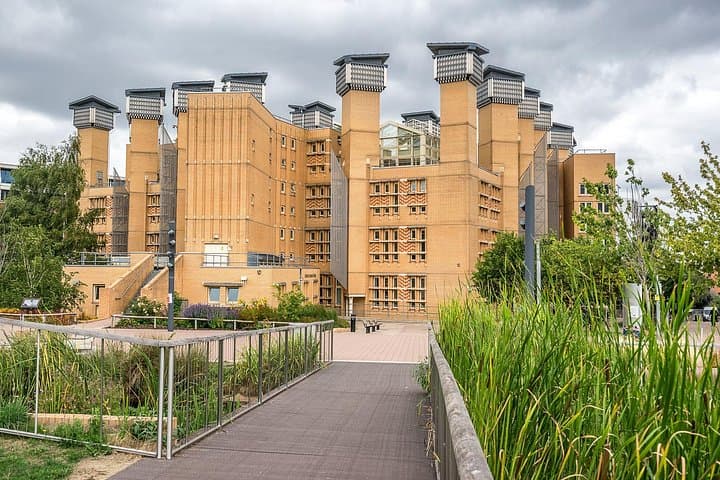
You begin at the bronze Lady Godiva, wind tugging at your coat as trams and footsteps thread around Broadgate. The city opens as a sequence of facades: medieval timber-framed alleys, the carved stone of St. Mary’s Guildhall, and the raw profile of Coventry Cathedral’s ruined nave meeting its modern counterpart — each stop a different chapter of the city’s life.
You begin at the bronze Lady Godiva, wind tugging at your coat as trams and footsteps thread around Broadgate. The city opens as a sequence of facades: medieval timber-framed alleys, the carved stone of St. Mary’s Guildhall, and the raw profile of Coventry Cathedral’s ruined nave meeting its modern counterpart — each stop a different chapter of the city’s life.
Coventry’s story is blunt and layered. A prosperous medieval market town built on cloth and trade, it later pivoted to 19th‑century manufacturing and motor works. The Blitz of 1940 gutted large parts of the center; post‑war planners stitched a modern civic core beside the shell of the old cathedral. Geology here is low, gently rolling Midlands clay — easy underfoot, but historic streets can be uneven.
A local guide threads anecdotes into architecture: the civic pride of Drapers’ Hall, the courtroom histories inside St. Mary’s, and the quieter corners like St. Osburg’s. Culture is present in independent shops on Far Gosford Street and the city’s working‑class grit; the River Sherbourne, mostly culverted through town, still hints at older boundaries.
Practical guidance: expect about 2–2.5 hours on pavement and cobbles with short standing stops; total walking distance roughly 2–3 miles. Wear supportive shoes and bring a rain layer — Coventry weather can change fast. Public transport runs nearby if you need to cut the route short. The tour is private, English‑led, and suited to most mobility levels, but check accessibility details if you require step‑free paths. Bring a charged camera and a curious mindset: the guide’s stories turn façades into places that remember.