THE ADVENTURE COLLECTIVE® · Independent discovery and booking for outdoor travel

Stand on the rim of Cova de Paúl and descend into Cape Verde’s greenest valley on a 3–5 hour guided hike. Expect steep stone switchbacks, terraced farms, and a chance to taste local grogue in Ribeira de Paúl.
Stand on the rim of Cova de Paúl and descend into Cape Verde’s greenest valley on a 3–5 hour guided hike. Expect steep stone switchbacks, terraced farms, and a chance to taste local grogue in Ribeira de Paúl.
High above the Atlantic, the rim of Cova de Paúl opens like a green amphitheater. Hikers step out of a minivan into crisp mountain air at roughly 1,100 meters and face a broad, cultivated crater where terraces and fields spill toward a valley carved by water and time.
Verified experiences and guided adventures in the surrounding area.
Operated by Bu Country Tours · Pombas (Ribeira de Paúl), Paul
High above the Atlantic, the rim of Cova de Paúl opens like a green amphitheater. Hikers step out of a minivan into crisp mountain air at roughly 1,100 meters and face a broad, cultivated crater where terraces and fields spill toward a valley carved by water and time.
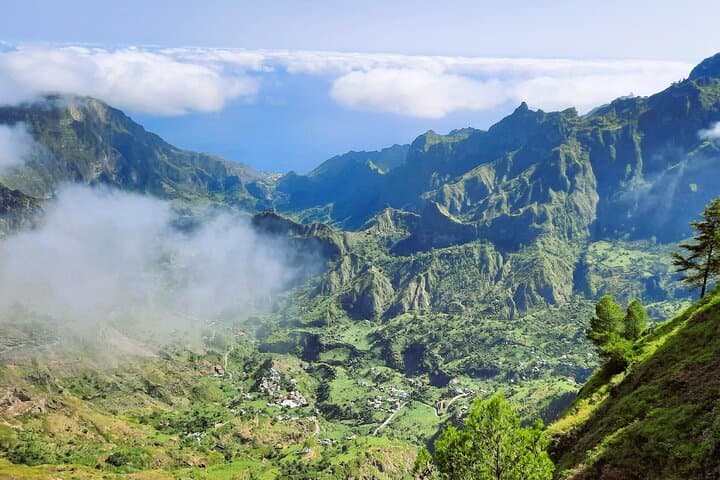
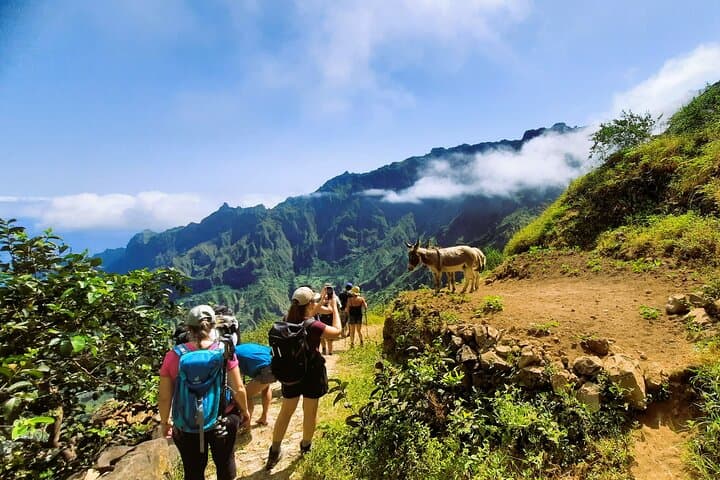
The route follows the crater’s rim for a short sweep before committing to a steep, zigzagging descent: three hours of stone paths, switchbacks and occasional loose scree leading into the densely vegetated Ribeira de Paúl. Geologically the crater is an extinct volcanic caldera, its bowl flattened and filled with fertile volcanic soils that have supported terraced agriculture for generations. Culturally, the valley is defined by small settlements, abandoned vineyards, and grogue distilleries — a local rum still produced seasonally from January through May.
Expect avocado, mango and banana trees arching over parts of the trail, and old sugarcane terraces that mark the island’s agrarian history. The trail tests calves and ankles in equal measure; descending feels like the landscape is pressing forward, guiding each step into the valley.
Practical notes: the guided excursion lasts 3–5 hours door-to-door, with transportation from Porto Novo and return. Wear sturdy shoes with good grip, bring 1.5–2 liters of water, sun protection and a light wind layer for the exposed rim. Mobile reception can be patchy; follow your guide on narrow sections and allow extra time for photography and a grogue tasting stop when in season.
moderate.
3–5 hours.
Moderate fitness—comfortable on steep descents and sustained downhill sections; some hikers may find knees taxed.
The guided walk from the crater rim into Ribeira de Paúl typically takes about 3 to 3.5 hours of walking, with additional time for transfers and stops.
Most tours pick up in Porto Novo and return there after the hike, with drop-offs to other accommodations sometimes available.
Grogue production and tastings are most active during the rum season (January 1–May 31); outside that window, visits depend on local availability.
Hikers with basic fitness can do it, but those afraid of heights or with poor cardiovascular health should avoid it; the descent is steep and demands sure footing.
The crater and valley have long supported terraced agriculture; volcanic soils made the area a key food-producing region for Santo Antão.
Stick to marked paths to prevent erosion of terraced fields; support local guides and small producers to keep agricultural stewardship viable.
Bu Country Tours operates guided outdoor trips and adventures with an emphasis on safety, stewardship, and memorable experiences.
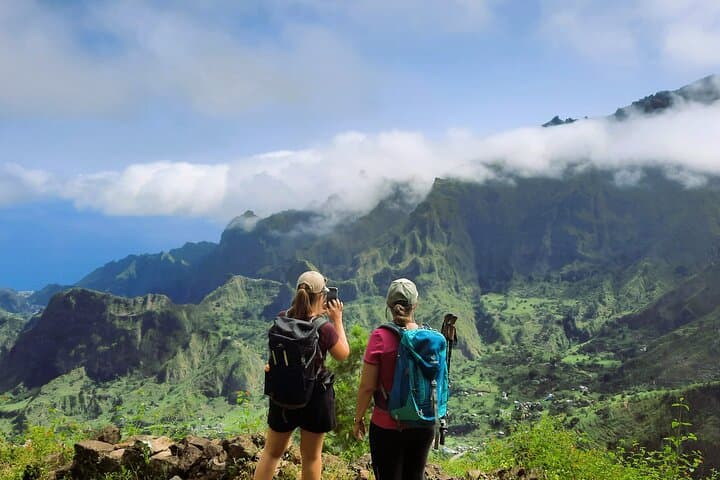
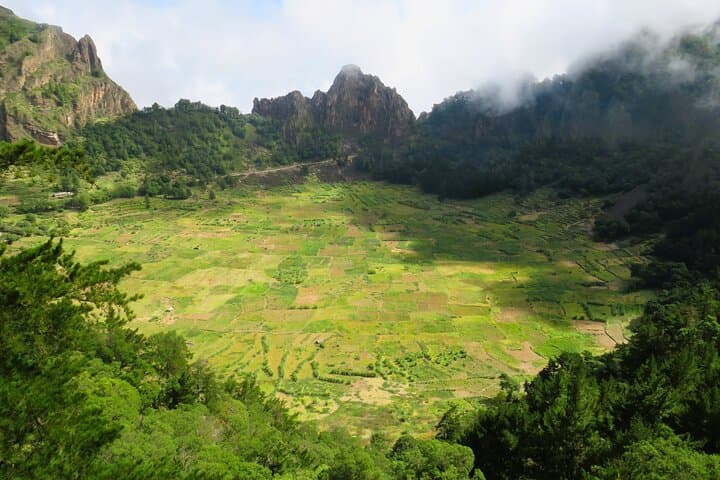
High above the Atlantic, the rim of Cova de Paúl opens like a green amphitheater. Hikers step out of a minivan into crisp mountain air at roughly 1,100 meters and face a broad, cultivated crater where terraces and fields spill toward a valley carved by water and time.
High above the Atlantic, the rim of Cova de Paúl opens like a green amphitheater. Hikers step out of a minivan into crisp mountain air at roughly 1,100 meters and face a broad, cultivated crater where terraces and fields spill toward a valley carved by water and time.
The route follows the crater’s rim for a short sweep before committing to a steep, zigzagging descent: three hours of stone paths, switchbacks and occasional loose scree leading into the densely vegetated Ribeira de Paúl. Geologically the crater is an extinct volcanic caldera, its bowl flattened and filled with fertile volcanic soils that have supported terraced agriculture for generations. Culturally, the valley is defined by small settlements, abandoned vineyards, and grogue distilleries — a local rum still produced seasonally from January through May.
Expect avocado, mango and banana trees arching over parts of the trail, and old sugarcane terraces that mark the island’s agrarian history. The trail tests calves and ankles in equal measure; descending feels like the landscape is pressing forward, guiding each step into the valley.
Practical notes: the guided excursion lasts 3–5 hours door-to-door, with transportation from Porto Novo and return. Wear sturdy shoes with good grip, bring 1.5–2 liters of water, sun protection and a light wind layer for the exposed rim. Mobile reception can be patchy; follow your guide on narrow sections and allow extra time for photography and a grogue tasting stop when in season.