THE ADVENTURE COLLECTIVE® · Independent discovery and booking for outdoor travel

Pedal away from the quay into shady rubber plantations and quiet village lanes on a half-day cycling route from Phu My Port. This ride pairs easy terrain with local culture and wartime history, ideal for cruise passengers wanting a grounded shore excursion.
Pedal away from the quay into shady rubber plantations and quiet village lanes on a half-day cycling route from Phu My Port. This ride pairs easy terrain with local culture and wartime history, ideal for cruise passengers wanting a grounded shore excursion.
You push off from the port with salt on your lips and the steady hum of engines behind you; within minutes the paved waterfront gives way to narrow village lanes where sunlight filters through high rubber trees. The ride slows the world: bicycle gears click, cicadas punctuate the silence, and rice dikes—gold or green depending on season—rise like low walls guiding the route.
Verified experiences and guided adventures in the surrounding area.
Operated by Mr Biker Saigon · Phu My, Ba Ria-Vung Tau
You push off from the port with salt on your lips and the steady hum of engines behind you; within minutes the paved waterfront gives way to narrow village lanes where sunlight filters through high rubber trees. The ride slows the world: bicycle gears click, cicadas punctuate the silence, and rice dikes—gold or green depending on season—rise like low walls guiding the route.
This stretch of southeastern Vietnam bears layers of history. French colonial planters introduced large-scale rubber cultivation in the late 19th and early 20th centuries; during the war years villages such as Long Phuoc became contested places, leaving scars and stories still visible along field edges. Geologically, the terrain is coastal plain—flat to gently rolling soils over laterite—making for forgiving cycling but occasional sticky mud after heavy rain.
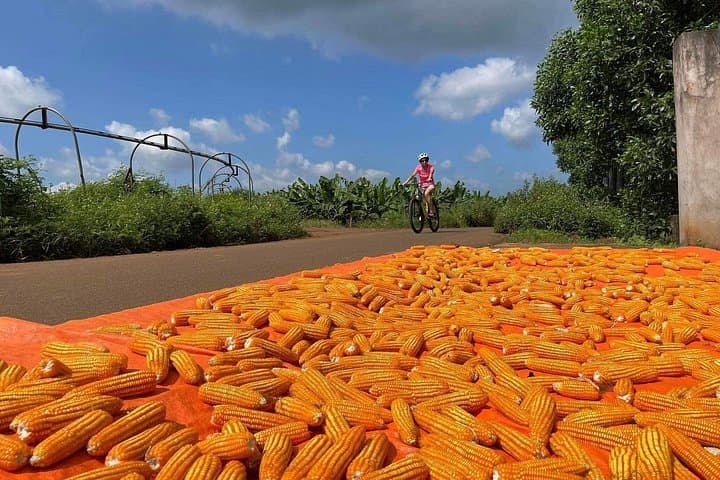
Culturally the route threads through working villages: women drying fish, farmers tending paddies, and small pagodas tucked behind fruit trees. Local guides explain farming rhythms, ferry crossings, and how rubber tapping shapes local economies.
Practical guidance: expect 4–6 hours with stops; terrain is mostly paved village lanes and quiet secondary roads, suitable for beginner to intermediate riders at a moderate pace. Bring sunscreen and insect repellent, drink often, and plan to ride in the cooler morning hours to avoid midday heat. Helmets are provided, but carry a small repair kit and know basic flat-fixing. Respect private land—stay on public lanes—and save time for a slow roadside snack; the ride is as much about the people and pace as it is about distance.
moderate.
5–6 hours.
Suitable for people with regular low-impact fitness—able to pedal for several hours with short breaks.
The tour runs about 5–6 hours at a moderate, unhurried pace on mostly flat, paved village lanes—suitable for riders with basic stamina.
Yes—mountain or hybrid bikes in multiple sizes and helmets are supplied; bring your own gloves or padded shorts for extra comfort.
Children may join if they are comfortable cycling for several hours; check age and height requirements with the operator when booking.
The operator may cancel or reschedule in heavy rain for safety; light rain often continues with appropriate caution and use of a rain shell.
The area combines French-era rubber plantations with villages that saw conflict during the Vietnam War; traces of that past appear in village layouts and local stories.
Rubber monoculture affects local biodiversity—stay on roads, avoid trampling dikes, and support local vendors to keep tourism benefits local.
Mr Biker Saigon operates guided outdoor trips and adventures with an emphasis on safety, stewardship, and memorable experiences.
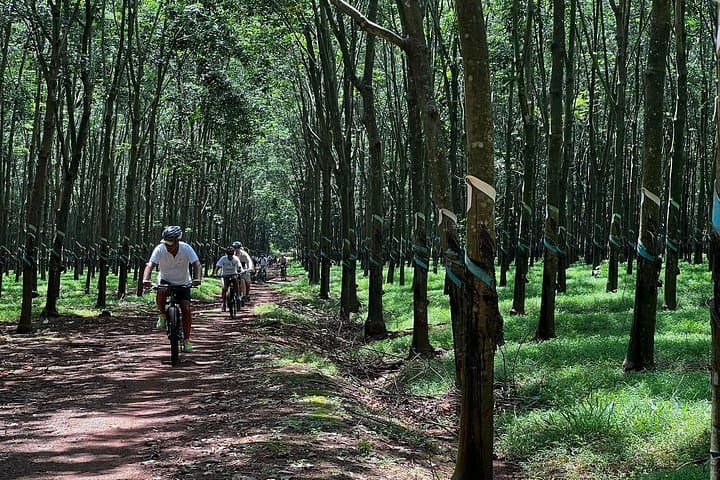
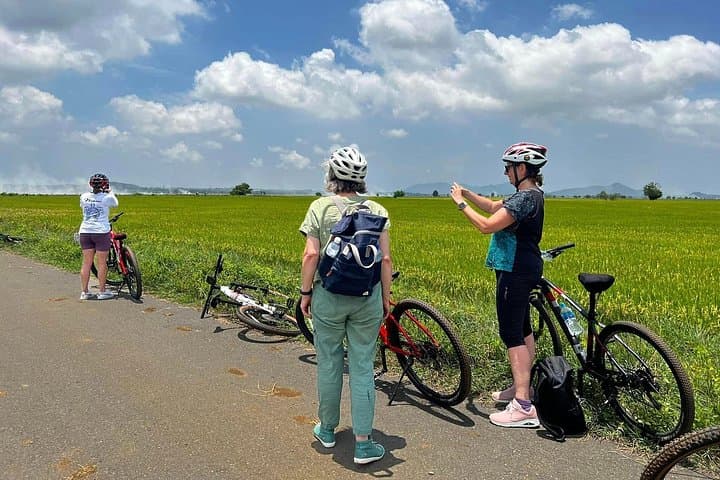

You push off from the port with salt on your lips and the steady hum of engines behind you; within minutes the paved waterfront gives way to narrow village lanes where sunlight filters through high rubber trees. The ride slows the world: bicycle gears click, cicadas punctuate the silence, and rice dikes—gold or green depending on season—rise like low walls guiding the route.
You push off from the port with salt on your lips and the steady hum of engines behind you; within minutes the paved waterfront gives way to narrow village lanes where sunlight filters through high rubber trees. The ride slows the world: bicycle gears click, cicadas punctuate the silence, and rice dikes—gold or green depending on season—rise like low walls guiding the route.
This stretch of southeastern Vietnam bears layers of history. French colonial planters introduced large-scale rubber cultivation in the late 19th and early 20th centuries; during the war years villages such as Long Phuoc became contested places, leaving scars and stories still visible along field edges. Geologically, the terrain is coastal plain—flat to gently rolling soils over laterite—making for forgiving cycling but occasional sticky mud after heavy rain.
Culturally the route threads through working villages: women drying fish, farmers tending paddies, and small pagodas tucked behind fruit trees. Local guides explain farming rhythms, ferry crossings, and how rubber tapping shapes local economies.
Practical guidance: expect 4–6 hours with stops; terrain is mostly paved village lanes and quiet secondary roads, suitable for beginner to intermediate riders at a moderate pace. Bring sunscreen and insect repellent, drink often, and plan to ride in the cooler morning hours to avoid midday heat. Helmets are provided, but carry a small repair kit and know basic flat-fixing. Respect private land—stay on public lanes—and save time for a slow roadside snack; the ride is as much about the people and pace as it is about distance.