THE ADVENTURE COLLECTIVE® · Independent discovery and booking for outdoor travel

Make your own cotton-wick soy candles in a hands-on Newark workshop that covers wax selection, wick sizing and fragrance blending. Perfect for beginners who want a practical intro to safe, clean-burning candles.
Make your own cotton-wick soy candles in a hands-on Newark workshop that covers wax selection, wick sizing and fragrance blending. Perfect for beginners who want a practical intro to safe, clean-burning candles.
The room smells faintly of warm wax and citrus as light filters through street-facing windows; a table of glass jars, measured fragrance oils and coiled cotton wicks waits like a small, deliberate laboratory. Participants arrive with curiosity and leave with a custom candle that cools under their watch — a tactile reminder of how simple materials shape atmosphere.
Verified experiences and guided adventures in the surrounding area.
Operated by The Eclectic Chic Boutique · Newark, New Jersey
The room smells faintly of warm wax and citrus as light filters through street-facing windows; a table of glass jars, measured fragrance oils and coiled cotton wicks waits like a small, deliberate laboratory. Participants arrive with curiosity and leave with a custom candle that cools under their watch — a tactile reminder of how simple materials shape atmosphere.
Candle making reaches back centuries as a practical craft and local industry. In Newark, a city shaped by 19th-century manufacturing and the Passaic River’s push through the basin, small studios now replace former factories. The geology beneath — Triassic redbeds and basalt flows of the Newark Basin — is a quieter backdrop, but it helped concentrate industry along lowland corridors and river access.
Culturally, Newark’s Ironbound neighborhood feeds a hands-on ethos: food markets and craft shops supply both scent inspiration and containers. Modern classes here focus on clean-burning soy wax and cotton wicks, a nod to sustainability and indoor air quality. Expect a primer on wax chemistry, wick selection, fragrance load and safety practices like proper melting temperatures and ventilation.
Practically, this beginner-friendly, roughly 105-minute workshop suits all fitness levels and requires no prior skills. You’ll station at a covered workspace, follow step-by-step demos, pour into molds or jars, and learn to troubleshoot common problems such as tunneling or frosting. Bring a reusable tote for transport, note any scent sensitivities when booking, and plan to cool your candles at the venue before taking them home. The result is both a souvenir and a skill — a simple craft with precise technique and immediate, satisfying payoff.
easy.
1.5–2 hours.
No special fitness required—suitable for most adults and older children with supervision
Yes—soy wax, cotton wicks, fragrance oils, jars and tools are provided as part of the workshop.
Children are welcome with adult supervision; infants must sit on a lap and some tasks may be handled by the instructor.
Notify the host when booking—options often include unscented candles or lower fragrance loads and good ventilation.
Full refunds are typically available if you cancel at least 24 hours before the scheduled start; check your booking confirmation for specifics.
Newark’s manufacturing era and location along the Passaic helped concentrate small industrial trades; today many former factory spaces host artisan studios and workshops.
This class emphasizes soy wax and cotton wicks, lower-emission alternatives to paraffin; dispose wax and containers per local recycling rules and avoid pouring wax down drains.
The Eclectic Chic Boutique operates guided outdoor trips and adventures with an emphasis on safety, stewardship, and memorable experiences.
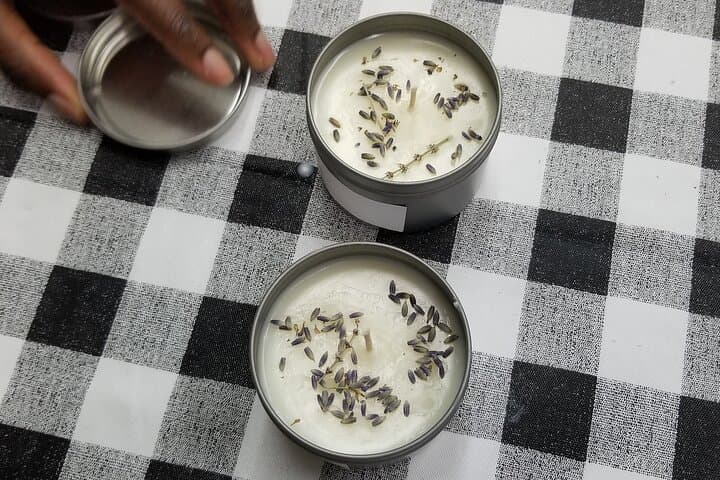
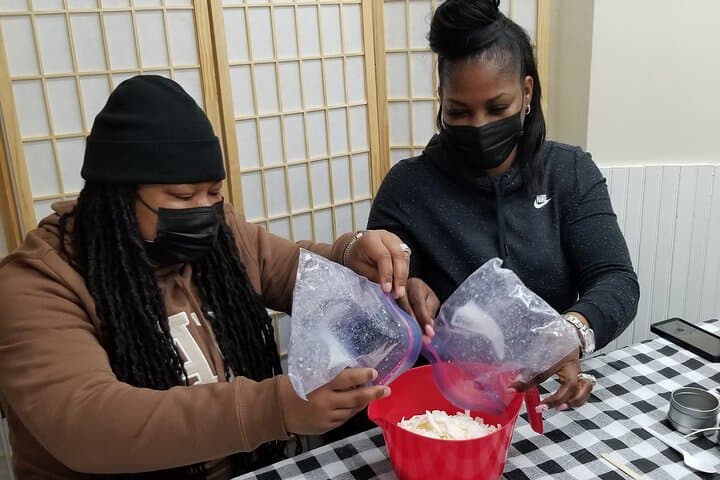
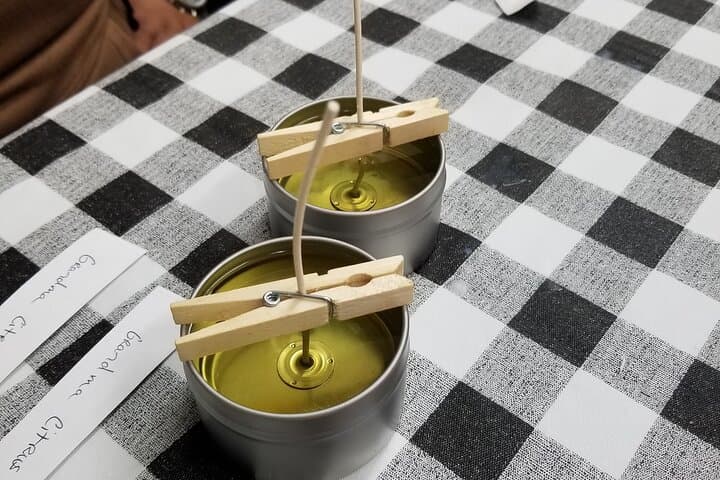
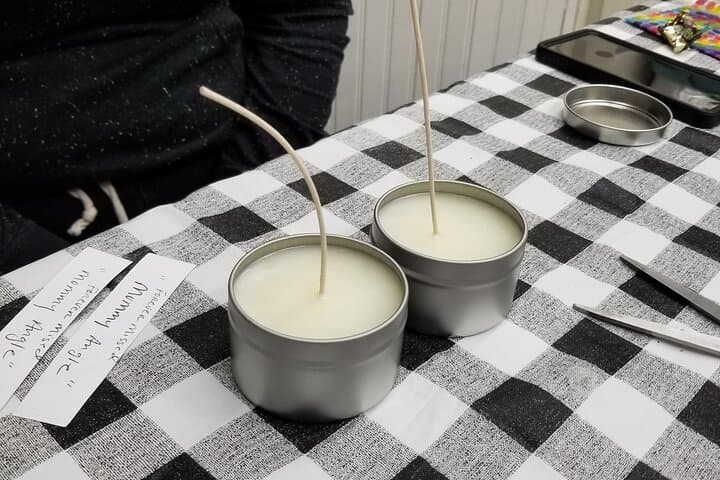
The room smells faintly of warm wax and citrus as light filters through street-facing windows; a table of glass jars, measured fragrance oils and coiled cotton wicks waits like a small, deliberate laboratory. Participants arrive with curiosity and leave with a custom candle that cools under their watch — a tactile reminder of how simple materials shape atmosphere.
The room smells faintly of warm wax and citrus as light filters through street-facing windows; a table of glass jars, measured fragrance oils and coiled cotton wicks waits like a small, deliberate laboratory. Participants arrive with curiosity and leave with a custom candle that cools under their watch — a tactile reminder of how simple materials shape atmosphere.
Candle making reaches back centuries as a practical craft and local industry. In Newark, a city shaped by 19th-century manufacturing and the Passaic River’s push through the basin, small studios now replace former factories. The geology beneath — Triassic redbeds and basalt flows of the Newark Basin — is a quieter backdrop, but it helped concentrate industry along lowland corridors and river access.
Culturally, Newark’s Ironbound neighborhood feeds a hands-on ethos: food markets and craft shops supply both scent inspiration and containers. Modern classes here focus on clean-burning soy wax and cotton wicks, a nod to sustainability and indoor air quality. Expect a primer on wax chemistry, wick selection, fragrance load and safety practices like proper melting temperatures and ventilation.
Practically, this beginner-friendly, roughly 105-minute workshop suits all fitness levels and requires no prior skills. You’ll station at a covered workspace, follow step-by-step demos, pour into molds or jars, and learn to troubleshoot common problems such as tunneling or frosting. Bring a reusable tote for transport, note any scent sensitivities when booking, and plan to cool your candles at the venue before taking them home. The result is both a souvenir and a skill — a simple craft with precise technique and immediate, satisfying payoff.