THE ADVENTURE COLLECTIVE® · Independent discovery and booking for outdoor travel

Ride high on volcanic ridges and rock-strewn singletrack beneath Cotopaxi’s glaciar-capped cone. This full‑day enduro experience from Quito drops from ~15,000 ft through sandy scree, rocky singletrack and moorland for 2–3 technical downhill runs.
Ride high on volcanic ridges and rock-strewn singletrack beneath Cotopaxi’s glaciar-capped cone. This full‑day enduro experience from Quito drops from ~15,000 ft through sandy scree, rocky singletrack and moorland for 2–3 technical downhill runs.
The morning air bites with highland cold as the van pushes south from Quito along the Pan-American — volcanoes cut the horizon like dark teeth. You step out at the Parqueadero around 15,000 ft (≈4,572 m), a thin, bright sky above, and mount a full‑suspension bike built to eat volcanic scree. The first descent, known locally as the Holy Ridge, drops hard: sandy volcanic material, steep pitches, exposed rock shelves, then a narrower singletrack that runs through paramo grass and moorland.
Verified experiences and guided adventures in the surrounding area.
Operated by Activexpedition · Quito, Pichincha
The morning air bites with highland cold as the van pushes south from Quito along the Pan-American — volcanoes cut the horizon like dark teeth. You step out at the Parqueadero around 15,000 ft (≈4,572 m), a thin, bright sky above, and mount a full‑suspension bike built to eat volcanic scree. The first descent, known locally as the Holy Ridge, drops hard: sandy volcanic material, steep pitches, exposed rock shelves, then a narrower singletrack that runs through paramo grass and moorland.
Cotopaxi, one of Ecuador’s highest active volcanoes at roughly 5,897 m (about 19,347 ft), dominates the landscape. The trails were shaped by past eruptions and glacial sculpting — sharp ridgelines, pumice fields and rocky outcrops tell a geology of fire and ice. The area’s history folds indigenous Andean practices with hacienda-era grazing; you may pass wild horses and, with luck, glimpse an Andean condor circling thermals.
Expect 2–3 downhill runs over an 8‑hour outing, with private transport and bike kit supplied; snacks are included. Weather at elevation changes quickly — afternoons can bring wind and rain, so start early and prioritize acclimatization. Ride technical sections with conservative braking on loose volcanic sands; watch for soft edges where trail meets moor.
Practical tips: hydrate at altitude, wear a layered shell and full‑face or sturdy helmet, and carry a basic repair kit. If you have back or heart issues, this high‑altitude, high‑impact day is not recommended. For riders who relish raw terrain and panoramic volcano views, Cotopaxi’s downhill circuits offer intense, unfiltered highland riding.
challenging.
8 hours.
Good cardiovascular fitness and leg strength; comfortable with sustained technical descents at high altitude
Yes — riders should be comfortable with steep, technical descents and loose volcanic terrain; guides can adjust routes to ability but basic DH skills are expected.
Yes — full‑suspension bikes are provided along with snacks and private transport from Quito; bring personal protective gear if you prefer.
The tour runs about 8 hours total with 2–3 downhill runs depending on fitness and weather conditions.
Not recommended for pregnant travelers or those with serious back or heart conditions due to high altitude and the physical demands of downhill riding.
The Cotopaxi area has been used for centuries by indigenous Andean communities and later haciendas; volcanic eruptions have repeatedly reshaped human settlement and trail patterns.
Cotopaxi sits within a protected reserve with rules to minimize erosion and campsite impact; stay on established trails to protect fragile paramo soils.
Activexpedition operates guided outdoor trips and adventures with an emphasis on safety, stewardship, and memorable experiences.


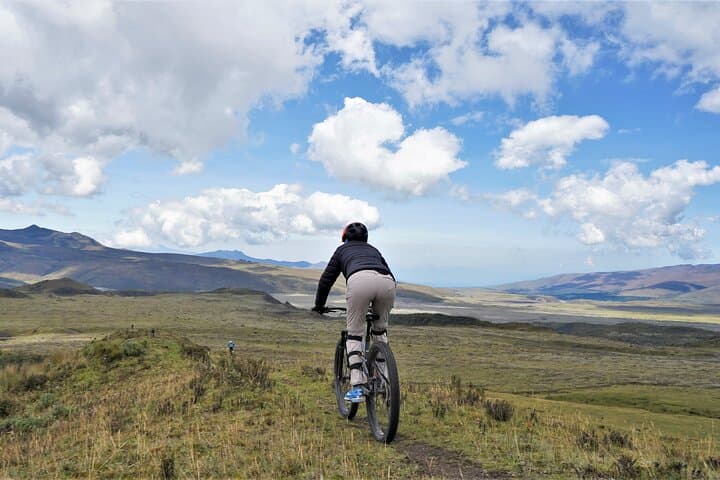
The morning air bites with highland cold as the van pushes south from Quito along the Pan-American — volcanoes cut the horizon like dark teeth. You step out at the Parqueadero around 15,000 ft (≈4,572 m), a thin, bright sky above, and mount a full‑suspension bike built to eat volcanic scree. The first descent, known locally as the Holy Ridge, drops hard: sandy volcanic material, steep pitches, exposed rock shelves, then a narrower singletrack that runs through paramo grass and moorland.
The morning air bites with highland cold as the van pushes south from Quito along the Pan-American — volcanoes cut the horizon like dark teeth. You step out at the Parqueadero around 15,000 ft (≈4,572 m), a thin, bright sky above, and mount a full‑suspension bike built to eat volcanic scree. The first descent, known locally as the Holy Ridge, drops hard: sandy volcanic material, steep pitches, exposed rock shelves, then a narrower singletrack that runs through paramo grass and moorland.
Cotopaxi, one of Ecuador’s highest active volcanoes at roughly 5,897 m (about 19,347 ft), dominates the landscape. The trails were shaped by past eruptions and glacial sculpting — sharp ridgelines, pumice fields and rocky outcrops tell a geology of fire and ice. The area’s history folds indigenous Andean practices with hacienda-era grazing; you may pass wild horses and, with luck, glimpse an Andean condor circling thermals.
Expect 2–3 downhill runs over an 8‑hour outing, with private transport and bike kit supplied; snacks are included. Weather at elevation changes quickly — afternoons can bring wind and rain, so start early and prioritize acclimatization. Ride technical sections with conservative braking on loose volcanic sands; watch for soft edges where trail meets moor.
Practical tips: hydrate at altitude, wear a layered shell and full‑face or sturdy helmet, and carry a basic repair kit. If you have back or heart issues, this high‑altitude, high‑impact day is not recommended. For riders who relish raw terrain and panoramic volcano views, Cotopaxi’s downhill circuits offer intense, unfiltered highland riding.