THE ADVENTURE COLLECTIVE® · Independent discovery and booking for outdoor travel

Ride and hike beneath Cotopaxi’s towering cone on a full‑day tour that mixes gravel road cycling with short, high‑altitude hikes to Limpiopungo Lagoon. Expect exposed páramo, strong winds and landmark views—prepare for altitude and variable weather.
Ride and hike beneath Cotopaxi’s towering cone on a full‑day tour that mixes gravel road cycling with short, high‑altitude hikes to Limpiopungo Lagoon. Expect exposed páramo, strong winds and landmark views—prepare for altitude and variable weather.
The road opens into high Andean air and the cone of Cotopaxi fills the horizon—white summit daring the wind as you pedal along volcanic gravel toward Limpiopungo Lagoon.
Verified experiences and guided adventures in the surrounding area.
Operated by Imagine Ecuador · Quito, Pichincha
The road opens into high Andean air and the cone of Cotopaxi fills the horizon—white summit daring the wind as you pedal along volcanic gravel toward Limpiopungo Lagoon.
This full‑day biking-and-hiking loop moves between open páramo, black volcanic scree and the sheltered reed edges of the lagoon. The landscape is recent in geological terms; Cotopaxi is one of the world’s highest active stratovolcanoes (summit 5,897 m) and the park’s soils are young, shaped by eruptions and glaciers. Indigenous communities have hunted and herded here for centuries, and the park established protections in the 20th century to conserve water sources and fragile high‑altitude ecosystems.
Expect wide, exposed skies, wind that tests your balance, and the occasional condor riding the thermals. Trails and park roads are primarily gravel and packed earth; you’ll alternate steady cycling sections (several kilometres on access roads) with short hikes to viewpoints and the lagoon shore. Altitude is the real terrain feature—most activity occurs near 3,800–4,200 m—so breathing will feel different and pace matters more than speed.
Practical guidance: arrive acclimatized from Quito or Latacunga, layer clothing for sun and cold, and plan for a long day (roughly nine hours including transfers). Guides typically provide bikes, helmets and lunch; bring water, high‑SPF sunscreen and a warm midlayer. Stick to designated routes to protect wetlands and reduce erosion—this is fragile, high‑altitude country that rewards respect with clear, unobstructed views of one of the Andes’ most dramatic volcanoes.
moderate.
9 hours.
Moderate fitness required—able to cycle for several kilometres on gravel and complete short hikes at high altitude.
Yes—most tour operators supply a mountain or hybrid bike and helmet; check fit requirements and bring personal items like gloves for comfort.
Possibly—symptoms vary; acclimatize in Quito or Latacunga, drink fluids, eat lightly and inform guides if you feel unwell.
Hikes are short (typically 1–3 km) but occur at high elevation, so they feel harder than at sea level; pacing is recommended.
Layered clothing, windproof outer layer, sun protection, and a small daypack for water and snacks are recommended.
Cotopaxi has long been significant to indigenous Andean cultures and was later protected as a national park to conserve fresh water sources and high‑altitude ecosystems.
Stay on marked paths and avoid disturbing bofedales; park management limits impacts through regulated access and visitor education to protect fragile páramo vegetation.
Imagine Ecuador operates guided outdoor trips and adventures with an emphasis on safety, stewardship, and memorable experiences.
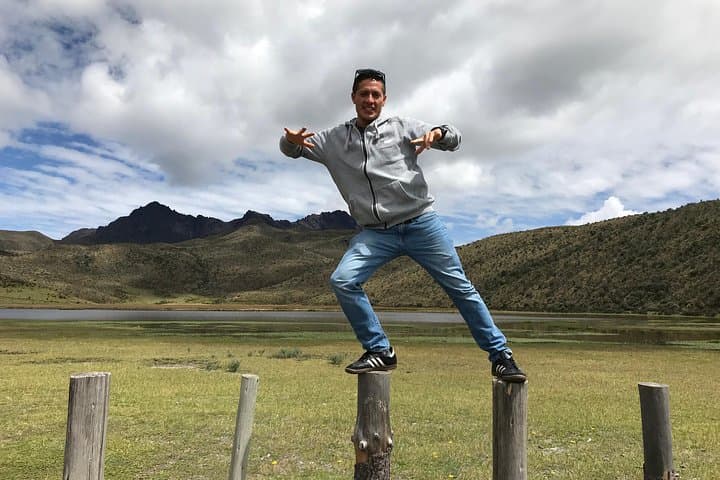
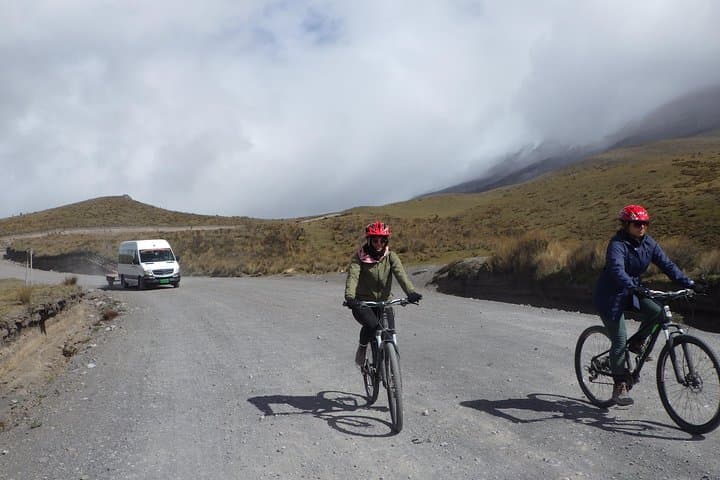
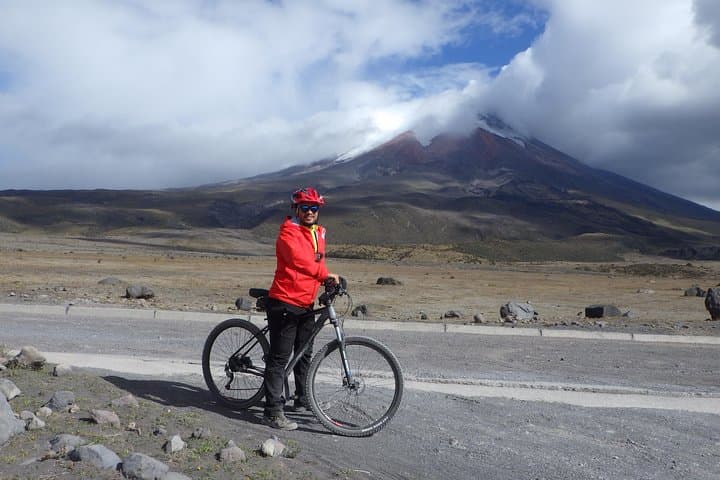
The road opens into high Andean air and the cone of Cotopaxi fills the horizon—white summit daring the wind as you pedal along volcanic gravel toward Limpiopungo Lagoon.
The road opens into high Andean air and the cone of Cotopaxi fills the horizon—white summit daring the wind as you pedal along volcanic gravel toward Limpiopungo Lagoon.
This full‑day biking-and-hiking loop moves between open páramo, black volcanic scree and the sheltered reed edges of the lagoon. The landscape is recent in geological terms; Cotopaxi is one of the world’s highest active stratovolcanoes (summit 5,897 m) and the park’s soils are young, shaped by eruptions and glaciers. Indigenous communities have hunted and herded here for centuries, and the park established protections in the 20th century to conserve water sources and fragile high‑altitude ecosystems.
Expect wide, exposed skies, wind that tests your balance, and the occasional condor riding the thermals. Trails and park roads are primarily gravel and packed earth; you’ll alternate steady cycling sections (several kilometres on access roads) with short hikes to viewpoints and the lagoon shore. Altitude is the real terrain feature—most activity occurs near 3,800–4,200 m—so breathing will feel different and pace matters more than speed.
Practical guidance: arrive acclimatized from Quito or Latacunga, layer clothing for sun and cold, and plan for a long day (roughly nine hours including transfers). Guides typically provide bikes, helmets and lunch; bring water, high‑SPF sunscreen and a warm midlayer. Stick to designated routes to protect wetlands and reduce erosion—this is fragile, high‑altitude country that rewards respect with clear, unobstructed views of one of the Andes’ most dramatic volcanoes.