THE ADVENTURE COLLECTIVE® · Independent discovery and booking for outdoor travel

Learn to surf on Costa da Caparica with a certified instructor in a focused 2‑hour group class. Boards, wetsuits, and on-beach coaching are provided — ideal for beginners and improving surfers wanting a safe, guided introduction to Lisbon’s Atlantic breaks.
Learn to surf on Costa da Caparica with a certified instructor in a focused 2‑hour group class. Boards, wetsuits, and on-beach coaching are provided — ideal for beginners and improving surfers wanting a safe, guided introduction to Lisbon’s Atlantic breaks.
A morning on Costa da Caparica begins with salt on the air and an Atlantic swell that seems to dare you off the sand. Group classes gather where broad sandy beaches meet a steady right and left-hand break; trainers size up conditions and pair you with a board that matches your height and skill. The lesson moves from shore drills to guided pop-ups, then into short paddles and catching small, forgiving waves — the sea pushing, instructing and rewarding.
Verified experiences and guided adventures in the surrounding area.
Operated by South Adventures · Costa da Caparica, Setúbal District
A morning on Costa da Caparica begins with salt on the air and an Atlantic swell that seems to dare you off the sand. Group classes gather where broad sandy beaches meet a steady right and left-hand break; trainers size up conditions and pair you with a board that matches your height and skill. The lesson moves from shore drills to guided pop-ups, then into short paddles and catching small, forgiving waves — the sea pushing, instructing and rewarding.
This coastline grew from a centuries-old fishing economy into a 20th-century beach culture, with surf culture arriving in the 1970s and maturing into an organized, safety-focused scene. Geologically, the long beaches and sandbars form predictable breaks when Atlantic swells align, while nearby cliffs and estuarine currents change conditions around high tide.
Practical guidance is straightforward: group lessons run about two hours with a 3–5 student-to-instructor ratio, and equipment (board, leash, wetsuit) is provided. Lessons usually take place in Costa da Caparica but may move to Guincho or Carcavelos for better safety or swell. Expect basic water-safety coaching, repetitive in-water practice, and on-beach technique feedback.
Plan for changing weather and sun exposure — wetsuits keep you warm, but wind and currents demand attention. Beginners should time lessons for mid to low tide when breaks are gentler, and all participants should disclose medical concerns in advance. With practical instruction and the Atlantic’s steady pull, a two-hour group surf class is a compact, effective way to start riding Portugal’s coast.
easy.
2 hours.
Basic swimming ability and comfort in ocean surf; general fitness sufficient for repeated paddling and pop-up practice.
No — group lessons cater to all levels; instructors teach basic paddling, pop-ups and safety drills for beginners while adapting progressions for more experienced students.
The price includes a surfboard, leash and wetsuit; bring swimwear, sunscreen and a towel for personal comfort.
Classes are offered for a wide range of ages, but operators ask about agebands and health conditions at booking and may restrict participation for young children or those with specific medical issues.
Lessons may move to a more sheltered beach (Carcavelos or Guincho) or be canceled for safety — the operator refunds cancellations made at least 24 hours in advance per policy.
Costa da Caparica evolved from fishing villages to a major Lisbon beach destination in the 20th century, and surf schools formalized in the 1970s as tourism and sport grew.
Beach dune restoration and organized cleanups are active locally; surf schools emphasize leaving no trace, avoiding sensitive dune areas and reporting marine pollution.
South Adventures operates guided outdoor trips and adventures with an emphasis on safety, stewardship, and memorable experiences.
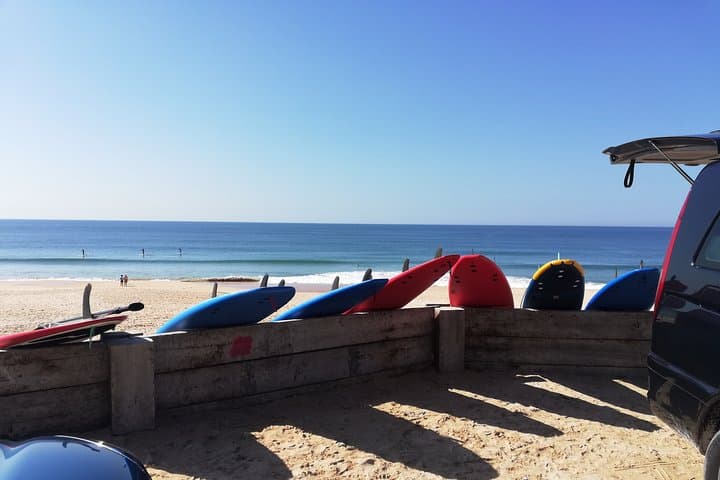
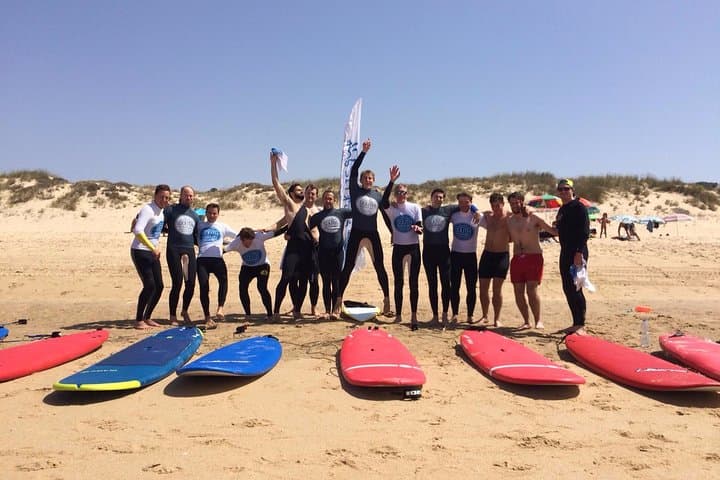
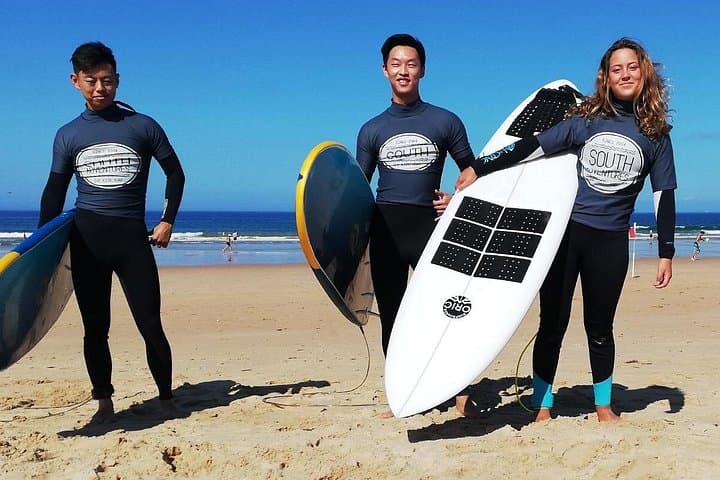
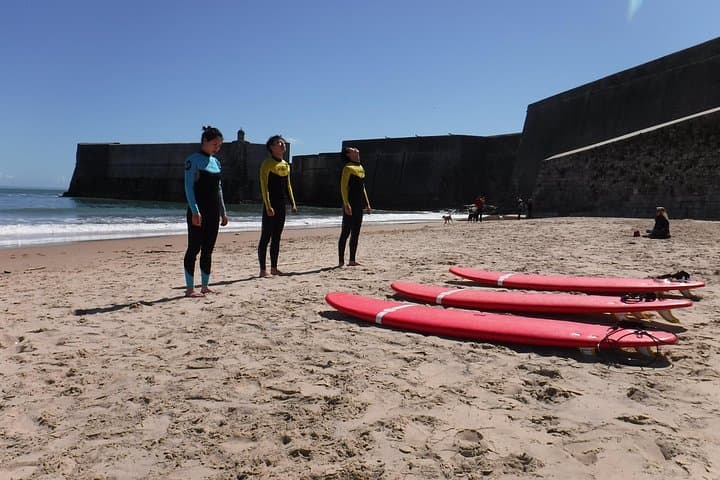
A morning on Costa da Caparica begins with salt on the air and an Atlantic swell that seems to dare you off the sand. Group classes gather where broad sandy beaches meet a steady right and left-hand break; trainers size up conditions and pair you with a board that matches your height and skill. The lesson moves from shore drills to guided pop-ups, then into short paddles and catching small, forgiving waves — the sea pushing, instructing and rewarding.
A morning on Costa da Caparica begins with salt on the air and an Atlantic swell that seems to dare you off the sand. Group classes gather where broad sandy beaches meet a steady right and left-hand break; trainers size up conditions and pair you with a board that matches your height and skill. The lesson moves from shore drills to guided pop-ups, then into short paddles and catching small, forgiving waves — the sea pushing, instructing and rewarding.
This coastline grew from a centuries-old fishing economy into a 20th-century beach culture, with surf culture arriving in the 1970s and maturing into an organized, safety-focused scene. Geologically, the long beaches and sandbars form predictable breaks when Atlantic swells align, while nearby cliffs and estuarine currents change conditions around high tide.
Practical guidance is straightforward: group lessons run about two hours with a 3–5 student-to-instructor ratio, and equipment (board, leash, wetsuit) is provided. Lessons usually take place in Costa da Caparica but may move to Guincho or Carcavelos for better safety or swell. Expect basic water-safety coaching, repetitive in-water practice, and on-beach technique feedback.
Plan for changing weather and sun exposure — wetsuits keep you warm, but wind and currents demand attention. Beginners should time lessons for mid to low tide when breaks are gentler, and all participants should disclose medical concerns in advance. With practical instruction and the Atlantic’s steady pull, a two-hour group surf class is a compact, effective way to start riding Portugal’s coast.