THE ADVENTURE COLLECTIVE® · Independent discovery and booking for outdoor travel

Ride a historic mountain railway and fly eight ziplines across 705 meters of regenerating native forest at Driving Creek. This 2.5-hour eco-focused canopy tour blends adrenaline with conservation and local pottery history.
Ride a historic mountain railway and fly eight ziplines across 705 meters of regenerating native forest at Driving Creek. This 2.5-hour eco-focused canopy tour blends adrenaline with conservation and local pottery history.
The train heaves itself up a narrow track, wood and steel rattling, and the forest leans closer as if eavesdropping. An 18-minute rail-car ascent carries you above ferns and gullies to a ridge where guides clip you into a harness and the trees begin to feel like an inhabited city—branches reaching, birds calling, roots gripping the hillside.
Verified experiences and guided adventures in the surrounding area.
Operated by Coromandel Zipline Tours · Coromandel, Waikato
The train heaves itself up a narrow track, wood and steel rattling, and the forest leans closer as if eavesdropping. An 18-minute rail-car ascent carries you above ferns and gullies to a ridge where guides clip you into a harness and the trees begin to feel like an inhabited city—branches reaching, birds calling, roots gripping the hillside.
This is Coromandel Zipline Tours at Driving Creek: eight ziplines spanning 705 meters across gullies, streams and patches of regenerating forest. The ride is intentional—part thrill, part field trip. Guides are storytellers and technicians; they speak in the language of soil and sap, explaining how kauri logging, gold-mining and pastoral farming scarred these slopes a century ago and how volunteers and artists have been coaxing it back ever since.
The geology here still shows the peninsula’s volcanic past—steep ridges and eroded gullies carved into andesitic rock and sediment. Driving Creek itself once fed small mills; today water threads through ferns and sedges, daring you to move quietly enough to hear fantails flicker. The site’s cultural layer is layered too: Barry Brickell’s railway and potteries transformed an industrial scar into a working studio and conservation laboratory, blending art, engineering and restoration.
Practicality underpins the romance. Tours run about 2.5 hours, include safety equipment, wet-weather clothing and a rail-car transfer, and operate with two guides for small groups. Physically this is accessible—short walks, platform ladders and brief uphill steps—but harness and helmet fit are non-negotiable, so weight and age details are collected at booking. All profits support native forest restoration and local clay arts, so your ticket is both admission and donation.
Timing matters. Book morning slots for clearer light and more active birdlife; afternoons are quieter and often greener after coastal breezes settle. Wear sturdy closed-toe shoes, layers for sudden wind or rain, and secure small cameras with straps—midair snapshots are addictive and easily lost. If you’re hoping to glimpse kiwi, remember they are nocturnal and shy; tui and kererū are far more likely daytime subjects.
Safety is visible and methodical: instructors run gear checks at every station and the cables are designed for progressive loads across the eight lines. Rain may close certain lines; the operator includes wet-weather gear but a slick jacket and a dry change are sensible.
At the end, standing on the final platform, the forest opens: trunks of emergent kauri peering above the canopy, gullies that used to be scars now full of green growth. The zipline isn’t just a rush—it’s a line pulled through time, connecting what this landscape was to what a committed community is making it again.
easy.
2–3 hours.
Suitable for most fitness levels; participants should be comfortable climbing short ladders and walking uneven trails.
The experience runs about 150 minutes total, including an 18-minute rail-car ascent, safety briefings and eight zipline runs.
Children are welcome but operators collect age and weight at booking for harness fit; typical limits align with industry standards—check the operator for exact minimums and maximums before booking.
Yes—guides lead every station, provide full safety equipment and the course is designed for people with no prior zipline experience.
Closed-toe shoes, comfortable activewear and a light waterproof layer; avoid loose items that could snag on gear.
Operations may be canceled for heavy rain or high winds; wet-weather clothing is provided and full refunds are available if canceled more than 24 hours before departure.
Meet at the Driving Creek start point—public transport options are available nearby, but many visitors drive from Coromandel Town or Thames.
Driving Creek was reshaped from kauri-logging and mining land; potter and conservationist Barry Brickell built the railway and pottery to restore and reinterpret the landscape.
The operator donates profits to native forest restoration and supports local predator-control and planting programs—visitors are asked to stay on designated paths and avoid disturbing flora.
Coromandel Zipline Tours operates guided outdoor trips and adventures with an emphasis on safety, stewardship, and memorable experiences.
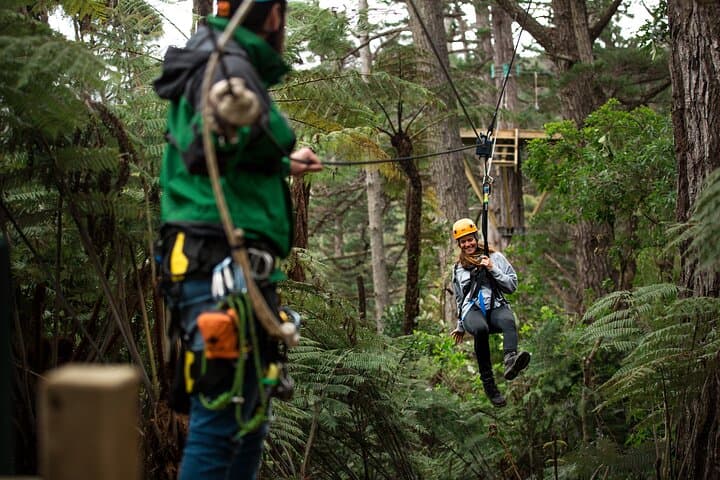
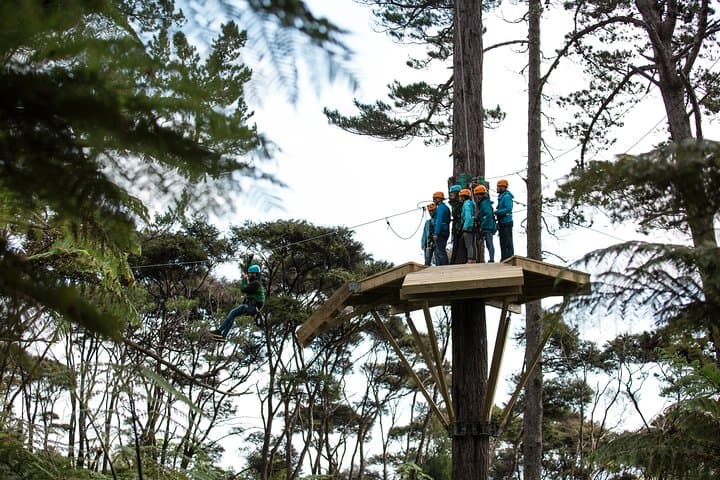
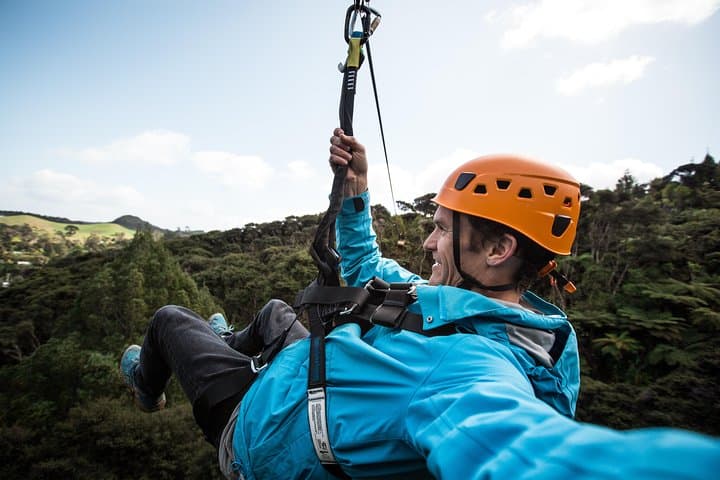
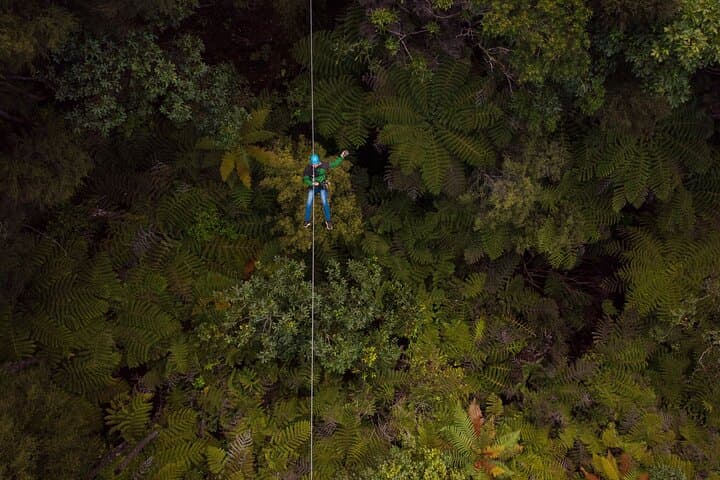
The train heaves itself up a narrow track, wood and steel rattling, and the forest leans closer as if eavesdropping. An 18-minute rail-car ascent carries you above ferns and gullies to a ridge where guides clip you into a harness and the trees begin to feel like an inhabited city—branches reaching, birds calling, roots gripping the hillside.
The train heaves itself up a narrow track, wood and steel rattling, and the forest leans closer as if eavesdropping. An 18-minute rail-car ascent carries you above ferns and gullies to a ridge where guides clip you into a harness and the trees begin to feel like an inhabited city—branches reaching, birds calling, roots gripping the hillside.
This is Coromandel Zipline Tours at Driving Creek: eight ziplines spanning 705 meters across gullies, streams and patches of regenerating forest. The ride is intentional—part thrill, part field trip. Guides are storytellers and technicians; they speak in the language of soil and sap, explaining how kauri logging, gold-mining and pastoral farming scarred these slopes a century ago and how volunteers and artists have been coaxing it back ever since.
The geology here still shows the peninsula’s volcanic past—steep ridges and eroded gullies carved into andesitic rock and sediment. Driving Creek itself once fed small mills; today water threads through ferns and sedges, daring you to move quietly enough to hear fantails flicker. The site’s cultural layer is layered too: Barry Brickell’s railway and potteries transformed an industrial scar into a working studio and conservation laboratory, blending art, engineering and restoration.
Practicality underpins the romance. Tours run about 2.5 hours, include safety equipment, wet-weather clothing and a rail-car transfer, and operate with two guides for small groups. Physically this is accessible—short walks, platform ladders and brief uphill steps—but harness and helmet fit are non-negotiable, so weight and age details are collected at booking. All profits support native forest restoration and local clay arts, so your ticket is both admission and donation.
Timing matters. Book morning slots for clearer light and more active birdlife; afternoons are quieter and often greener after coastal breezes settle. Wear sturdy closed-toe shoes, layers for sudden wind or rain, and secure small cameras with straps—midair snapshots are addictive and easily lost. If you’re hoping to glimpse kiwi, remember they are nocturnal and shy; tui and kererū are far more likely daytime subjects.
Safety is visible and methodical: instructors run gear checks at every station and the cables are designed for progressive loads across the eight lines. Rain may close certain lines; the operator includes wet-weather gear but a slick jacket and a dry change are sensible.
At the end, standing on the final platform, the forest opens: trunks of emergent kauri peering above the canopy, gullies that used to be scars now full of green growth. The zipline isn’t just a rush—it’s a line pulled through time, connecting what this landscape was to what a committed community is making it again.