THE ADVENTURE COLLECTIVE® · Independent discovery and booking for outdoor travel

Slow-walking through Serra d’Ossa’s cork oaks, this 4–5 hour trek combines close botanical exploration with a Maroteira wine tasting and a traditional Alentejo lunch. Ideal for nature lovers who prefer micro-exploration and local food culture.
Slow-walking through Serra d’Ossa’s cork oaks, this 4–5 hour trek combines close botanical exploration with a Maroteira wine tasting and a traditional Alentejo lunch. Ideal for nature lovers who prefer micro-exploration and local food culture.
A cool breeze moves through the cork oaks as you step off the lane and onto a soft, dappled carpet of leaves — the forest feels deliberate, each tree a slow-working artisan. This 4–5 hour walk around Serra d’Ossa puts you among ancient Quercus suber stands where bark is harvested by hand and the ground hums with insect life.
Verified experiences and guided adventures in the surrounding area.
Operated by Corktrekking · Évora, Alentejo
A cool breeze moves through the cork oaks as you step off the lane and onto a soft, dappled carpet of leaves — the forest feels deliberate, each tree a slow-working artisan. This 4–5 hour walk around Serra d’Ossa puts you among ancient Quercus suber stands where bark is harvested by hand and the ground hums with insect life.
The Alentejo’s cork landscapes are both cultural and geological: low, rounded hills of schist and sandstone that shaped traditional land use and the region’s open-canopy silvopasture. Cork harvesting has fed local families for generations; the trees’ thick bark is stripped on multi-decade cycles, an economy synchronized with the land’s rhythms. Wildlife is present but subtle — wild boar rooting in the understory, flitting birds and the occasional hare — and guides emphasize low-impact observation.
The walk is intentionally gentle, aimed at botanists and curious hikers who want close, slow study rather than long-distance mileage. After the forest section a seated tasting introduces Maroteira wines alongside Iberian ham and local cheeses, then a traditional Alentejo lunch in a family-run restaurant closes the day.
Practical notes: expect 4 hours of mostly flat to rolling trails, some loose soil and short shaded ascents. Wear sturdy shoes, sun protection and bring a refillable bottle; bottled water is provided. Morning starts avoid midday heat in summer and improve bird activity. The experience blends field botany, light trekking and regional gastronomy — a compact taste of Alentejo’s land and culture.
easy.
4–5 hours.
Suitable for most fitness levels; requires steady walking on gentle terrain for several hours
The activity lasts about 4–5 hours and is classified as easy: mostly gentle, rolling terrain with short shaded ascents suitable for most walkers.
Yes—tasting of Maroteira wines and local produce plus a traditional Alentejo lunch at a family-run restaurant are included in the itinerary.
Expect birds, hares, and occasionally wild boar or mongoose; encounters are typically at a distance—guides advise quiet observation.
The route is low-impact and family-friendly, but those with significant mobility limitations should contact the operator to confirm accessibility for specific sections.
Cork harvesting has defined Alentejo’s rural economy for centuries; the region’s trees are managed on long cycles that balance extraction with tree health.
Cork oak landscapes are biodiversity hotspots and carbon stores; visitors are encouraged to follow low-impact guidelines and respect harvesting operations.
Corktrekking operates guided outdoor trips and adventures with an emphasis on safety, stewardship, and memorable experiences.
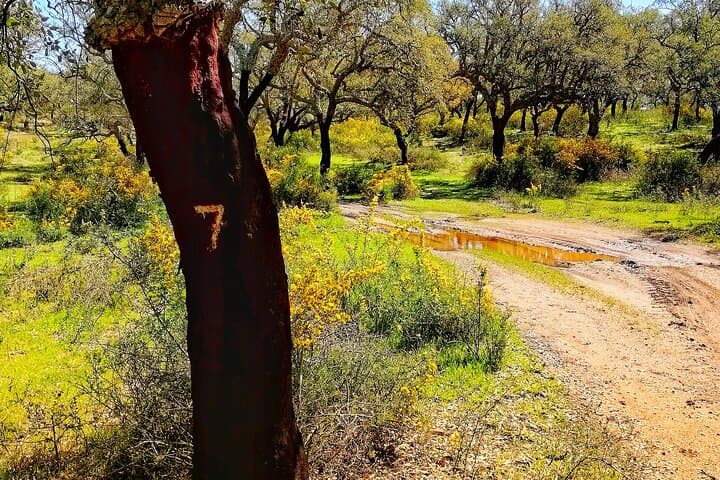
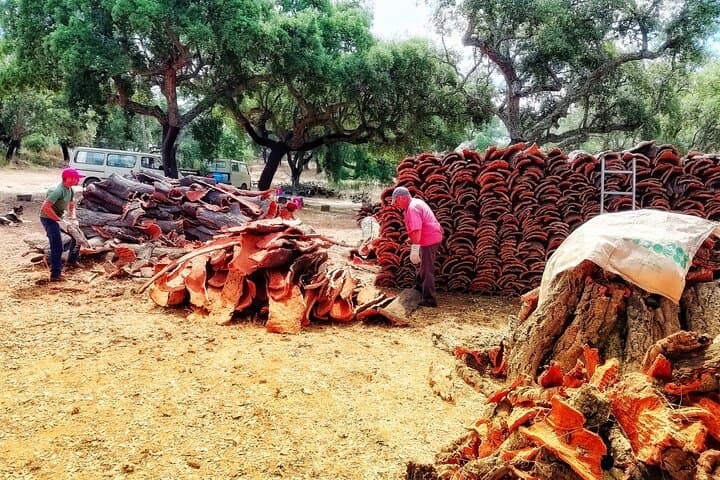
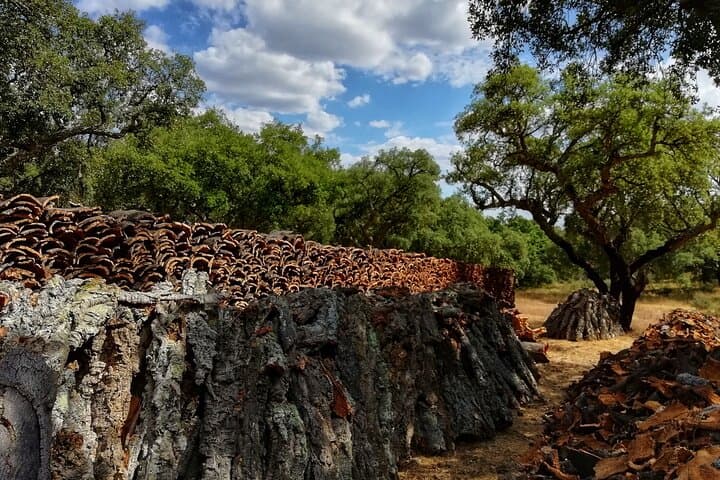
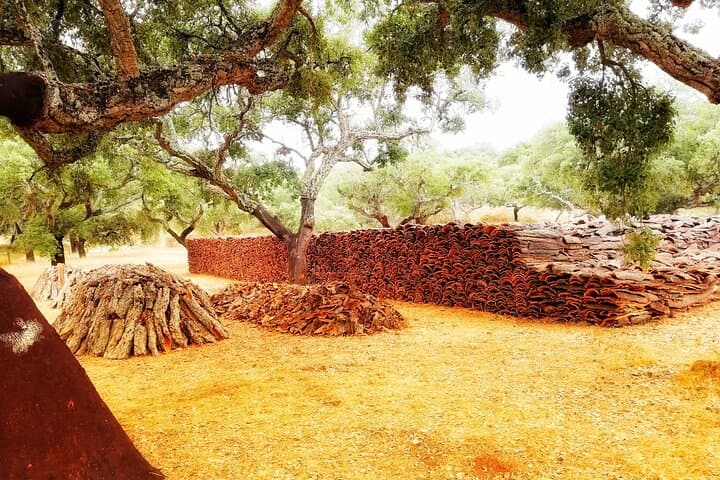
A cool breeze moves through the cork oaks as you step off the lane and onto a soft, dappled carpet of leaves — the forest feels deliberate, each tree a slow-working artisan. This 4–5 hour walk around Serra d’Ossa puts you among ancient Quercus suber stands where bark is harvested by hand and the ground hums with insect life.
A cool breeze moves through the cork oaks as you step off the lane and onto a soft, dappled carpet of leaves — the forest feels deliberate, each tree a slow-working artisan. This 4–5 hour walk around Serra d’Ossa puts you among ancient Quercus suber stands where bark is harvested by hand and the ground hums with insect life.
The Alentejo’s cork landscapes are both cultural and geological: low, rounded hills of schist and sandstone that shaped traditional land use and the region’s open-canopy silvopasture. Cork harvesting has fed local families for generations; the trees’ thick bark is stripped on multi-decade cycles, an economy synchronized with the land’s rhythms. Wildlife is present but subtle — wild boar rooting in the understory, flitting birds and the occasional hare — and guides emphasize low-impact observation.
The walk is intentionally gentle, aimed at botanists and curious hikers who want close, slow study rather than long-distance mileage. After the forest section a seated tasting introduces Maroteira wines alongside Iberian ham and local cheeses, then a traditional Alentejo lunch in a family-run restaurant closes the day.
Practical notes: expect 4 hours of mostly flat to rolling trails, some loose soil and short shaded ascents. Wear sturdy shoes, sun protection and bring a refillable bottle; bottled water is provided. Morning starts avoid midday heat in summer and improve bird activity. The experience blends field botany, light trekking and regional gastronomy — a compact taste of Alentejo’s land and culture.