THE ADVENTURE COLLECTIVE® · Independent discovery and booking for outdoor travel

A three-day, off-the-beaten-track loop from Huaraz that links Llanganuco, Chavín approaches and the Pastoruri Glacier. Expect long unpaved drives, short high-altitude hikes and authentic village stays away from touristic hubs.
A three-day, off-the-beaten-track loop from Huaraz that links Llanganuco, Chavín approaches and the Pastoruri Glacier. Expect long unpaved drives, short high-altitude hikes and authentic village stays away from touristic hubs.
You step out of Huaraz before dawn and the road unfurls—dust, highland scrub and sudden blue between granite ribs. The Cordillera Blanca circuit moves at the pace of mountains: slow, granular, demanding breath and attention. Over three days you pass Andean villages, carved passes and the stark approach to Pastoruri Glacier, where moraine and ice argue about survival.
Verified experiences and guided adventures in the surrounding area.
You step out of Huaraz before dawn and the road unfurls—dust, highland scrub and sudden blue between granite ribs. The Cordillera Blanca circuit moves at the pace of mountains: slow, granular, demanding breath and attention. Over three days you pass Andean villages, carved passes and the stark approach to Pastoruri Glacier, where moraine and ice argue about survival.
This is Ancash country: the legacy of the Chavín culture and later highland communities is written in stone trails, irrigation terraces and local weaving traditions. Geologically the range is a spine of granite and metamorphic rock uplifted by tectonics and sculpted by Pleistocene glaciers; the recent recession of Pastoruri is a sharp, visible marker of modern climate shifts.
Culture here is practical and present—small farms, Quechua-speaking families and mountain shepherds who keep traditions alive. Expect simple lodgings selected to support local hosts rather than luxury lodges.
Practically, the route is 80% unpaved with long vehicle transfers (roughly nine hours of driving across the circuit) and short high-altitude hikes up to about 5,000 m. Acclimatize in Huaraz for at least 24–48 hours beforehand. Bring layered clothing for cold mornings, sun protection for the mid-day exposure, and water with electrolytes for thin air. Travel windows favor the dry season (May–September) for clearer roads and safer approaches.
The trip suits travelers who want raw landscapes and cultural contact more than crowds—it's about presence, preparation and respect for a fragile high-mountain environment.
challenging.
3 days.
Good aerobic fitness and prior exposure to altitudes above 3,000 m; comfortable with short hikes and long vehicle transfers.
Expect long stretches on rough, unpaved roads; drivers are experienced but motion-sickness and dust are common—plan accordingly.
No technical climbing skills are required—short high-altitude walks are included but no glacier travel is expected for this itinerary.
Possibly—symptoms range from mild headache to nausea; acclimatization in Huaraz, hydration, slow pacing and over-the-counter meds help; severe symptoms require descent.
This tour includes specified entrance tickets and several lunches but verify exact inclusions with the operator before booking.
The region holds pre-Inca and Chavín archaeological influence; ancient trade routes and terraces reflect centuries of highland adaptation.
Pastoruri and nearby glaciers are retreating; visitors should minimize impact by staying on trails, avoiding single-use plastics and supporting community-based tourism.
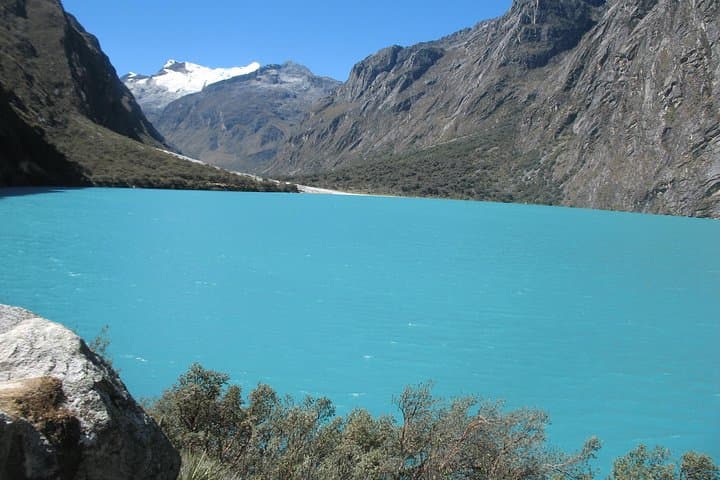
You step out of Huaraz before dawn and the road unfurls—dust, highland scrub and sudden blue between granite ribs. The Cordillera Blanca circuit moves at the pace of mountains: slow, granular, demanding breath and attention. Over three days you pass Andean villages, carved passes and the stark approach to Pastoruri Glacier, where moraine and ice argue about survival.
You step out of Huaraz before dawn and the road unfurls—dust, highland scrub and sudden blue between granite ribs. The Cordillera Blanca circuit moves at the pace of mountains: slow, granular, demanding breath and attention. Over three days you pass Andean villages, carved passes and the stark approach to Pastoruri Glacier, where moraine and ice argue about survival.
This is Ancash country: the legacy of the Chavín culture and later highland communities is written in stone trails, irrigation terraces and local weaving traditions. Geologically the range is a spine of granite and metamorphic rock uplifted by tectonics and sculpted by Pleistocene glaciers; the recent recession of Pastoruri is a sharp, visible marker of modern climate shifts.
Culture here is practical and present—small farms, Quechua-speaking families and mountain shepherds who keep traditions alive. Expect simple lodgings selected to support local hosts rather than luxury lodges.
Practically, the route is 80% unpaved with long vehicle transfers (roughly nine hours of driving across the circuit) and short high-altitude hikes up to about 5,000 m. Acclimatize in Huaraz for at least 24–48 hours beforehand. Bring layered clothing for cold mornings, sun protection for the mid-day exposure, and water with electrolytes for thin air. Travel windows favor the dry season (May–September) for clearer roads and safer approaches.
The trip suits travelers who want raw landscapes and cultural contact more than crowds—it's about presence, preparation and respect for a fragile high-mountain environment.