THE ADVENTURE COLLECTIVE® · Independent discovery and booking for outdoor travel

Enter a pocket of Rome where architecture breaks rules: Coppedè’s ornate façades, frog fountain, and strange symbols reward close inspection. This private 2.5-hour walking tour decodes the quarter’s esoteric details and local stories.
Enter a pocket of Rome where architecture breaks rules: Coppedè’s ornate façades, frog fountain, and strange symbols reward close inspection. This private 2.5-hour walking tour decodes the quarter’s esoteric details and local stories.
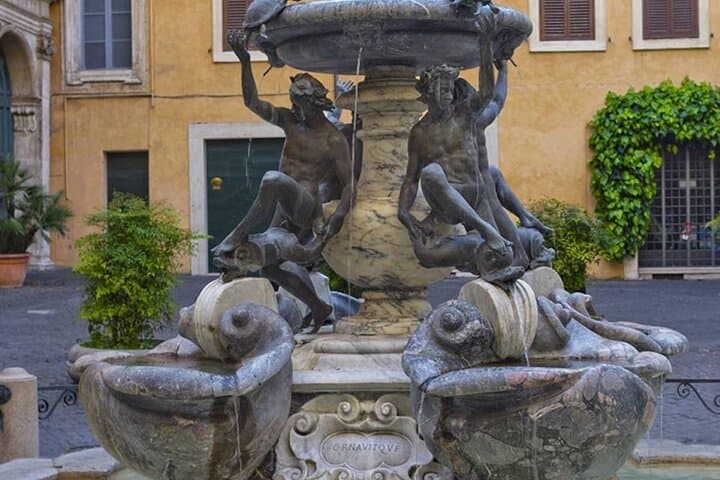
You step through a low stone arch and the city changes pitch: facades tilt into ornament, bronze frogs perch on a fountain, and sculpted masks leer from cornices as if daring you to read their stories.
Verified experiences and guided adventures in the surrounding area.
Operated by Keys Of Italy / Florence · Rome, Lazio
You step through a low stone arch and the city changes pitch: facades tilt into ornament, bronze frogs perch on a fountain, and sculpted masks leer from cornices as if daring you to read their stories.
The Coppedè quarter—designed by Gino Coppedè between the 1910s and 1920s—was conceived as an architectural set piece, a deliberate rupture from Rome’s classical axes. Here Art Nouveau friezes rub shoulders with Gothic turrets and Baroque flourishes; the plaza’s Fountain of the Frogs remains a local stage where tourists and Romans briefly overlap, famously even amusing visiting musicians in the 1960s.
Geologically the neighborhood sits on Rome’s gentle alluvial plain north of the historic center, so streets are flat but paved with uneven cobbles and decorative stone. Culturally the quarter reads like an eccentric manifesto—symbols, masks, and esoteric motifs reflect early-20th-century tastes for allegory and secret societies, giving the district a theatrical, slightly conspiratorial air.
On a private 2.5-hour walking tour you’ll move slowly—stopping at the archway, the frog fountain, and hallmark façades while a guide decodes sculptural symbols and points out hidden inscriptions. Practical notes: wear solid-soled shoes for short cobbles, expect narrow lanes and limited seating, and schedule mornings or late afternoons for softer light and fewer crowds. Photography is welcomed but be discreet around residents, and check weather—rain slicks both stone and steps.
This is an urban stroll for people who want their Rome textured: architectural curiosities that demand close inspection and a guide who can turn decorative stone into local history.
easy.
2–3 hours.
Suitable for most fitness levels; requires standing and walking on paved surfaces for up to 2.5 hours.
The route is mostly flat, but cobblestones and narrow sidewalks may be challenging; contact the operator to confirm specific accessibility needs.
No—this is a walking tour of public streets and plazas; there are no paid admissions on the standard route.
The tour is private for your party, allowing the guide to tailor stops and pacing to your interests and mobility.
Guides are typically local and often speak English and Italian; confirm language needs at booking.
Gino Coppedè designed the quarter between roughly 1915–1927 as a stylistic experiment combining Art Nouveau, Gothic, and Baroque elements to create a theatrical urban milieu.
The district is protected as part of Rome’s architectural heritage; visitors are asked to avoid touching frescoes and to minimize noise and litter to preserve fragile details.
Keys Of Italy / Florence operates guided outdoor trips and adventures with an emphasis on safety, stewardship, and memorable experiences.
You step through a low stone arch and the city changes pitch: facades tilt into ornament, bronze frogs perch on a fountain, and sculpted masks leer from cornices as if daring you to read their stories.
You step through a low stone arch and the city changes pitch: facades tilt into ornament, bronze frogs perch on a fountain, and sculpted masks leer from cornices as if daring you to read their stories.
The Coppedè quarter—designed by Gino Coppedè between the 1910s and 1920s—was conceived as an architectural set piece, a deliberate rupture from Rome’s classical axes. Here Art Nouveau friezes rub shoulders with Gothic turrets and Baroque flourishes; the plaza’s Fountain of the Frogs remains a local stage where tourists and Romans briefly overlap, famously even amusing visiting musicians in the 1960s.
Geologically the neighborhood sits on Rome’s gentle alluvial plain north of the historic center, so streets are flat but paved with uneven cobbles and decorative stone. Culturally the quarter reads like an eccentric manifesto—symbols, masks, and esoteric motifs reflect early-20th-century tastes for allegory and secret societies, giving the district a theatrical, slightly conspiratorial air.
On a private 2.5-hour walking tour you’ll move slowly—stopping at the archway, the frog fountain, and hallmark façades while a guide decodes sculptural symbols and points out hidden inscriptions. Practical notes: wear solid-soled shoes for short cobbles, expect narrow lanes and limited seating, and schedule mornings or late afternoons for softer light and fewer crowds. Photography is welcomed but be discreet around residents, and check weather—rain slicks both stone and steps.
This is an urban stroll for people who want their Rome textured: architectural curiosities that demand close inspection and a guide who can turn decorative stone into local history.