THE ADVENTURE COLLECTIVE® · Independent discovery and booking for outdoor travel

Leave the Acropolis crowds behind and climb Athens’ highest urban peak. This guided 90-minute hike rewards steady effort with sweeping 360° views—Acropolis, sea, and city—via quiet pine trails and a famed summit “balcony.”
Leave the Acropolis crowds behind and climb Athens’ highest urban peak. This guided 90-minute hike rewards steady effort with sweeping 360° views—Acropolis, sea, and city—via quiet pine trails and a famed summit “balcony.”
You step away from the honk and chatter of central Athens and the city folds upward into a wooded ridge—pines shading a rocky trail that angles toward the highest point in the city.
Verified experiences and guided adventures in the surrounding area.
Operated by Ultimate Athens · Athens, Attica
You step away from the honk and chatter of central Athens and the city folds upward into a wooded ridge—pines shading a rocky trail that angles toward the highest point in the city.
Lycabettus Hill has long been a vantage and refuge: an ancient lookout with limestone outcrops formed by uplift on the Attica plain, later threaded by paths used by locals and pilgrims. Its slopes sit above the elegant Kolonaki neighborhood, where marble facades give way to scrub pines and the air smells of resin and distant sea.
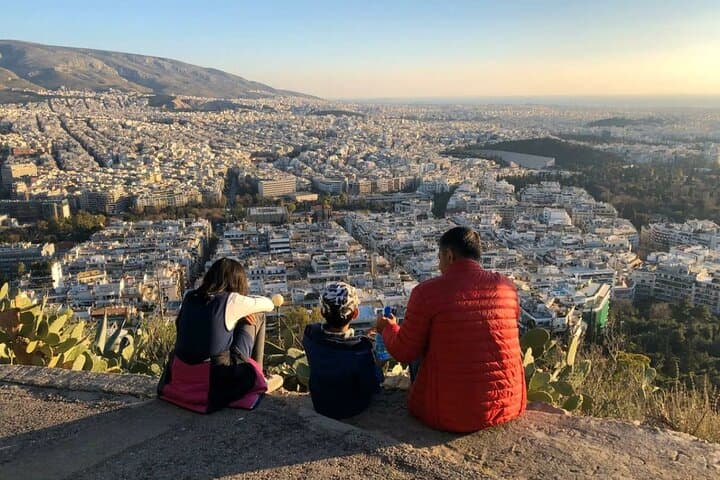
Culturally, the hill is part of everyday Athenian life—an amphitheater and chapel (Agios Georgios) crown the summit, and a small café catches the late light. Geologically, expect gritty limestone underfoot and short, steep switchbacks that expose bedrock and reveal the city unfolding below—Acropolis to the southwest, the Gulf of Argolis to the east.
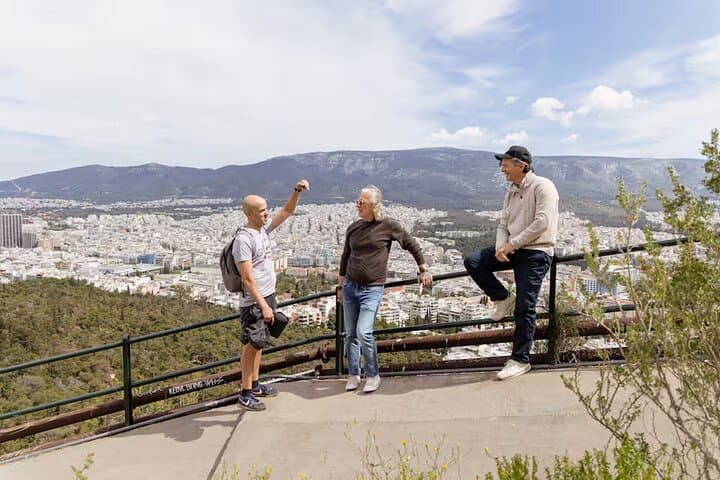
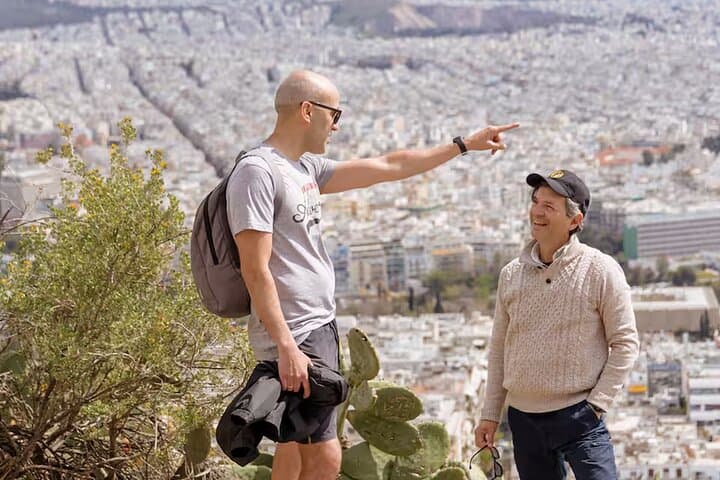
The climb is compact but honest: rough terrain, sustained uphill walking and a few stone steps. A guided 90-minute ascent like this takes you along quieter paths, through a sun-dappled pine canopy, then onto a broad plateau called “the balcony” with arguably the best unobstructed Acropolis view in Athens.
Practical guidance: wear sturdy hiking shoes, bring 1–1.5 liters of water, and plan to go early or late in the day to avoid heat and crowds. Expect exposed sections—bring sun protection—and steady footing on loose rock. Fitness matters more than technical skill; walkers in good cardiovascular shape will find the reward hard-earned but immediate. Finish with coffee on the summit terrace and a panoramic handshake with the city below.
moderate.
1.5 hours.
Requires good cardiovascular fitness and steady balance for uphill walking on uneven, rocky terrain.
A guided climb takes about 90 minutes round-trip on standard routes, including stops at viewpoints.
Steep and uneven sections make the hike unsuitable for those with serious mobility limitations or very young children without carrier support.
Yes—there is a funicular that runs from Kolonaki for those who prefer not to walk, though guided hikes use quieter, pedestrian paths.
Early morning or late afternoon offers cooler temperatures and better light; avoid midday in summer due to heat and sun exposure.
Lycabettus served historically as a natural lookout and local landmark; the small 19th-century chapel of Agios Georgios marks the summit and hosts occasional local services.
The hill is urban but ecologically sensitive; stick to marked paths to prevent erosion and avoid trampling native shrubs and pine seedlings.
Ultimate Athens operates guided outdoor trips and adventures with an emphasis on safety, stewardship, and memorable experiences.

You step away from the honk and chatter of central Athens and the city folds upward into a wooded ridge—pines shading a rocky trail that angles toward the highest point in the city.
You step away from the honk and chatter of central Athens and the city folds upward into a wooded ridge—pines shading a rocky trail that angles toward the highest point in the city.
Lycabettus Hill has long been a vantage and refuge: an ancient lookout with limestone outcrops formed by uplift on the Attica plain, later threaded by paths used by locals and pilgrims. Its slopes sit above the elegant Kolonaki neighborhood, where marble facades give way to scrub pines and the air smells of resin and distant sea.
Culturally, the hill is part of everyday Athenian life—an amphitheater and chapel (Agios Georgios) crown the summit, and a small café catches the late light. Geologically, expect gritty limestone underfoot and short, steep switchbacks that expose bedrock and reveal the city unfolding below—Acropolis to the southwest, the Gulf of Argolis to the east.
The climb is compact but honest: rough terrain, sustained uphill walking and a few stone steps. A guided 90-minute ascent like this takes you along quieter paths, through a sun-dappled pine canopy, then onto a broad plateau called “the balcony” with arguably the best unobstructed Acropolis view in Athens.
Practical guidance: wear sturdy hiking shoes, bring 1–1.5 liters of water, and plan to go early or late in the day to avoid heat and crowds. Expect exposed sections—bring sun protection—and steady footing on loose rock. Fitness matters more than technical skill; walkers in good cardiovascular shape will find the reward hard-earned but immediate. Finish with coffee on the summit terrace and a panoramic handshake with the city below.