THE ADVENTURE COLLECTIVE® · Independent discovery and booking for outdoor travel

Scaling Island Peak from Chhukung is a demanding high-altitude climb that tests endurance and skills while rewarding adventurers with sweeping views of Everest and surrounding giants. This guide breaks down the essential details you need to prepare for a successful summit.
Scaling Island Peak from Chhukung is a demanding high-altitude climb that tests endurance and skills while rewarding adventurers with sweeping views of Everest and surrounding giants. This guide breaks down the essential details you need to prepare for a successful summit.
Rising sharply against the raw, jagged skyline of Nepal’s Everest region, Island Peak demands respect. At 6,173 meters, it stands as one of the most accessible Himalayan summits, drawing climbers eager to test their limits amidst stone-strewn ridges and sweeping glacial valleys. The journey begins in the village of Chhukung, a quiet hamlet perched on the edge of the Imja Khola river, where the buzz of trekkers gives way to the imposing stillness of the mountains. From here, the trail leads straight into a realm shaped by ice and time, where vertical walls dare you onward and the wind pushes you toward the summit.
Verified experiences and guided adventures in the surrounding area.
Operated by Nepal Wilderness Trekking · Chhukung, Province No. 1
Rising sharply against the raw, jagged skyline of Nepal’s Everest region, Island Peak demands respect. At 6,173 meters, it stands as one of the most accessible Himalayan summits, drawing climbers eager to test their limits amidst stone-strewn ridges and sweeping glacial valleys. The journey begins in the village of Chhukung, a quiet hamlet perched on the edge of the Imja Khola river, where the buzz of trekkers gives way to the imposing stillness of the mountains. From here, the trail leads straight into a realm shaped by ice and time, where vertical walls dare you onward and the wind pushes you toward the summit.
Geologically, Island Peak (Imja Tse) rises out of great folds of metamorphic rock, its slopes scarred by ancient glaciers that continue to mill the landscape beneath the watchful gaze of Lhotse and Everest. This climb offers more than altitude; it layers experience with Sherpa culture, as local guides weave old climbing wisdom into the daily rhythm of the ascent. Camp is pitched at base camp, where high winds chatter through prayer flags, and each breath tastes sharp with cold and effort.
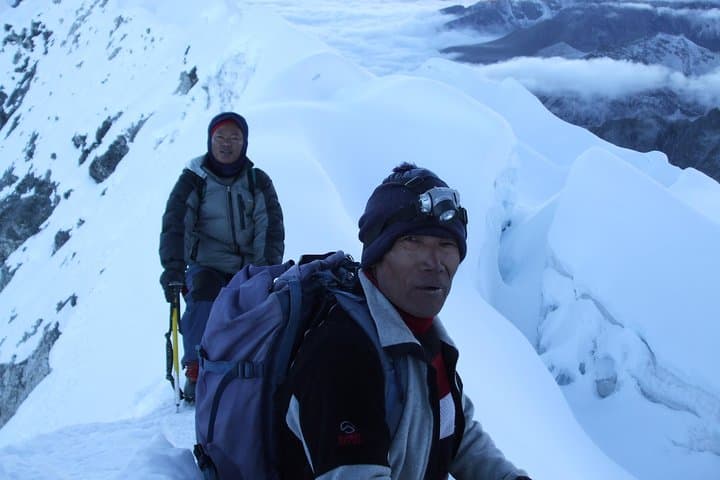
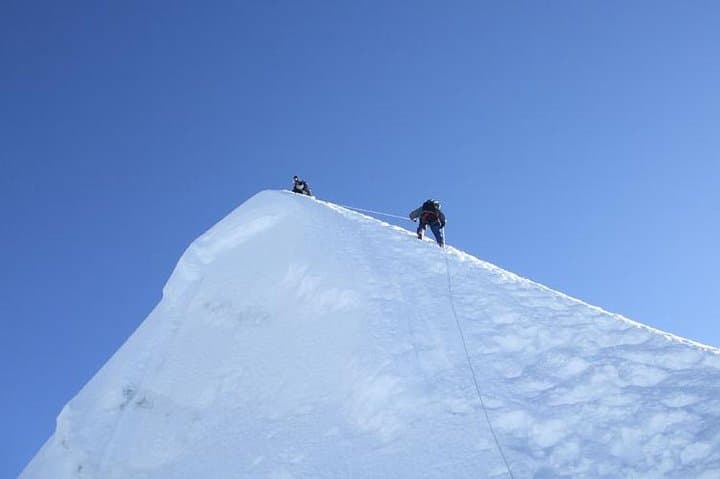
Climbers should anticipate over nine hours of rigorous movement between base camp and summit, navigating rocky scrambles and snow fields equipped with crampons and ice axes. The ascent demands excellent cardiovascular fitness and mountain savvy, including basic knowledge of rope techniques and glacier travel. Weather can shift quickly; preparation for rapid temperature drops and sun exposure at altitude is essential.
Despite its challenges, this trip is well supported by Nepal Wilderness Trekking, providing all necessary permits, gear like climbing ropes and anchors, and meals from base camp onward. The route is well-established but requires focus and respect for the mountain’s power. Acclimatization days in Chhukung or nearby are prudent to reduce risk of altitude illness.
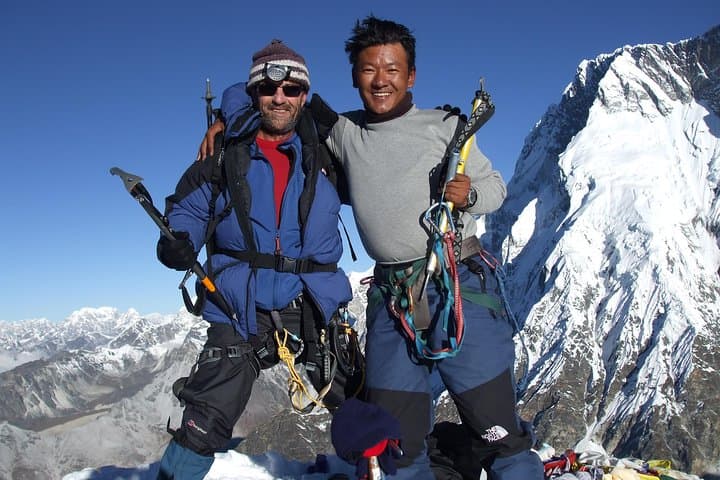
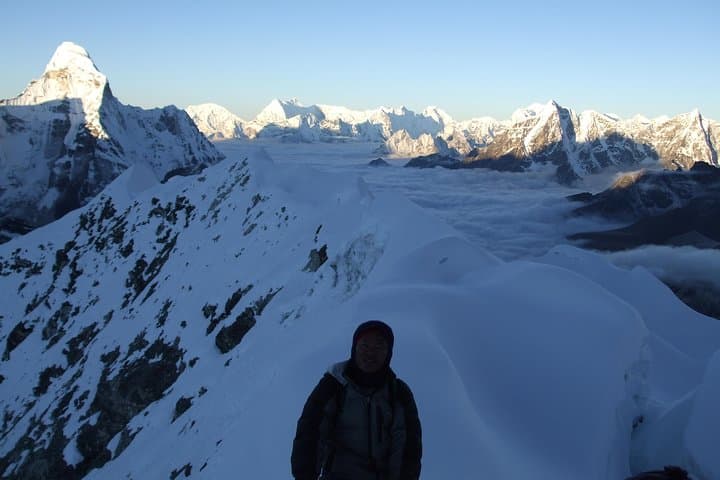
Island Peak’s rugged profile is a proving ground offering panoramic views of towering Everest, Nuptse, and Ama Dablam, vistas that reward each painstaking step. For travelers, this climb is not just a summit attempt but a deep engagement with a landscape where rock, ice, and sky converge in stark, unforgettable clarity.
Planning tip: start early to maximize daylight and avoid afternoon weather, bring layered clothing for drastic temperature swings, and rely on your guides’ local knowledge for route safety. Whether solo or in a group, this climb promises a rigorous challenge and the chance to stand atop one of the Himalaya’s great gateways.
difficult.
8–10 hours (summit day).
Requires high aerobic fitness and stamina; prior trekking or climbing experience recommended
Spring and autumn are the most popular seasons due to stable weather and clearer skies.
Basic mountaineering skills and experience with ropes and crampons are highly recommended for safety.
Yes, due to the elevation gain, proper acclimatization and hydration are critical to mitigate symptoms.
Yes, local agencies provide experienced guides and porters essential for logistics and safety.
The climb requires strong physical conditioning, as the summit day alone can last 8–10 hours at high altitude.
Most climbing gear like ropes and anchors are provided, but personal boots, clothing layers, and glasses should be brought by the climber.
Island Peak was first climbed in 1953 as a training peak for Everest expeditions and remains a popular climb for acclimatization and experience.
Efforts by local groups focus on minimizing waste and preserving fragile alpine environments by enforcing strict camping and trekking regulations.
Nepal Wilderness Trekking operates guided outdoor trips and adventures with an emphasis on safety, stewardship, and memorable experiences.
Rising sharply against the raw, jagged skyline of Nepal’s Everest region, Island Peak demands respect. At 6,173 meters, it stands as one of the most accessible Himalayan summits, drawing climbers eager to test their limits amidst stone-strewn ridges and sweeping glacial valleys. The journey begins in the village of Chhukung, a quiet hamlet perched on the edge of the Imja Khola river, where the buzz of trekkers gives way to the imposing stillness of the mountains. From here, the trail leads straight into a realm shaped by ice and time, where vertical walls dare you onward and the wind pushes you toward the summit.
Rising sharply against the raw, jagged skyline of Nepal’s Everest region, Island Peak demands respect. At 6,173 meters, it stands as one of the most accessible Himalayan summits, drawing climbers eager to test their limits amidst stone-strewn ridges and sweeping glacial valleys. The journey begins in the village of Chhukung, a quiet hamlet perched on the edge of the Imja Khola river, where the buzz of trekkers gives way to the imposing stillness of the mountains. From here, the trail leads straight into a realm shaped by ice and time, where vertical walls dare you onward and the wind pushes you toward the summit.
Geologically, Island Peak (Imja Tse) rises out of great folds of metamorphic rock, its slopes scarred by ancient glaciers that continue to mill the landscape beneath the watchful gaze of Lhotse and Everest. This climb offers more than altitude; it layers experience with Sherpa culture, as local guides weave old climbing wisdom into the daily rhythm of the ascent. Camp is pitched at base camp, where high winds chatter through prayer flags, and each breath tastes sharp with cold and effort.
Climbers should anticipate over nine hours of rigorous movement between base camp and summit, navigating rocky scrambles and snow fields equipped with crampons and ice axes. The ascent demands excellent cardiovascular fitness and mountain savvy, including basic knowledge of rope techniques and glacier travel. Weather can shift quickly; preparation for rapid temperature drops and sun exposure at altitude is essential.
Despite its challenges, this trip is well supported by Nepal Wilderness Trekking, providing all necessary permits, gear like climbing ropes and anchors, and meals from base camp onward. The route is well-established but requires focus and respect for the mountain’s power. Acclimatization days in Chhukung or nearby are prudent to reduce risk of altitude illness.
Island Peak’s rugged profile is a proving ground offering panoramic views of towering Everest, Nuptse, and Ama Dablam, vistas that reward each painstaking step. For travelers, this climb is not just a summit attempt but a deep engagement with a landscape where rock, ice, and sky converge in stark, unforgettable clarity.
Planning tip: start early to maximize daylight and avoid afternoon weather, bring layered clothing for drastic temperature swings, and rely on your guides’ local knowledge for route safety. Whether solo or in a group, this climb promises a rigorous challenge and the chance to stand atop one of the Himalaya’s great gateways.