THE ADVENTURE COLLECTIVE® · Independent discovery and booking for outdoor travel

Climb Psiloritis—Crete’s highest peak—and stand where myth and geology meet at 2,456 m. This full-day hike rewards sustained effort with sweeping island and sea views, Minoan echoes and rugged karst ridgelines.
Climb Psiloritis—Crete’s highest peak—and stand where myth and geology meet at 2,456 m. This full-day hike rewards sustained effort with sweeping island and sea views, Minoan echoes and rugged karst ridgelines.
Morning light strips across hard limestone as you climb—wind pushing you toward the bare crown of Psiloritis, the island’s highest point. Sheep-braided tracks break into scree, and low stone mitata dot the lower slopes like sentries. At the summit of Timios Stavros (2,456 m) the island flattens away into stitched olive groves and the Aegean hangs like a distant promise.
Verified experiences and guided adventures in the surrounding area.
Operated by Alternative Crete · Anogeia, Crete
Morning light strips across hard limestone as you climb—wind pushing you toward the bare crown of Psiloritis, the island’s highest point. Sheep-braided tracks break into scree, and low stone mitata dot the lower slopes like sentries. At the summit of Timios Stavros (2,456 m) the island flattens away into stitched olive groves and the Aegean hangs like a distant promise.
Psiloritis carries deep layers of story: Minoan ruins at ancient Zominthos and the mythic Idaion Antron link the mountain to Zeus’s origin tales. Geologically it’s a karst massif—limestone folded and hollowed into caves, plateaus and sharp ridgelines. Local culture remains pastoral; shepherds still move flocks seasonally and simple stone huts demonstrate centuries of adaptation to thin soils and high winds.
Expect a long, steady ascent on mixed terrain—dirt tracks, rocky switchbacks and exposed ridge sections. The trail gains roughly 1,100–1,400 m depending on the approach; plan 5–6 hours round-trip from common trailheads. Weather shifts fast: clear sun can flip to cold winds above 2,000 m in minutes.
Practical edge: wear sturdy boots, carry 2–3 liters of water, and layer for wind and sun. Altitude is modest but demanding—pace conservatively and use poles on steep descents (walking sticks may be provided). Aim for early starts to avoid afternoon wind and to enjoy the panorama with fewer clouds. Respect grazing lands and leave no trace: these slopes are both living landscape and UNESCO-listed geopark, and your footsteps matter.
challenging.
5–6 hours.
Good aerobic fitness with experience on sustained uphill hikes; comfortable with uneven terrain and exposure.
The route is a sustained climb to 2,456 m with loose rock and exposed sections; expect 5–6 hours round-trip and a steady elevation gain—suitable for hikers with moderate-to-strong fitness.
This tour includes an English-speaking certified guide, and walking sticks are supplied; guided groups simplify navigation and local insight into geology and culture.
Late spring through early fall offers the most stable conditions; winter can bring snow and requires alpine gear and experience.
At 2,456 m some may notice mild symptoms; pace slowly, stay hydrated, and descend if you feel unwell—severe altitude sickness is rare but possible.
Psiloritis is tied to Minoan culture and mythology—sites like Zominthos and the Idaion Antron cave connect the massif to ancient ritual and settlement.
Psiloritis is part of the UNESCO Global Geopark network; stick to trails, avoid disturbing grazing areas, and carry out all waste to protect fragile alpine soils.
Alternative Crete operates guided outdoor trips and adventures with an emphasis on safety, stewardship, and memorable experiences.
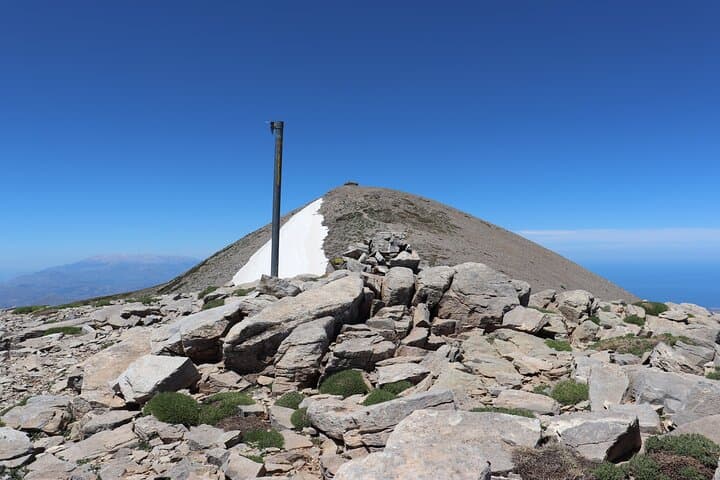
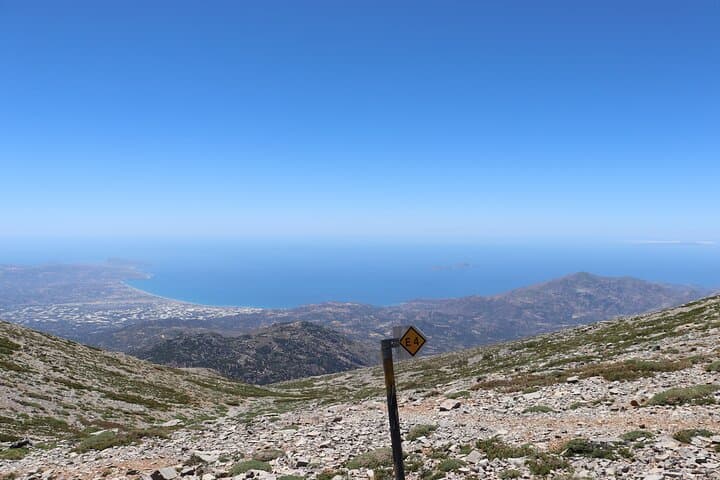
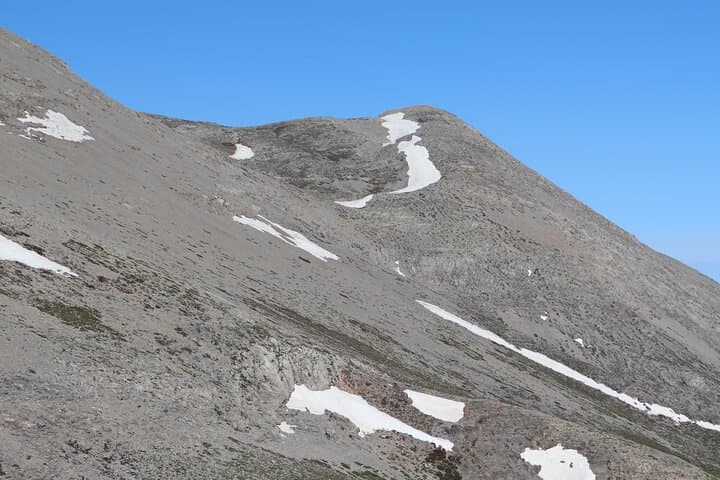
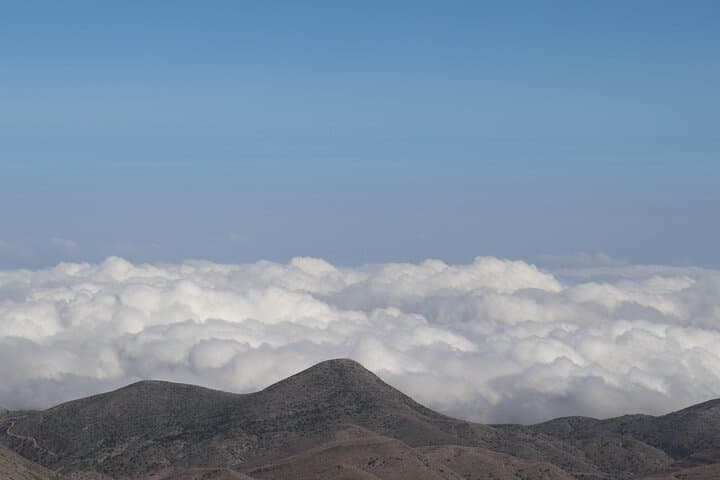
Morning light strips across hard limestone as you climb—wind pushing you toward the bare crown of Psiloritis, the island’s highest point. Sheep-braided tracks break into scree, and low stone mitata dot the lower slopes like sentries. At the summit of Timios Stavros (2,456 m) the island flattens away into stitched olive groves and the Aegean hangs like a distant promise.
Morning light strips across hard limestone as you climb—wind pushing you toward the bare crown of Psiloritis, the island’s highest point. Sheep-braided tracks break into scree, and low stone mitata dot the lower slopes like sentries. At the summit of Timios Stavros (2,456 m) the island flattens away into stitched olive groves and the Aegean hangs like a distant promise.
Psiloritis carries deep layers of story: Minoan ruins at ancient Zominthos and the mythic Idaion Antron link the mountain to Zeus’s origin tales. Geologically it’s a karst massif—limestone folded and hollowed into caves, plateaus and sharp ridgelines. Local culture remains pastoral; shepherds still move flocks seasonally and simple stone huts demonstrate centuries of adaptation to thin soils and high winds.
Expect a long, steady ascent on mixed terrain—dirt tracks, rocky switchbacks and exposed ridge sections. The trail gains roughly 1,100–1,400 m depending on the approach; plan 5–6 hours round-trip from common trailheads. Weather shifts fast: clear sun can flip to cold winds above 2,000 m in minutes.
Practical edge: wear sturdy boots, carry 2–3 liters of water, and layer for wind and sun. Altitude is modest but demanding—pace conservatively and use poles on steep descents (walking sticks may be provided). Aim for early starts to avoid afternoon wind and to enjoy the panorama with fewer clouds. Respect grazing lands and leave no trace: these slopes are both living landscape and UNESCO-listed geopark, and your footsteps matter.