THE ADVENTURE COLLECTIVE® · Independent discovery and booking for outdoor travel

Scaling Pedra da Gavea offers one of Rio de Janeiro’s toughest hikes and most stunning views, combining Atlantic Forest trails with an exhilarating rope-assisted scramble. Discover what it takes to summit this coastal giant safely and savor panoramic city and ocean vistas.
Scaling Pedra da Gavea offers one of Rio de Janeiro’s toughest hikes and most stunning views, combining Atlantic Forest trails with an exhilarating rope-assisted scramble. Discover what it takes to summit this coastal giant safely and savor panoramic city and ocean vistas.
At dawn, the air in Rio de Janeiro hums with anticipation as the trailhead at Concha Doce bakery stirs to life. Ahead looms Pedra da Gavea, a towering granite giant rising sharply from Tijuca National Park's lush Atlantic Forest. This hike stakes a claim as one of the most demanding and rewarding ascents in the city—a steep climb crowned by panoramic views that stretch from Sugarloaf Mountain to the vast Atlantic Ocean.
Verified experiences and guided adventures in the surrounding area.
Operated by Rio Mountain Sports · Rio de Janeiro, Rio de Janeiro
At dawn, the air in Rio de Janeiro hums with anticipation as the trailhead at Concha Doce bakery stirs to life. Ahead looms Pedra da Gavea, a towering granite giant rising sharply from Tijuca National Park's lush Atlantic Forest. This hike stakes a claim as one of the most demanding and rewarding ascents in the city—a steep climb crowned by panoramic views that stretch from Sugarloaf Mountain to the vast Atlantic Ocean.
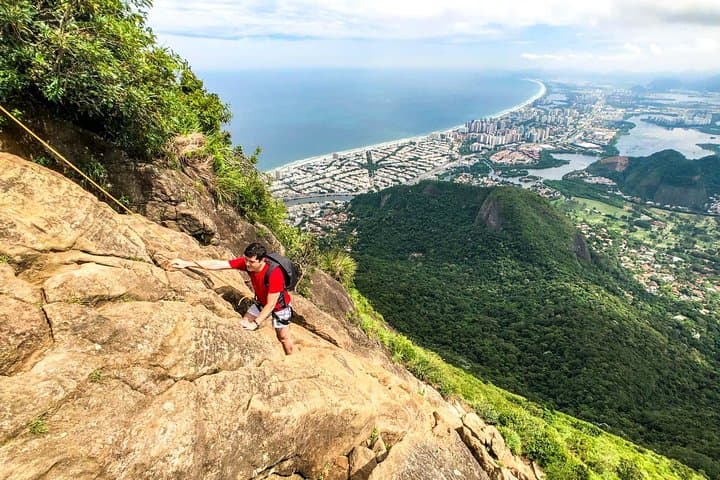
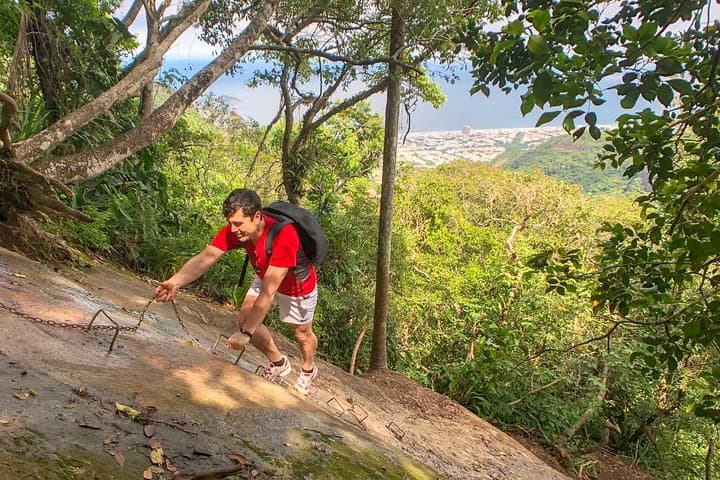
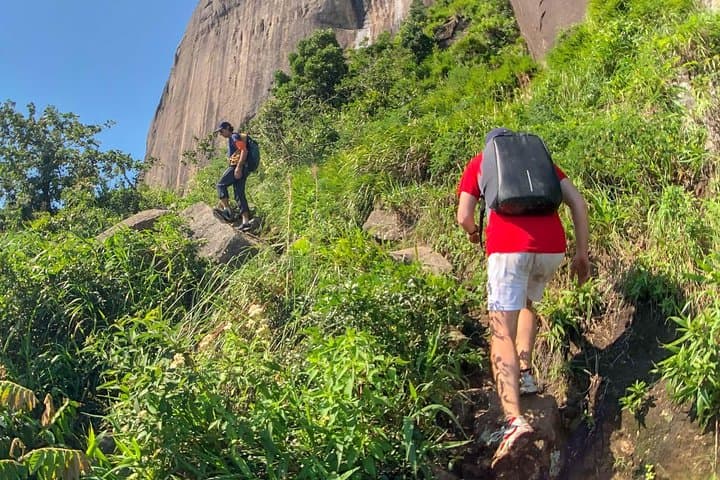
The trail is a physical dialogue with nature. From the start, dense, humid forest shadows press close, alive with the calls of toucans and monkeys. The trail’s uneven rock and tangled roots dare your footing as you climb higher. After roughly two-thirds of the 4–5 hour journey, you’ll face the Carrasqueira scramble: a 30-meter vertical rock face that demands hands, feet, and rope. Here, certified guides equip you with climbing gear, turning the daunting patch into a manageable but thrilling challenge.
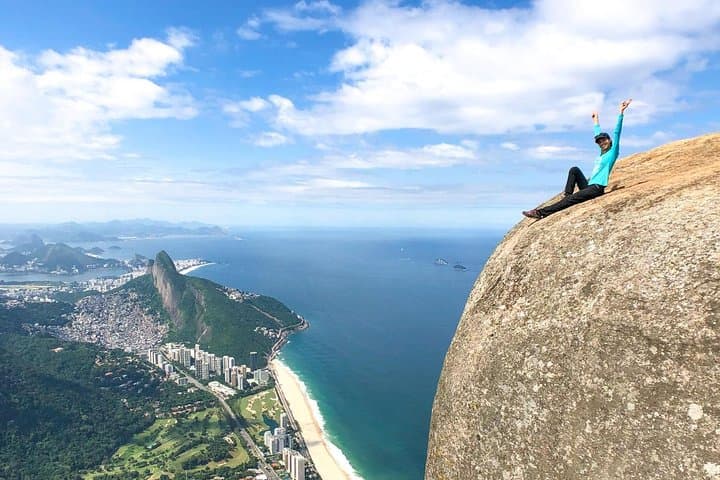
Once atop the plateau, the forest thins and Rio reveals itself—mountains, sea, and cityscape woven in a breathtaking 360-degree vista. Below, the waves push against the city’s edges as if marking the boundary between two worlds. The return follows the same path, descending Carrasqueira with the safety of guided rappel techniques.
Pedra da Gavea is not just a hike but a journey through geological and cultural layers. This monolith, one of the world’s tallest coastal rock formations, stands as a relic of volcanic activity and natural erosion over millions of years. Tijuca National Park itself, one of the largest urban rainforests globally, reflects Rio’s commitment to conserving its green heart amid urban sprawl.
Travelers should come prepared: the trail is steep and uneven, demanding physical fitness but no prior climbing experience. Sturdy hiking shoes with strong traction, layered breathable clothing, and at least 2–3 liters of water per person are essentials. Early starts beat afternoon heat and afternoon showers common in tropical climates. Guides lead the group at a steady pace, offering climbing tips and ensuring safety.
Public transport and accommodations are conveniently accessible in Rio’s neighborhoods like Barra da Tijuca or Copacabana, making logistics straightforward.
For those seeking an adventurous mix of rock climbing, natural immersion, and city vistas, Pedra da Gavea offers a singular challenge crowned by one of Rio’s most commanding views.
challenging.
4–5 hours.
Good physical condition needed to handle steep ascents, uneven terrain, and rope climbing
No, the guides provide all necessary safety gear and instruction for the rope-assisted scramble.
The trail ascends approximately 842 meters (2,762 feet) to the summit.
Due to the strenuous nature and technical rope sections, the hike is recommended for physically fit adults only.
It’s strongly advised to hike with a certified guide for safety, especially on Carrasqueira.
Carry at least 2–3 liters of water and snacks, as there are no services on the trail.
Begin early around 8am to avoid heat and afternoon rain typical in the region.
Pedra da Gavea, formed by ancient volcanic activity, is imbued with local myths linking it to pre-Columbian giants.
Tijuca National Park is actively protected to preserve its urban rainforest ecosystem, balancing tourism and habitat conservation.
Rio Mountain Sports operates guided outdoor trips and adventures with an emphasis on safety, stewardship, and memorable experiences.
At dawn, the air in Rio de Janeiro hums with anticipation as the trailhead at Concha Doce bakery stirs to life. Ahead looms Pedra da Gavea, a towering granite giant rising sharply from Tijuca National Park's lush Atlantic Forest. This hike stakes a claim as one of the most demanding and rewarding ascents in the city—a steep climb crowned by panoramic views that stretch from Sugarloaf Mountain to the vast Atlantic Ocean.
At dawn, the air in Rio de Janeiro hums with anticipation as the trailhead at Concha Doce bakery stirs to life. Ahead looms Pedra da Gavea, a towering granite giant rising sharply from Tijuca National Park's lush Atlantic Forest. This hike stakes a claim as one of the most demanding and rewarding ascents in the city—a steep climb crowned by panoramic views that stretch from Sugarloaf Mountain to the vast Atlantic Ocean.
The trail is a physical dialogue with nature. From the start, dense, humid forest shadows press close, alive with the calls of toucans and monkeys. The trail’s uneven rock and tangled roots dare your footing as you climb higher. After roughly two-thirds of the 4–5 hour journey, you’ll face the Carrasqueira scramble: a 30-meter vertical rock face that demands hands, feet, and rope. Here, certified guides equip you with climbing gear, turning the daunting patch into a manageable but thrilling challenge.
Once atop the plateau, the forest thins and Rio reveals itself—mountains, sea, and cityscape woven in a breathtaking 360-degree vista. Below, the waves push against the city’s edges as if marking the boundary between two worlds. The return follows the same path, descending Carrasqueira with the safety of guided rappel techniques.
Pedra da Gavea is not just a hike but a journey through geological and cultural layers. This monolith, one of the world’s tallest coastal rock formations, stands as a relic of volcanic activity and natural erosion over millions of years. Tijuca National Park itself, one of the largest urban rainforests globally, reflects Rio’s commitment to conserving its green heart amid urban sprawl.
Travelers should come prepared: the trail is steep and uneven, demanding physical fitness but no prior climbing experience. Sturdy hiking shoes with strong traction, layered breathable clothing, and at least 2–3 liters of water per person are essentials. Early starts beat afternoon heat and afternoon showers common in tropical climates. Guides lead the group at a steady pace, offering climbing tips and ensuring safety.
Public transport and accommodations are conveniently accessible in Rio’s neighborhoods like Barra da Tijuca or Copacabana, making logistics straightforward.
For those seeking an adventurous mix of rock climbing, natural immersion, and city vistas, Pedra da Gavea offers a singular challenge crowned by one of Rio’s most commanding views.