THE ADVENTURE COLLECTIVE® · Independent discovery and booking for outdoor travel

A steep, technical hike to the summit of Pedra da Gávea — an 844 m seaside monolith overlooking Rio. Expect exposed slabs, a rope-assisted final pitch, and sweeping city-and-coast views.
A steep, technical hike to the summit of Pedra da Gávea — an 844 m seaside monolith overlooking Rio. Expect exposed slabs, a rope-assisted final pitch, and sweeping city-and-coast views.
You step out of the Atlantic breeze and into a green wall — the Tijuca canopy closes over the trail, then opens onto vertical granite that rises from the city like a weathered ship’s hull. The final ridge pushes you onto exposed slabs where the city and sea unfold: São Conrado’s coastline to the south, the West Zone and Corcovado to the west, all visible from the summit at 844 meters.
Verified experiences and guided adventures in the surrounding area.
Operated by Lucas Rio de Janeiro · Rio de Janeiro, Rio de Janeiro
You step out of the Atlantic breeze and into a green wall — the Tijuca canopy closes over the trail, then opens onto vertical granite that rises from the city like a weathered ship’s hull. The final ridge pushes you onto exposed slabs where the city and sea unfold: São Conrado’s coastline to the south, the West Zone and Corcovado to the west, all visible from the summit at 844 meters.
This route follows paths trodden for centuries; sailors used the monolith as a coastal reference and the name "Gávea" recalls a topsail. Geologically the peak is a single massive granite intrusion—coastal and bold—and local folklore has long circled the rock’s carved face and steep cliffs. The surrounding Tijuca Forest is reclaimed Atlantic Forest, an urban national park that preserves flora, wildlife and old water springs.
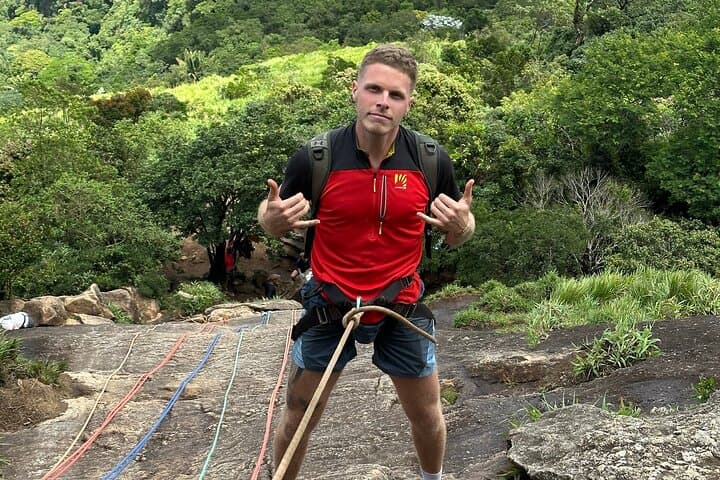
Practically, expect steep, rocky hiking of roughly 6 km round trip with ~800 m of elevation gain and a technical final pitch: a 20–30 meter assisted climbing section (often called the carrasqueira) using ropes and a climbing chair supplied by guided services. Trails are narrow, rooted and occasionally slick; guides provide safety gear and photo support. Start before mid-morning to avoid afternoon storms and heat, bring 2–3 liters of water, grippy boots, and a headlamp if you linger. Be prepared for exposed scrambling and short sections where a steady head for heights matters.
Respect closures, stick to routes to limit erosion, and give way to descending parties — the mountain demands both effort and humility, and rewards you with one of Rio’s most uncompromising panoramas.
challenging.
3–5 hours.
Should be in good aerobic shape; regular hikers who can handle sustained climbs and short technical scrambling will fare best.
The final pitch is steep and exposed but short (about 20–30 meters); guides provide ropes and a climbing chair, though you must be comfortable with heights and basic scrambling.
No technical climbing certification is required—this is a guided hike with assisted gear—but experience with exposed trails and scrambling is helpful.
Not recommended for young children, pregnant travelers, or anyone with serious back or heart conditions due to exposure, steep terrain and exertion.
Drier months (May–September) offer clearer skies and cooler temperatures; avoid the rainy season (December–March) when trails become slippery and storms are common.
Pedra da Gávea served as a nautical landmark for sailors; its name references the topsail ('gávea') of old sailing ships and it features prominently in local lore.
The summit lies within Tijuca National Park; stay on trail, pack out waste and follow guide instructions to minimize erosion and protect native Atlantic Forest.
Lucas Rio de Janeiro operates guided outdoor trips and adventures with an emphasis on safety, stewardship, and memorable experiences.
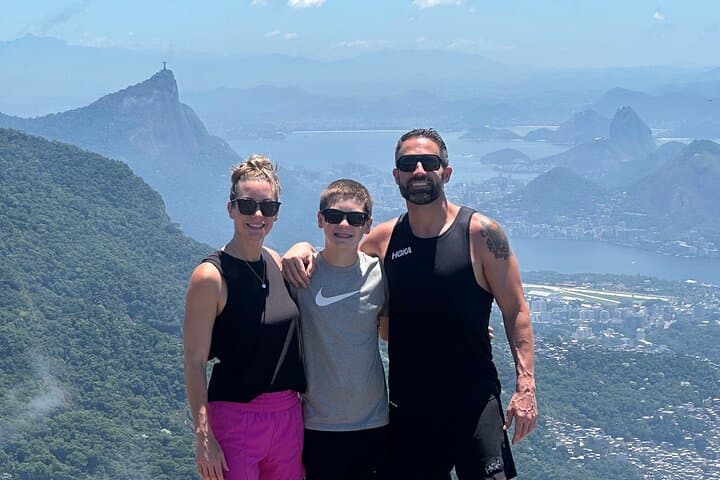
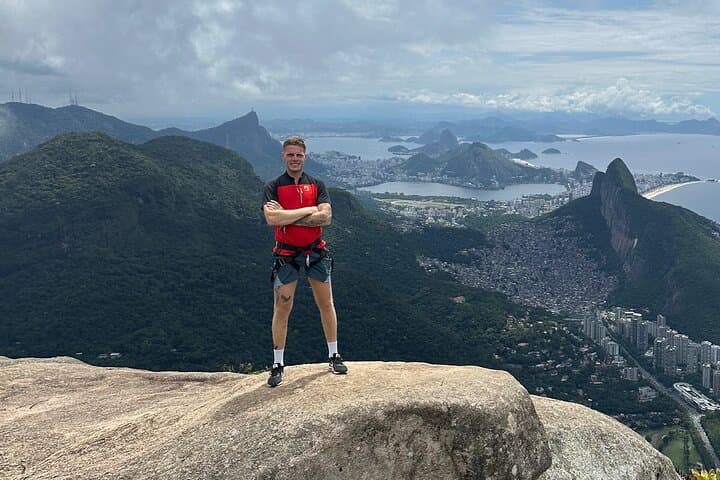
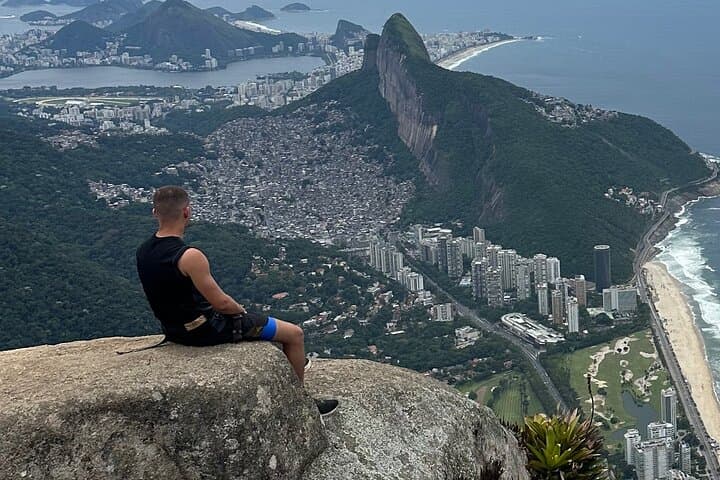
You step out of the Atlantic breeze and into a green wall — the Tijuca canopy closes over the trail, then opens onto vertical granite that rises from the city like a weathered ship’s hull. The final ridge pushes you onto exposed slabs where the city and sea unfold: São Conrado’s coastline to the south, the West Zone and Corcovado to the west, all visible from the summit at 844 meters.
You step out of the Atlantic breeze and into a green wall — the Tijuca canopy closes over the trail, then opens onto vertical granite that rises from the city like a weathered ship’s hull. The final ridge pushes you onto exposed slabs where the city and sea unfold: São Conrado’s coastline to the south, the West Zone and Corcovado to the west, all visible from the summit at 844 meters.
This route follows paths trodden for centuries; sailors used the monolith as a coastal reference and the name "Gávea" recalls a topsail. Geologically the peak is a single massive granite intrusion—coastal and bold—and local folklore has long circled the rock’s carved face and steep cliffs. The surrounding Tijuca Forest is reclaimed Atlantic Forest, an urban national park that preserves flora, wildlife and old water springs.
Practically, expect steep, rocky hiking of roughly 6 km round trip with ~800 m of elevation gain and a technical final pitch: a 20–30 meter assisted climbing section (often called the carrasqueira) using ropes and a climbing chair supplied by guided services. Trails are narrow, rooted and occasionally slick; guides provide safety gear and photo support. Start before mid-morning to avoid afternoon storms and heat, bring 2–3 liters of water, grippy boots, and a headlamp if you linger. Be prepared for exposed scrambling and short sections where a steady head for heights matters.
Respect closures, stick to routes to limit erosion, and give way to descending parties — the mountain demands both effort and humility, and rewards you with one of Rio’s most uncompromising panoramas.