THE ADVENTURE COLLECTIVE® · Independent discovery and booking for outdoor travel

An eight-hour guided ascent across Tijuca’s granite face, Pedra da Gávea combines steep scrambling, fixed chains and rope-assisted rappels. Expect technical rock sections, wide city views and dense Atlantic forest on a demanding day-trip.
An eight-hour guided ascent across Tijuca’s granite face, Pedra da Gávea combines steep scrambling, fixed chains and rope-assisted rappels. Expect technical rock sections, wide city views and dense Atlantic forest on a demanding day-trip.
The trail opens beneath a canopy of Atlantic forest where humidity beads on fern fronds and the path immediately begins to climb—steep, root-strewn, and honest. As you gain angle the city slips away below: flat beaches give way to rooftops, then the sweep of Guanabara Bay, and finally the raw granite face of Pedra da Gávea looming overhead like a challenge dared.
Verified experiences and guided adventures in the surrounding area.
Operated by Botas na Trilha Ecotur · Rio de Janeiro, Rio de Janeiro
The trail opens beneath a canopy of Atlantic forest where humidity beads on fern fronds and the path immediately begins to climb—steep, root-strewn, and honest. As you gain angle the city slips away below: flat beaches give way to rooftops, then the sweep of Guanabara Bay, and finally the raw granite face of Pedra da Gávea looming overhead like a challenge dared.
Geology here is visible and raw: an enormous granite-gneiss inselberg carved by time and weather, rising from Tijuca National Park. The mountain’s slabs, cracks and fixed chains tell a history of both rock and people—local climbers, early visitors who named features like Cabeça do Imperador and the Stone of the Ship, and generations of cariocas who’ve come to test themselves against its flanks.
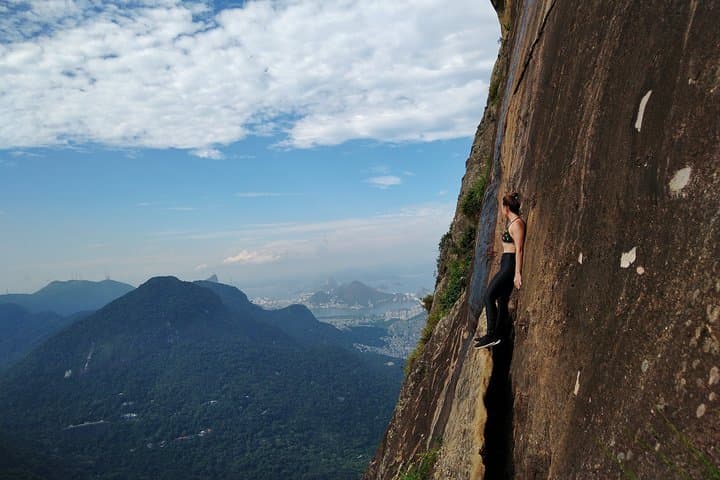
Expect technical sections: strenuous scrambling, fixed chains, and rope-assisted climbs and rappels (guides supply helmets, harnesses and hardware). Wildlife peeks from the understory—small monkeys and forest birds—while the city beyond pulses indifferent to the effort it takes to get here.
Plan an early start to avoid heat and afternoon storms; the route via Carrasqueira is the common guided line and takes most groups a full day. Guides registered with Brazil’s Ministry of Tourism handle rope systems, rescue training and route-finding, but the route demands clear-headed fitness, steady footing and willingness to use your hands.
Practical notes: sturdy, broken-in boots, gloves for rope work, ample water, and layered clothing are non-negotiable. Leave no trace, follow your guide’s safety brief, and be prepared for rapid weather shifts—this is an exposed, technical wilderness climb with city views as your reward.
challenging.
8 hours.
Requires a high level of cardiovascular fitness, comfort with sustained scrambling and upper-body engagement for short rope-assisted sections.
You don’t need advanced rock-climbing certification, but you must be comfortable with exposed scrambling and short rope-assisted sections; guides will manage belays and rappels.
Guides supply helmets, harnesses, ropes, brakes and carabiners; participants should still bring gloves and proper footwear.
The full excursion is approximately 8 hours with steep inclines and obstacles—participants should have good aerobic fitness and no serious back, heart, or pregnancy-related conditions.
Operators cancel for storms or unsafe conditions—if there’s heavy rain, lightning, or slippery rock, the guide will postpone or reschedule for safety.
Part of Tijuca National Park, Pedra da Gávea is a prominent granite-gneiss monolith long visited by locals and climbers; folklore and speculation have surrounded its carved faces for decades.
Stick to established trails, avoid feeding wildlife, and pack out all trash—high foot traffic and rope stations increase erosion and require careful management.
Botas na Trilha Ecotur operates guided outdoor trips and adventures with an emphasis on safety, stewardship, and memorable experiences.
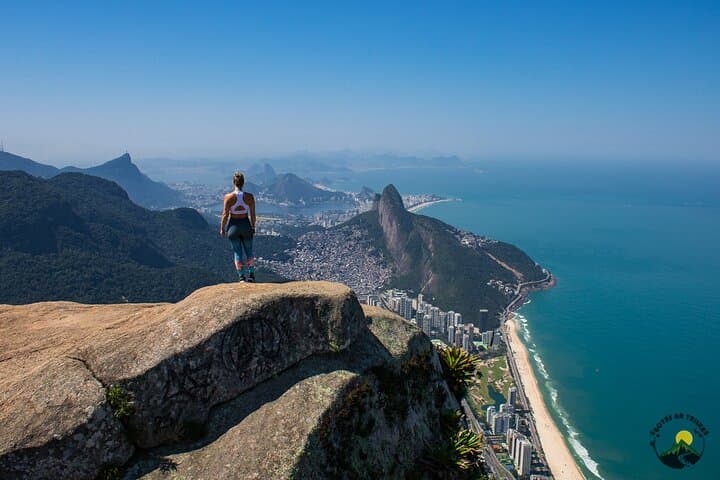
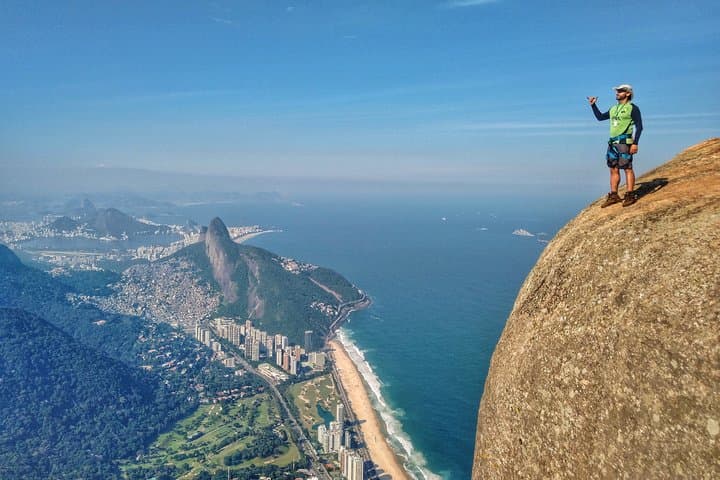

The trail opens beneath a canopy of Atlantic forest where humidity beads on fern fronds and the path immediately begins to climb—steep, root-strewn, and honest. As you gain angle the city slips away below: flat beaches give way to rooftops, then the sweep of Guanabara Bay, and finally the raw granite face of Pedra da Gávea looming overhead like a challenge dared.
The trail opens beneath a canopy of Atlantic forest where humidity beads on fern fronds and the path immediately begins to climb—steep, root-strewn, and honest. As you gain angle the city slips away below: flat beaches give way to rooftops, then the sweep of Guanabara Bay, and finally the raw granite face of Pedra da Gávea looming overhead like a challenge dared.
Geology here is visible and raw: an enormous granite-gneiss inselberg carved by time and weather, rising from Tijuca National Park. The mountain’s slabs, cracks and fixed chains tell a history of both rock and people—local climbers, early visitors who named features like Cabeça do Imperador and the Stone of the Ship, and generations of cariocas who’ve come to test themselves against its flanks.
Expect technical sections: strenuous scrambling, fixed chains, and rope-assisted climbs and rappels (guides supply helmets, harnesses and hardware). Wildlife peeks from the understory—small monkeys and forest birds—while the city beyond pulses indifferent to the effort it takes to get here.
Plan an early start to avoid heat and afternoon storms; the route via Carrasqueira is the common guided line and takes most groups a full day. Guides registered with Brazil’s Ministry of Tourism handle rope systems, rescue training and route-finding, but the route demands clear-headed fitness, steady footing and willingness to use your hands.
Practical notes: sturdy, broken-in boots, gloves for rope work, ample water, and layered clothing are non-negotiable. Leave no trace, follow your guide’s safety brief, and be prepared for rapid weather shifts—this is an exposed, technical wilderness climb with city views as your reward.