THE ADVENTURE COLLECTIVE® · Independent discovery and booking for outdoor travel

Stand beneath the towering Muztagh Ata and embark on a demanding yet accessible expedition across glaciers and high alpine campgrounds. This guide outlines what to expect from approach to summit—and how to prepare for a journey through China’s dramatic Pamirs.
Stand beneath the towering Muztagh Ata and embark on a demanding yet accessible expedition across glaciers and high alpine campgrounds. This guide outlines what to expect from approach to summit—and how to prepare for a journey through China’s dramatic Pamirs.
Rising sharply from China’s remote Pamirs Plateau, Muztagh Ata’s snow-draped summit commands a formidable presence at 7,546 meters. Approaching Base Camp, the trail winds past Karakul Lake, whose icy waters dare climbers with a reflection of the looming giants: Muztagh Ata to the west and Kongur to the east. Here, under the wide, unyielding sky, a steady ascent begins — a challenge as much of endurance as acclimatization.
Verified experiences and guided adventures in the surrounding area.
Operated by Muztagh Ata · Kashgar, Xinjiang
Rising sharply from China’s remote Pamirs Plateau, Muztagh Ata’s snow-draped summit commands a formidable presence at 7,546 meters. Approaching Base Camp, the trail winds past Karakul Lake, whose icy waters dare climbers with a reflection of the looming giants: Muztagh Ata to the west and Kongur to the east. Here, under the wide, unyielding sky, a steady ascent begins — a challenge as much of endurance as acclimatization.
Muztagh Ata, or “Father of Ice Mountains,” forms part of the Kunlun mountain range, a lesser-traveled jewel in high-altitude mountaineering. Unlike its neighboring peak, K2, Muztagh Ata offers a technically moderate climb, rewarding summit seekers with long, gradual slopes that rise over vast glaciers. The area itself is a geopolitical crossroads where the Pamir, Tian Shan, and Kunlun ranges converge — a place rich in Silk Road history and cultural exchange.
The expedition commences in Kashgar, a city brimming with Uyghur heritage, bustling bazaars, and Islamic architecture like the Id Kah Mosque. From here, a rugged drive to Subash (Edara) sets the stage for acclimatization with a breathtaking stop at Karakul Lake, the highest lake on the plateau at 3,600 meters. Beyond lies the Base Camp at 4,500 meters, accessible after a 3–4 hour trek through rocky terrain. Here, Bactrian camels transport loads as your crew prepares nourishing meals, essential fuel for what lies ahead.
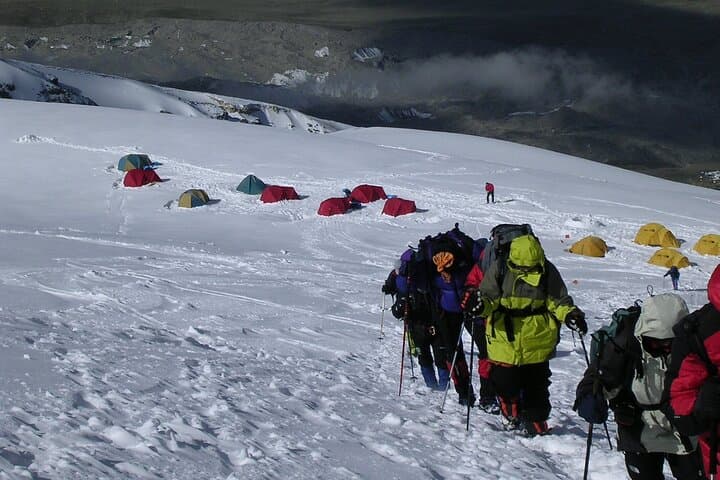
Climbing Muztagh Ata demands serious fitness and preparation. Ascents to higher camps (Camp 1 at 5,350 m, Camp 2 near 6,200 m, and optional Camp 3 up to 6,800 m) involve glacier travel, crevasse navigation, and snow slopes requiring mountaineering experience but not technical climbing proficiency. Summit day involves a gradual climb from Camp 3 or Camp 2 to the peak, with snowfields pushing you upwards under ever thinner air.
Practical details are paramount: cold temperatures call for layered clothing and down insulation; mountain boots and crampons are mandatory. Timing your expedition in warmer months reduces hazards but expect unpredictable weather and possible mudslides on access roads. The on-site cooks and support staff make all the difference, serving hearty meals that restore energy after demanding climbs.
This expedition goes beyond mountaineering—it offers immersion into one of the world’s most dramatic mountain landscapes coupled with Xinjiang’s complex cultural tapestry. Sustainability practices focus on minimal impact, with strict waste management ensuring the fragile alpine environment endures.
For photographers, dawn and dusk paint glaciers and peaks in soft light, with Karakul Lake’s glassy surface reflecting the soaring mountains. Wildlife is sparse but include endurance-adapted species like mountain goats and snow finches. Hidden gems like the local villages around Subash let you glimpse traditional customs untouched by mass tourism.
Muztagh Ata’s expedition is an invitation to push physical limits amid stark grandeur, where every step upward tests willpower and rewards perspective. With careful preparation and respect for the mountain’s moods, climbers return changed — carrying not just memories, but a deep connection to one of Asia’s highest frontiers.
challenging.
17–21 days.
Participants should be in excellent cardiovascular shape with strong endurance and experience hiking at high altitude.
Summer months, especially July and August, offer the most stable weather and warmer temperatures, reducing avalanche risks and road difficulties.
Yes, climbers should have experience with glacier travel, proper use of crampons and ice axe, and be comfortable above 5,000 meters.
Porters and Bactrian camels carry most heavy loads to Base Camp, allowing climbers to focus on acclimatization and climbing readiness.
Yes, all necessary permits, taxes, and environmental fees are covered prior to departure.
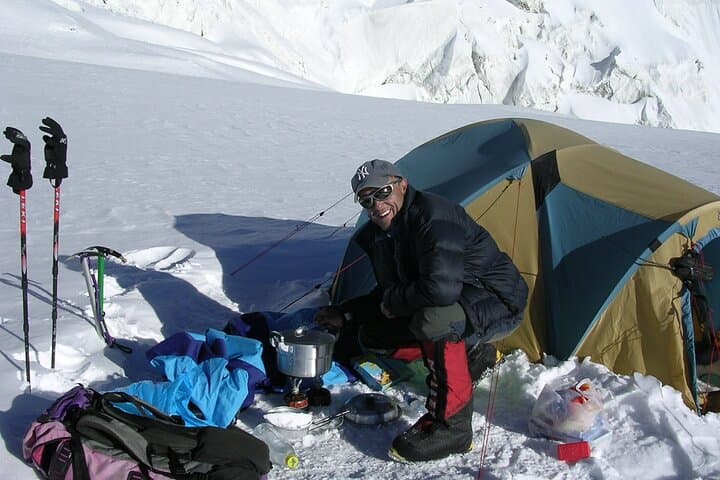
Participants stay in four-star hotels in Kashgar pre- and post-expedition, while camping in tents equipped with mattresses at Base Camp and higher camps.
Experienced cooks prepare full board meals that cater to international tastes, ensuring good nutrition critical for high-altitude performance.
Kashgar has long been a Silk Road hub, where traders crossed the Pamirs connecting China and Central Asia.
Strict waste management protocols are followed to protect the fragile alpine ecosystem; climbers are encouraged to minimize footprint.
Muztagh Ata operates guided outdoor trips and adventures with an emphasis on safety, stewardship, and memorable experiences.


Rising sharply from China’s remote Pamirs Plateau, Muztagh Ata’s snow-draped summit commands a formidable presence at 7,546 meters. Approaching Base Camp, the trail winds past Karakul Lake, whose icy waters dare climbers with a reflection of the looming giants: Muztagh Ata to the west and Kongur to the east. Here, under the wide, unyielding sky, a steady ascent begins — a challenge as much of endurance as acclimatization.
Rising sharply from China’s remote Pamirs Plateau, Muztagh Ata’s snow-draped summit commands a formidable presence at 7,546 meters. Approaching Base Camp, the trail winds past Karakul Lake, whose icy waters dare climbers with a reflection of the looming giants: Muztagh Ata to the west and Kongur to the east. Here, under the wide, unyielding sky, a steady ascent begins — a challenge as much of endurance as acclimatization.
Muztagh Ata, or “Father of Ice Mountains,” forms part of the Kunlun mountain range, a lesser-traveled jewel in high-altitude mountaineering. Unlike its neighboring peak, K2, Muztagh Ata offers a technically moderate climb, rewarding summit seekers with long, gradual slopes that rise over vast glaciers. The area itself is a geopolitical crossroads where the Pamir, Tian Shan, and Kunlun ranges converge — a place rich in Silk Road history and cultural exchange.
The expedition commences in Kashgar, a city brimming with Uyghur heritage, bustling bazaars, and Islamic architecture like the Id Kah Mosque. From here, a rugged drive to Subash (Edara) sets the stage for acclimatization with a breathtaking stop at Karakul Lake, the highest lake on the plateau at 3,600 meters. Beyond lies the Base Camp at 4,500 meters, accessible after a 3–4 hour trek through rocky terrain. Here, Bactrian camels transport loads as your crew prepares nourishing meals, essential fuel for what lies ahead.
Climbing Muztagh Ata demands serious fitness and preparation. Ascents to higher camps (Camp 1 at 5,350 m, Camp 2 near 6,200 m, and optional Camp 3 up to 6,800 m) involve glacier travel, crevasse navigation, and snow slopes requiring mountaineering experience but not technical climbing proficiency. Summit day involves a gradual climb from Camp 3 or Camp 2 to the peak, with snowfields pushing you upwards under ever thinner air.
Practical details are paramount: cold temperatures call for layered clothing and down insulation; mountain boots and crampons are mandatory. Timing your expedition in warmer months reduces hazards but expect unpredictable weather and possible mudslides on access roads. The on-site cooks and support staff make all the difference, serving hearty meals that restore energy after demanding climbs.
This expedition goes beyond mountaineering—it offers immersion into one of the world’s most dramatic mountain landscapes coupled with Xinjiang’s complex cultural tapestry. Sustainability practices focus on minimal impact, with strict waste management ensuring the fragile alpine environment endures.
For photographers, dawn and dusk paint glaciers and peaks in soft light, with Karakul Lake’s glassy surface reflecting the soaring mountains. Wildlife is sparse but include endurance-adapted species like mountain goats and snow finches. Hidden gems like the local villages around Subash let you glimpse traditional customs untouched by mass tourism.
Muztagh Ata’s expedition is an invitation to push physical limits amid stark grandeur, where every step upward tests willpower and rewards perspective. With careful preparation and respect for the mountain’s moods, climbers return changed — carrying not just memories, but a deep connection to one of Asia’s highest frontiers.