THE ADVENTURE COLLECTIVE® · Independent discovery and booking for outdoor travel

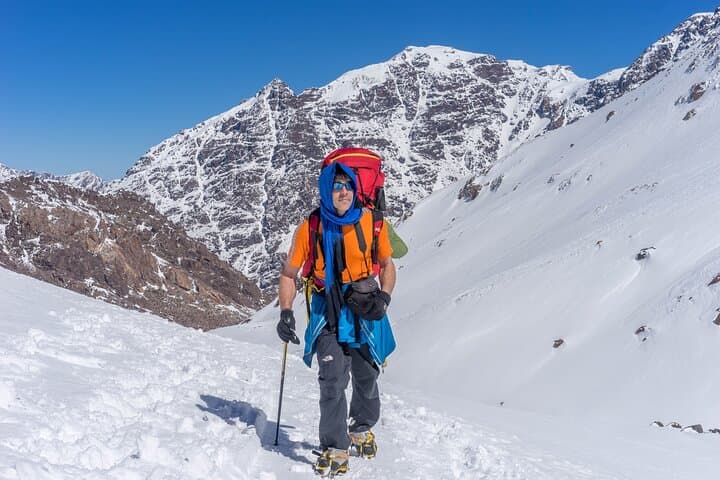
A compact, high-impact summit trek that takes you from Marrakech to the peak of Mount Toubkal in 48 hours. Expect steep scree, a night in a mountain refuge, and a pre-dawn ascent to catch sunrise from 4,167 m.
A compact, high-impact summit trek that takes you from Marrakech to the peak of Mount Toubkal in 48 hours. Expect steep scree, a night in a mountain refuge, and a pre-dawn ascent to catch sunrise from 4,167 m.
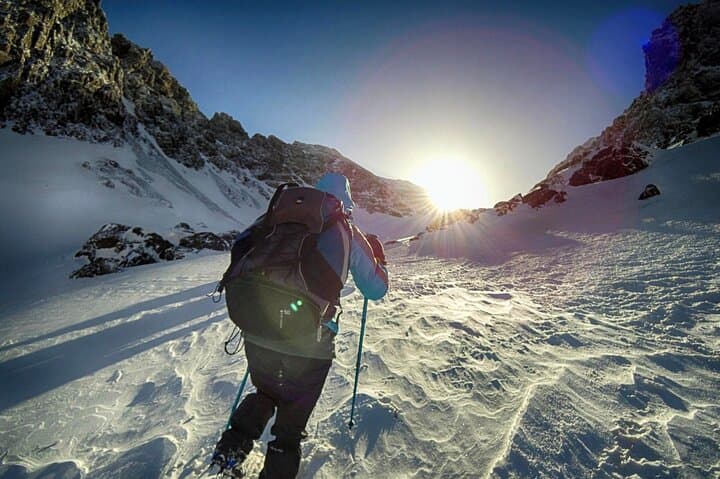
The night is thin and cold as the minibus slips out of Marrakech and the lights of the city fall behind. By Imlil the stars feel lower; by the refuge they are a tight scatter over stone. On this compressed 48‑hour loop, you trade souk clamor for wind-sculpted ridgelines and a pre-dawn push up scree that rewards patience with a sunrise that pulls the High Atlas awake.
Verified experiences and guided adventures in the surrounding area.
Operated by Atlas Mountains View · Imlil, Marrakech-Safi
The night is thin and cold as the minibus slips out of Marrakech and the lights of the city fall behind. By Imlil the stars feel lower; by the refuge they are a tight scatter over stone. On this compressed 48‑hour loop, you trade souk clamor for wind-sculpted ridgelines and a pre-dawn push up scree that rewards patience with a sunrise that pulls the High Atlas awake.
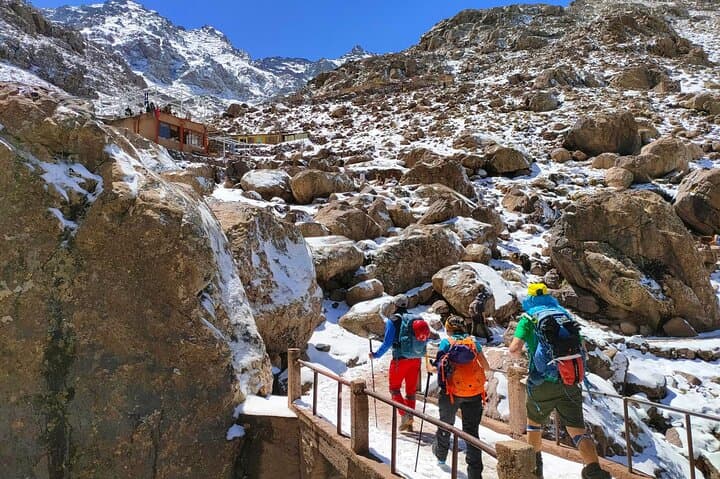
The Atlas are young mountains in geological terms—uplifted by the African and Eurasian plates—where hard schist and granite form steep valleys and loose talus. The route follows the Mizane valley through Berber villages like Aroumd, past the pilgrimage site of Sidi Chamharouch, and then into increasingly barren, high‑alpine terrain. Refuge life—simple dorms, shared meals, strong mint tea—gives a glimpse into mountain culture and a practical staging ground for the summit.
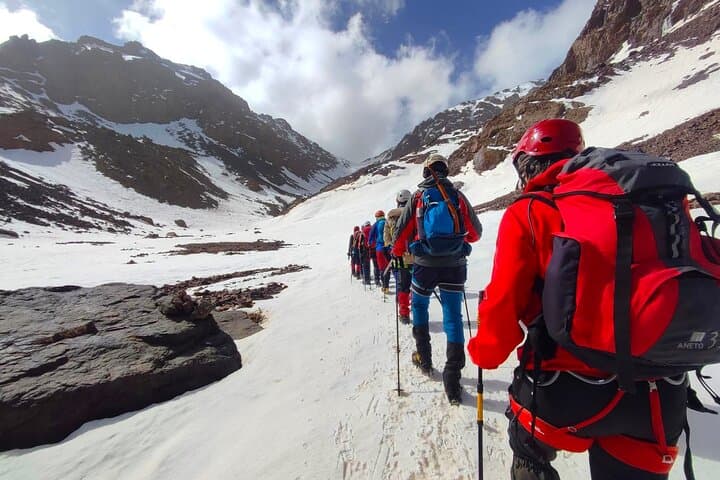
Expect long hours on uneven trails, substantial altitude gain (from ~1,740m in Imlil to 4,167m on the summit), and a steep final ascent over scree. The guides set a measured pace; mules carry most luggage. Hydration, layered clothing, and an early-night rhythm are essential to perform on the 4–6 hour summit push. If you’re fit, comfortable with altitude gain, and prepared for basic mountain lodging, this two-day itinerary is an efficient, high-reward way to stand on North Africa’s highest peak and return to Marrakech the same evening.
challenging.
2 days (approx. 48 hours).
Good cardiovascular fitness and experience with all-day hiking; comfortable with sustained uphill, high-elevation breathing, and basic scrambling.
The final ascent is steep and on loose scree; expect slow, steady climbing for 3–4 hours from the refuge and moderate to severe exertion at altitude.
This express itinerary has limited acclimatization—participants should arrive already well‑rested and consider prior exposure to altitude when booking.
Refuges are dormitory-style with shared sleeping areas, simple meals, and basic facilities—comfortable for resting but not luxurious.
Yes—mules are provided to transport main luggage to the refuge; you should carry a small daypack with essentials for the summit push.
The High Atlas is home to Berber communities whose seasonal agriculture and mountain trade routes shaped local culture; Sidi Chamharouch is a longstanding mountain pilgrimage site.
Alpine vegetation is fragile—stick to trails, avoid trampling alpine plants, and pack out all waste; local guides work to minimize tourist impact.
Atlas Mountains View operates guided outdoor trips and adventures with an emphasis on safety, stewardship, and memorable experiences.
The night is thin and cold as the minibus slips out of Marrakech and the lights of the city fall behind. By Imlil the stars feel lower; by the refuge they are a tight scatter over stone. On this compressed 48‑hour loop, you trade souk clamor for wind-sculpted ridgelines and a pre-dawn push up scree that rewards patience with a sunrise that pulls the High Atlas awake.
The night is thin and cold as the minibus slips out of Marrakech and the lights of the city fall behind. By Imlil the stars feel lower; by the refuge they are a tight scatter over stone. On this compressed 48‑hour loop, you trade souk clamor for wind-sculpted ridgelines and a pre-dawn push up scree that rewards patience with a sunrise that pulls the High Atlas awake.
The Atlas are young mountains in geological terms—uplifted by the African and Eurasian plates—where hard schist and granite form steep valleys and loose talus. The route follows the Mizane valley through Berber villages like Aroumd, past the pilgrimage site of Sidi Chamharouch, and then into increasingly barren, high‑alpine terrain. Refuge life—simple dorms, shared meals, strong mint tea—gives a glimpse into mountain culture and a practical staging ground for the summit.
Expect long hours on uneven trails, substantial altitude gain (from ~1,740m in Imlil to 4,167m on the summit), and a steep final ascent over scree. The guides set a measured pace; mules carry most luggage. Hydration, layered clothing, and an early-night rhythm are essential to perform on the 4–6 hour summit push. If you’re fit, comfortable with altitude gain, and prepared for basic mountain lodging, this two-day itinerary is an efficient, high-reward way to stand on North Africa’s highest peak and return to Marrakech the same evening.