THE ADVENTURE COLLECTIVE® · Independent discovery and booking for outdoor travel

A full-day, guided ascent of Mount Liamuiga takes you through rainforest, steep volcanic slopes and to a vast crater rim with wide Caribbean views. Expect a strenuous 6–8 hour outing that rewards endurance with geology, wildlife and memorable panoramas.
A full-day, guided ascent of Mount Liamuiga takes you through rainforest, steep volcanic slopes and to a vast crater rim with wide Caribbean views. Expect a strenuous 6–8 hour outing that rewards endurance with geology, wildlife and memorable panoramas.
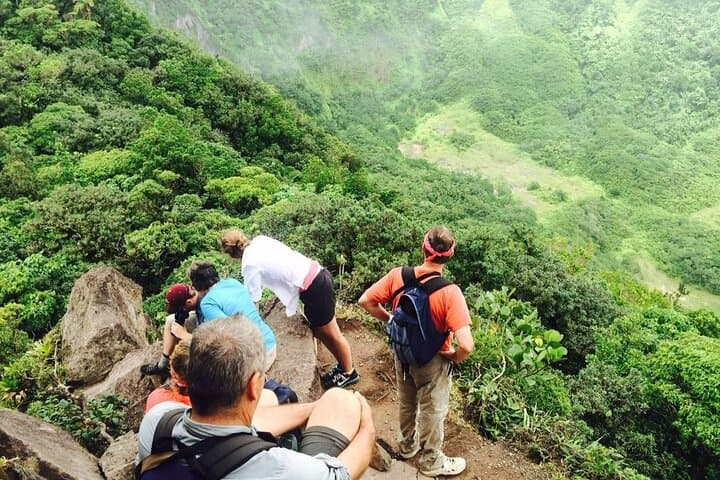
You step out of the vehicle into a cooler, moist air; the rainforest above Basseterre seems to breathe around you as the trailhead swallows the sound of the road. The path climbs immediately—roots, volcanic scree, and shaded funnels of green—each switchback pulling you higher until the sea becomes a distant band of blue.
Verified experiences and guided adventures in the surrounding area.
Operated by Scenic Escape St. Kitts Ltd. · Basseterre, Saint Kitts
You step out of the vehicle into a cooler, moist air; the rainforest above Basseterre seems to breathe around you as the trailhead swallows the sound of the road. The path climbs immediately—roots, volcanic scree, and shaded funnels of green—each switchback pulling you higher until the sea becomes a distant band of blue.
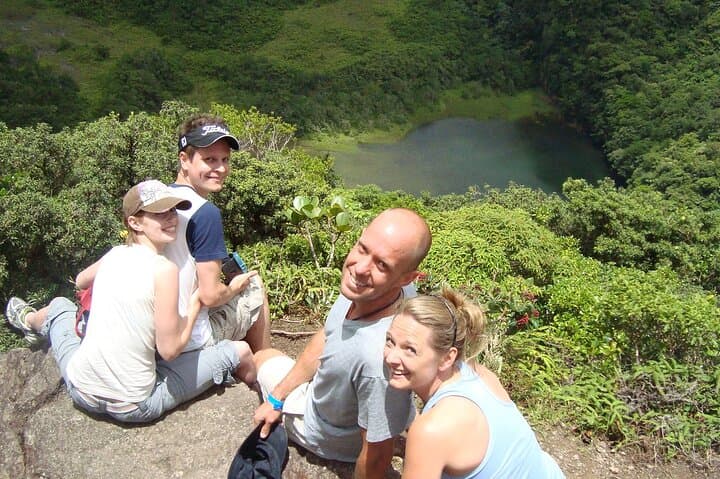
Liamuiga (formerly Mount Misery) is a dormant stratovolcano rising to about 3,792 ft (1,156 m). Its crater speaks to powerful eruptions that shaped St. Kitts’ rugged spine; later sugar plantations and colonial settlements settled the lowlands, leaving the high slopes to the forest and seabirds. Geologically, the mountain is young and steep, with porous volcanic soils that feed a lush montane rainforest and isolated cloud pockets.
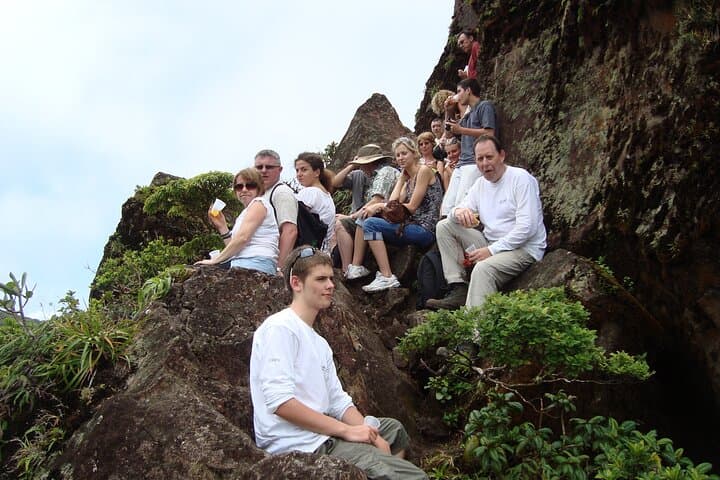
Culturally, local guides carry both geology and island lore—stories of early settlers, the Anguilla mynah and how the slopes supplied timber and wild fruits to coastal villages. On clear sections the crater exposes raw rock and mineral-streaked surfaces; winds up top feel like a hand urging you toward the rim.
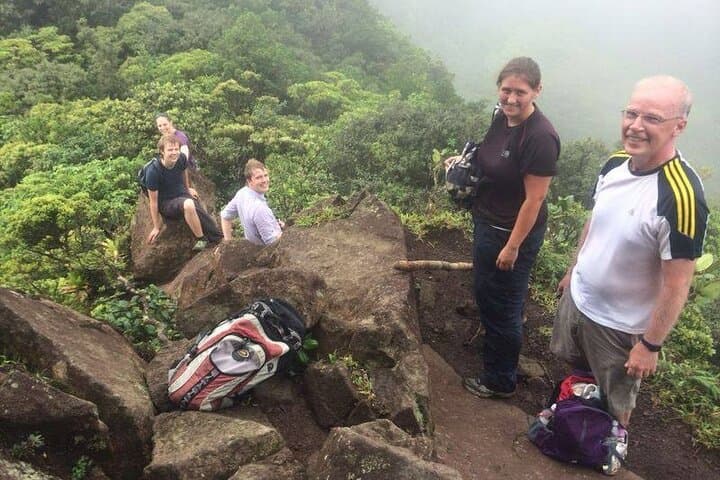
Practically: this is a long, steep hike—expect 6–8 hours total with more than 2,000 feet of gain and sections of loose volcanic gravel. Guides typically provide walking sticks, bottled water, and snacks; wear sturdy boots, bring at least 2–3 liters of water, sun protection, and a lightweight rain shell. Start early to avoid tropical downpours and collapsing light. Move deliberately on the descent—roots and scree demand attention. When you reach the crater, pause: the air is thinner, the island stretched out below, and the volcano quietly reminds you of the slow, patient work of earth-shaping forces.
challenging.
6–8 hours.
High level of cardiovascular fitness and leg strength; able to sustain steady uphill hiking and manage steep descents.
This is a strenuous hike with over 2,000 feet of elevation gain; participants should be in good cardiovascular shape and comfortable with sustained uphill hiking.
At roughly 3,792 ft (1,156 m) altitude sickness is uncommon, but move at your own pace and hydrate—those with respiratory or heart conditions should not attempt this hike.
Guides provide bottled water, snacks, walking sticks, and hotel/port pickup from Basseterre or Frigate Bay as noted in the tour inclusions.
This tour is not recommended for children, pregnant travelers, or anyone with significant back, heart or respiratory conditions due to the strenuous nature of the route.
The slopes of Liamuiga have volcanic origins that predate colonial settlement; lowland sugar plantations later shaped St. Kitts’ human geography while the high slopes remained largely forested.
Guided, small-group hikes minimize trail erosion and ecological impact; visitors should stick to the path, pack out trash, and respect wildlife to protect fragile montane habitats.
Scenic Escape St. Kitts Ltd. operates guided outdoor trips and adventures with an emphasis on safety, stewardship, and memorable experiences.
You step out of the vehicle into a cooler, moist air; the rainforest above Basseterre seems to breathe around you as the trailhead swallows the sound of the road. The path climbs immediately—roots, volcanic scree, and shaded funnels of green—each switchback pulling you higher until the sea becomes a distant band of blue.
You step out of the vehicle into a cooler, moist air; the rainforest above Basseterre seems to breathe around you as the trailhead swallows the sound of the road. The path climbs immediately—roots, volcanic scree, and shaded funnels of green—each switchback pulling you higher until the sea becomes a distant band of blue.
Liamuiga (formerly Mount Misery) is a dormant stratovolcano rising to about 3,792 ft (1,156 m). Its crater speaks to powerful eruptions that shaped St. Kitts’ rugged spine; later sugar plantations and colonial settlements settled the lowlands, leaving the high slopes to the forest and seabirds. Geologically, the mountain is young and steep, with porous volcanic soils that feed a lush montane rainforest and isolated cloud pockets.
Culturally, local guides carry both geology and island lore—stories of early settlers, the Anguilla mynah and how the slopes supplied timber and wild fruits to coastal villages. On clear sections the crater exposes raw rock and mineral-streaked surfaces; winds up top feel like a hand urging you toward the rim.
Practically: this is a long, steep hike—expect 6–8 hours total with more than 2,000 feet of gain and sections of loose volcanic gravel. Guides typically provide walking sticks, bottled water, and snacks; wear sturdy boots, bring at least 2–3 liters of water, sun protection, and a lightweight rain shell. Start early to avoid tropical downpours and collapsing light. Move deliberately on the descent—roots and scree demand attention. When you reach the crater, pause: the air is thinner, the island stretched out below, and the volcano quietly reminds you of the slow, patient work of earth-shaping forces.