THE ADVENTURE COLLECTIVE® · Independent discovery and booking for outdoor travel

A six-day, non-technical but demanding climb, the Machame Route delivers rainforest trails, lunar alpine deserts and a summit push to Uhuru Peak. This guide outlines what to expect day-by-day, how to prepare for altitude, and the local systems that make a safe ascent possible.
A six-day, non-technical but demanding climb, the Machame Route delivers rainforest trails, lunar alpine deserts and a summit push to Uhuru Peak. This guide outlines what to expect day-by-day, how to prepare for altitude, and the local systems that make a safe ascent possible.
At dawn the trail out of Moshi folds into rainforest—moss-heavy branches lean toward the path as if checking the boots of every climber who passes. On day one the Machame route threads through dripping green, climbs exposed ridges across the Shira Plateau, slices past the jagged silhouette of the Lava Tower and finishes beneath the stony face of Barafu where wind begins to take order from the sky.
Verified experiences and guided adventures in the surrounding area.
Operated by ALMIGHTY KILIMANJARO · Moshi, Kilimanjaro Region
At dawn the trail out of Moshi folds into rainforest—moss-heavy branches lean toward the path as if checking the boots of every climber who passes. On day one the Machame route threads through dripping green, climbs exposed ridges across the Shira Plateau, slices past the jagged silhouette of the Lava Tower and finishes beneath the stony face of Barafu where wind begins to take order from the sky.
Machame is often called the “Whiskey” route for its steeper, more varied profile compared with Marangu: longer days, more scrambling, better acclimatization if you commit to its circuit. Geologically Kilimanjaro is a dormant stratovolcano with three volcanic cones—Kibo, Mawenzi and Shira—and the climb traces those ancient forces. The summit push follows the Rebmann and Ratzel glaciers; they once crowned the peak more generously, now reduced to ribboned ice that warns of a changing climate.
Culturally the mountain sits on Chagga lands. Guides, porters and cooks who make the ascent possible are part of local towns like Machame and Mweka; their knowledge—from planting coffee to reading cloud patterns—shapes every successful summit. The national park is managed by TANAPA and entry fees support trail maintenance and local conservation programs.
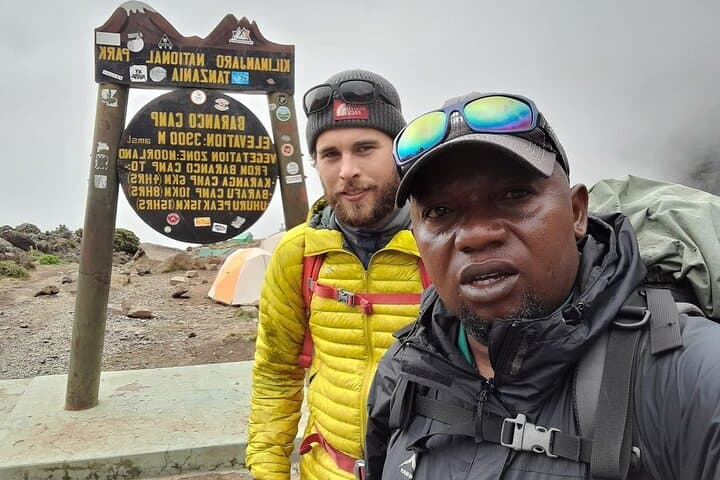
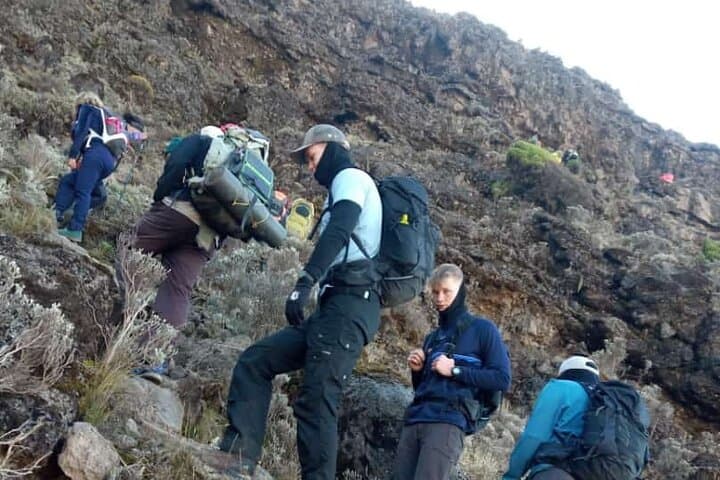
Practically: this is a six-day, non-technical but challenging expedition. Expect the itinerary to look like this—Day 1 Machame Gate to Machame Camp ~10.75 km/7 mi, rainforest, 5–6 hrs; Day 2 to Shira Camp ~5.3 km/3 mi; Day 3 via Lava Tower to Barranco ~10.75 km/6 mi; Day 4 over Barranco Wall to Barafu ~8.5 km/5 mi; Day 5 summit push to Uhuru Peak (4.9 km up from Barafu) and descend to Mweka; Day 6 final descent to Mweka Gate and return to Moshi.
Altitude is the central hazard. The itinerary builds in acclimatization—notice the Lava Tower day gains and then drops elevation intentionally. Hydrate, sleep well, and adopt a steady pace: slow and steady wins this mountain. Use gaiters and trekking poles for wet lower sections; crampons are useful near the summit if snow is present. Respect your crew: they handle logistics and safety, and tipping is customary.
Timing: the drier months (June–October and late January–February) give the best summit odds. Permits, park fees and well-equipped guides are non-negotiable; choose operators who provide medical oxygen and an experienced head guide.
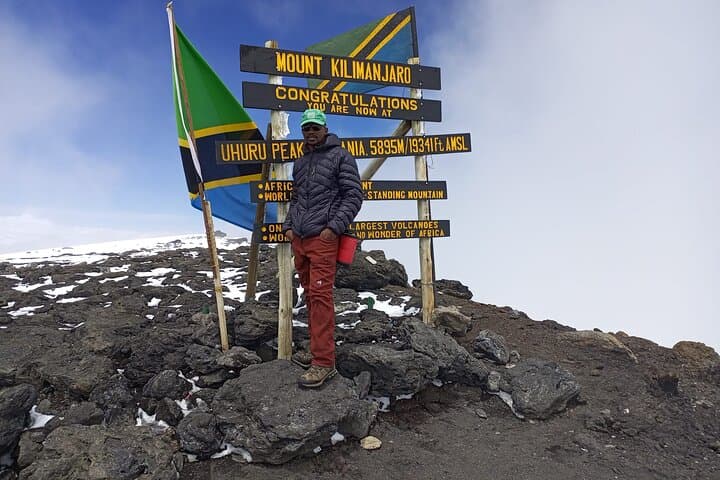
Summit day is a mental marathon—start between midnight and 2 a.m., move in a single-file rhythm under stars and wind, and watch the sunrise at Stella Point before the final push to Uhuru Peak. Reach the rim and the scale of the continent unfolds: it’s an exacting, ordinary step-by-step achievement that rewards preparation and restraint as much as spirit.
challenging.
6 days.
Good aerobic fitness with multi-day hiking experience; ability to walk 5–8 hours per day with heavy altitude gain.
No technical climbing skills are required, but previous multi-day hiking or backpacking experience is highly recommended due to long days and altitude.
The clearest windows are June–October and late December–February; these months have more stable weather and better summit odds.
Acute mountain sickness is the main risk—operators mitigate it with acclimatization days, experienced guides, oxygen and descent protocols if symptoms appear.
Reputable operators include park entry fees and camping permits—confirm these are in the package before booking.
Summit night is typically 5–7 hours ascent from Barafu in very cold, wind-exposed conditions—expect slow, sustained effort with short breaks.
Yes; porters are customary to carry tents and equipment, and private guide options are often available for additional cost.
Kilimanjaro’s first recorded ascent to the crater rim was in 1889 by Hans Meyer and Ludwig Purtscheller; the routes evolved as local Chagga communities and early explorers established trails and mountain services.
Kilimanjaro National Park fees support maintenance and anti-poaching work; minimize impact by packing out waste, using reusable containers and hiring operators who follow TANAPA waste guidelines.
ALMIGHTY KILIMANJARO operates guided outdoor trips and adventures with an emphasis on safety, stewardship, and memorable experiences.
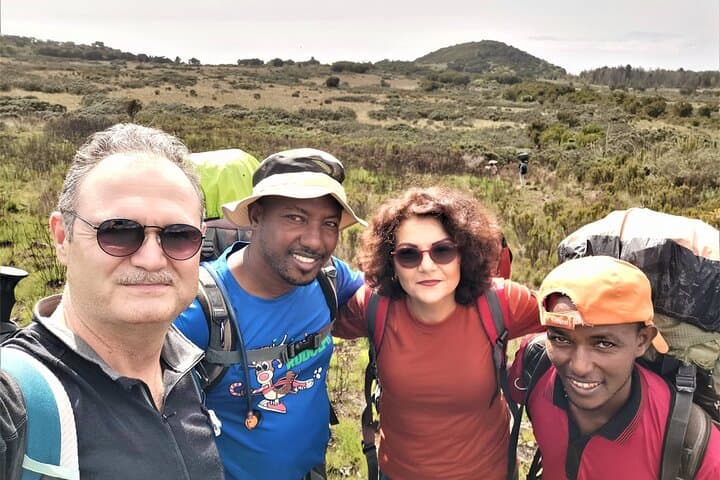
At dawn the trail out of Moshi folds into rainforest—moss-heavy branches lean toward the path as if checking the boots of every climber who passes. On day one the Machame route threads through dripping green, climbs exposed ridges across the Shira Plateau, slices past the jagged silhouette of the Lava Tower and finishes beneath the stony face of Barafu where wind begins to take order from the sky.
At dawn the trail out of Moshi folds into rainforest—moss-heavy branches lean toward the path as if checking the boots of every climber who passes. On day one the Machame route threads through dripping green, climbs exposed ridges across the Shira Plateau, slices past the jagged silhouette of the Lava Tower and finishes beneath the stony face of Barafu where wind begins to take order from the sky.
Machame is often called the “Whiskey” route for its steeper, more varied profile compared with Marangu: longer days, more scrambling, better acclimatization if you commit to its circuit. Geologically Kilimanjaro is a dormant stratovolcano with three volcanic cones—Kibo, Mawenzi and Shira—and the climb traces those ancient forces. The summit push follows the Rebmann and Ratzel glaciers; they once crowned the peak more generously, now reduced to ribboned ice that warns of a changing climate.
Culturally the mountain sits on Chagga lands. Guides, porters and cooks who make the ascent possible are part of local towns like Machame and Mweka; their knowledge—from planting coffee to reading cloud patterns—shapes every successful summit. The national park is managed by TANAPA and entry fees support trail maintenance and local conservation programs.
Practically: this is a six-day, non-technical but challenging expedition. Expect the itinerary to look like this—Day 1 Machame Gate to Machame Camp ~10.75 km/7 mi, rainforest, 5–6 hrs; Day 2 to Shira Camp ~5.3 km/3 mi; Day 3 via Lava Tower to Barranco ~10.75 km/6 mi; Day 4 over Barranco Wall to Barafu ~8.5 km/5 mi; Day 5 summit push to Uhuru Peak (4.9 km up from Barafu) and descend to Mweka; Day 6 final descent to Mweka Gate and return to Moshi.
Altitude is the central hazard. The itinerary builds in acclimatization—notice the Lava Tower day gains and then drops elevation intentionally. Hydrate, sleep well, and adopt a steady pace: slow and steady wins this mountain. Use gaiters and trekking poles for wet lower sections; crampons are useful near the summit if snow is present. Respect your crew: they handle logistics and safety, and tipping is customary.
Timing: the drier months (June–October and late January–February) give the best summit odds. Permits, park fees and well-equipped guides are non-negotiable; choose operators who provide medical oxygen and an experienced head guide.
Summit day is a mental marathon—start between midnight and 2 a.m., move in a single-file rhythm under stars and wind, and watch the sunrise at Stella Point before the final push to Uhuru Peak. Reach the rim and the scale of the continent unfolds: it’s an exacting, ordinary step-by-step achievement that rewards preparation and restraint as much as spirit.