THE ADVENTURE COLLECTIVE® · Independent discovery and booking for outdoor travel

Mera Peak (6,476 m) is a high Himalayan trekking peak that blends long alpine approaches with glacier travel and a technical summit push. This guide outlines what to expect, when to go and how to prepare for a successful climb.
Mera Peak (6,476 m) is a high Himalayan trekking peak that blends long alpine approaches with glacier travel and a technical summit push. This guide outlines what to expect, when to go and how to prepare for a successful climb.
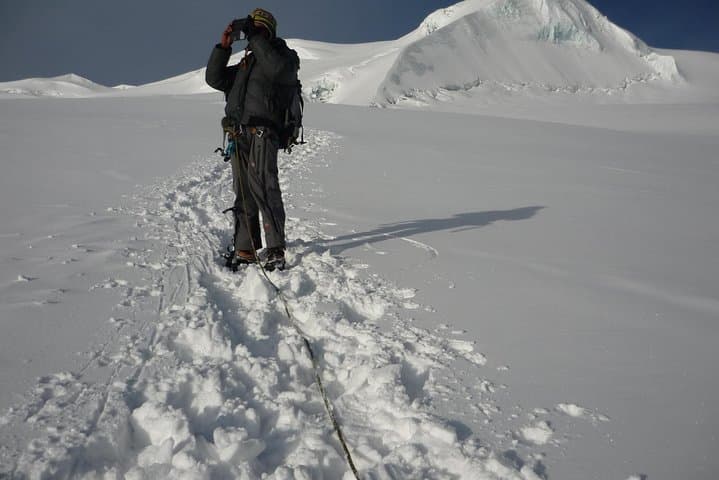
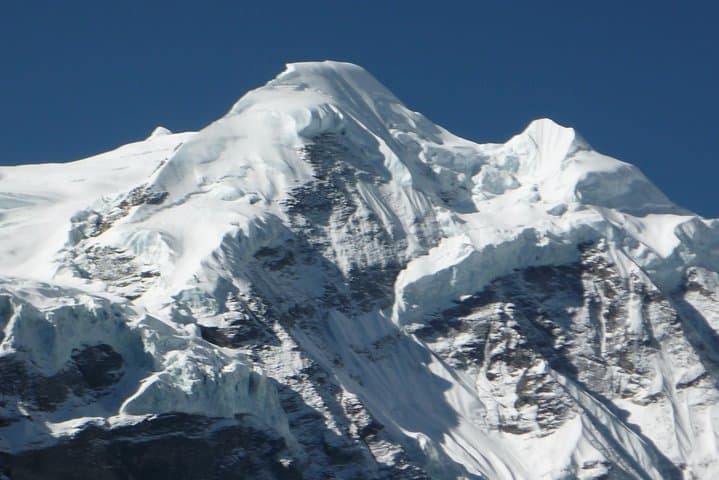
A cold predawn wind cuts across the Hinku Valley as headlamps carve a thin path toward Mera’s vast white slope. From high camp the ridge tilts into sky; every step presses thinner air beneath your boots and a sweep of Himalayan summits — Everest, Lhotse, Makalu, Baruntse — watches your line to the top. The climb is equal parts long approach trek and technical summit day: trail, moraine and glacier stitched together into a single ascent.
Verified experiences and guided adventures in the surrounding area.
Operated by Hiking Adventure Treks · Lukla, Province No. 1
A cold predawn wind cuts across the Hinku Valley as headlamps carve a thin path toward Mera’s vast white slope. From high camp the ridge tilts into sky; every step presses thinner air beneath your boots and a sweep of Himalayan summits — Everest, Lhotse, Makalu, Baruntse — watches your line to the top. The climb is equal parts long approach trek and technical summit day: trail, moraine and glacier stitched together into a single ascent.
Geologically the route runs along uplifted sedimentary and metamorphic rock pushed up by the Indian plate; loose scree gives way to compacted snow and crevasses higher up. Culturally the itinerary threads through Sherpa villages, mani walls and small gompas where expedition culture mixes with subsistence farming and yak caravans. Mera Peak is classified as a trekking peak by Nepal’s mountaineering authorities, making it a popular next step for climbers moving from high-altitude trekking to roped glacier travel.
Practically expect a 12–16 day trip with several days of acclimatization, a technical summit push that gains roughly 900–1,300 m from high camp, and glacier travel that requires crampons, ice axe and ropework. Optimal seasons are pre-monsoon (spring) and post-monsoon (autumn); weather can change rapidly so layer and summit early. Logistics usually begin with a flight from Kathmandu to Lukla, then a week of trekking. Permits, a certified guide and careful altitude management are non-negotiable. Hydrate, pace uphill, and respect the mountain’s rhythms — the ridge rewards patience with one of the clearest panoramic crowns in the Everest region.
challenging.
12–16 days.
Good cardiovascular fitness and multi-day trekking experience; comfortable on steep terrain and long summit days.
Most itineraries run 12–16 days including flights to Lukla, trekking approach, acclimatization, summit push and return to Lukla.
Basic glacier skills (crampon, ice axe, rope travel) are required; guided teams will rope clients but prior experience speeds learning.
Pre-monsoon (April–May) and post-monsoon (September–November) offer the most stable weather and clear summit views.
Yes — a climbing permit from Nepalese authorities and local conservation permits are required; guides typically handle paperwork.
Mera Peak gained popularity as a trekking peak managed under Nepal’s permit system; it draws climbers preparing for technically harder Himalayan ascents.
The region lies within community-managed land and conservation areas; follow leave-no-trace principles and avoid single-use plastics to reduce impact.
Hiking Adventure Treks operates guided outdoor trips and adventures with an emphasis on safety, stewardship, and memorable experiences.
A cold predawn wind cuts across the Hinku Valley as headlamps carve a thin path toward Mera’s vast white slope. From high camp the ridge tilts into sky; every step presses thinner air beneath your boots and a sweep of Himalayan summits — Everest, Lhotse, Makalu, Baruntse — watches your line to the top. The climb is equal parts long approach trek and technical summit day: trail, moraine and glacier stitched together into a single ascent.
A cold predawn wind cuts across the Hinku Valley as headlamps carve a thin path toward Mera’s vast white slope. From high camp the ridge tilts into sky; every step presses thinner air beneath your boots and a sweep of Himalayan summits — Everest, Lhotse, Makalu, Baruntse — watches your line to the top. The climb is equal parts long approach trek and technical summit day: trail, moraine and glacier stitched together into a single ascent.
Geologically the route runs along uplifted sedimentary and metamorphic rock pushed up by the Indian plate; loose scree gives way to compacted snow and crevasses higher up. Culturally the itinerary threads through Sherpa villages, mani walls and small gompas where expedition culture mixes with subsistence farming and yak caravans. Mera Peak is classified as a trekking peak by Nepal’s mountaineering authorities, making it a popular next step for climbers moving from high-altitude trekking to roped glacier travel.
Practically expect a 12–16 day trip with several days of acclimatization, a technical summit push that gains roughly 900–1,300 m from high camp, and glacier travel that requires crampons, ice axe and ropework. Optimal seasons are pre-monsoon (spring) and post-monsoon (autumn); weather can change rapidly so layer and summit early. Logistics usually begin with a flight from Kathmandu to Lukla, then a week of trekking. Permits, a certified guide and careful altitude management are non-negotiable. Hydrate, pace uphill, and respect the mountain’s rhythms — the ridge rewards patience with one of the clearest panoramic crowns in the Everest region.