THE ADVENTURE COLLECTIVE® · Independent discovery and booking for outdoor travel

Move from rainforest to alpine desert on the classic Marangu Route and reach Uhuru Peak in five days. This guide covers what to expect—terrain, history, logistics, and the gear and pacing that make a safe summit possible.
Move from rainforest to alpine desert on the classic Marangu Route and reach Uhuru Peak in five days. This guide covers what to expect—terrain, history, logistics, and the gear and pacing that make a safe summit possible.
A highland dawn breaks over Moshi as porters shoulder wooden crates and the first breaths of hikers fog the cool air. The Marangu Route climbs steadily from rainforest into moorland and then into a raw, lunar plateau where wind and stone take the lead. On this five-day itinerary climbers move through vegetation zones with a clarity that reads like a geological cross-section: verdant canopy, heather and giant lobelia, then the scree and ice near Kibo.
Verified experiences and guided adventures in the surrounding area.
Operated by PINNACLE ADVENTURES & SAFARIS LTD. · Moshi, Kilimanjaro Region
A highland dawn breaks over Moshi as porters shoulder wooden crates and the first breaths of hikers fog the cool air. The Marangu Route climbs steadily from rainforest into moorland and then into a raw, lunar plateau where wind and stone take the lead. On this five-day itinerary climbers move through vegetation zones with a clarity that reads like a geological cross-section: verdant canopy, heather and giant lobelia, then the scree and ice near Kibo.
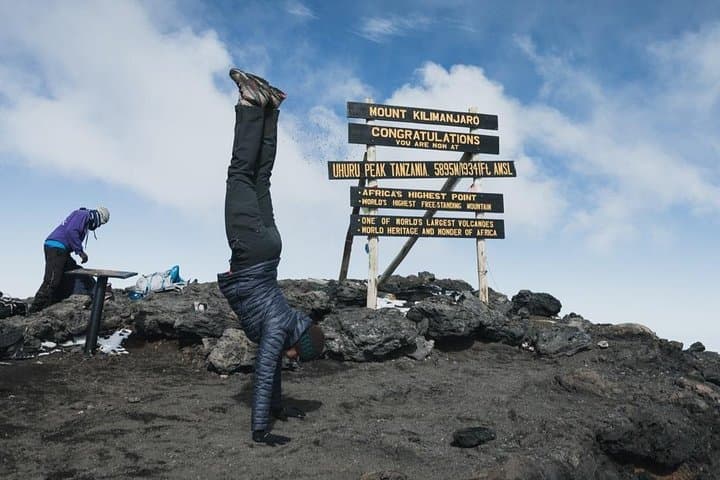
The route carries history—Chagga villages ring the mountain’s lower slopes, and the first recorded European ascent at the end of the 19th century cemented Kilimanjaro’s place in mountaineering lore. Geologically, Kilimanjaro is a dormant stratovolcano with three volcanic cones; the route approaches Kibo, the highest cone whose summit, Uhuru Peak, offers sunrise views that orient you to the continent.
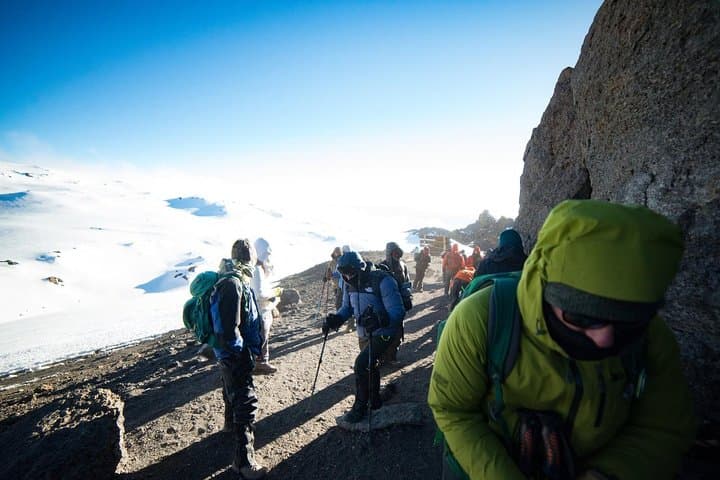
Expect communal hut nights, steady mileage (8–20 km daily), and a summit push that begins around midnight for a sunrise arrival. Altitude, not technical rock, is the chief challenge: acclimatize on the way up, pace conservatively, and listen to guides. Cultural exchanges with Chagga guides and porters are part of the rhythm—respectful conversation and tipping are customary.
Practical notes: pack layered insulation, sturdy boots with good ankle support, and a reliable headlamp for summit hours. Hydration and electrolyte replacement reduce the risk of acute mountain sickness; use the walking poles provided or bring your own. With proper prep, the Marangu Route delivers one of Africa’s most direct, accessible summit experiences—and a climb that rewards persistence with a sunrise from the Roof of Africa.
difficult.
5 days.
Good cardiovascular fitness with experience on day hikes; prepare with multi-hour walks and stair training to handle long summit day.
It is non-technical but strenuous due to altitude and the long summit day; reasonable fitness and prior day-hiking experience are recommended.
Huts on the Marangu Route provide dorm-style rooms; expect shared sleeping spaces and basic facilities.
Dry months (January–March and June–October) offer more stable weather and clearer summit views, though climbs run year-round with variable conditions.
Emergency oxygen is carried and included for use in emergencies, but it is not provided as a standard summit aid or acclimatization tool.
The Chagga people have farmed Kilimanjaro’s lower slopes for centuries; European climbers first documented ascents in the late 1800s, making the peak a symbolic goal of exploration.
Kilimanjaro National Park protects the summit zones, but increased tourism and shifting rainfall patterns stress local water resources and fragile alpine flora; follow leave-no-trace practices and support local conservation fees.
PINNACLE ADVENTURES & SAFARIS LTD. operates guided outdoor trips and adventures with an emphasis on safety, stewardship, and memorable experiences.
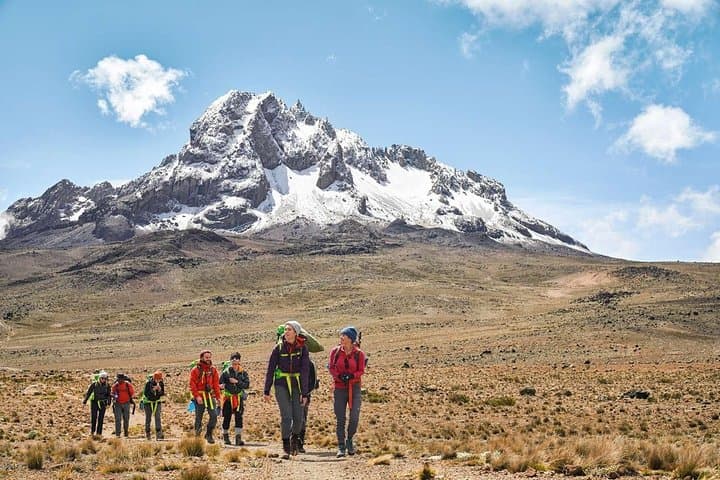
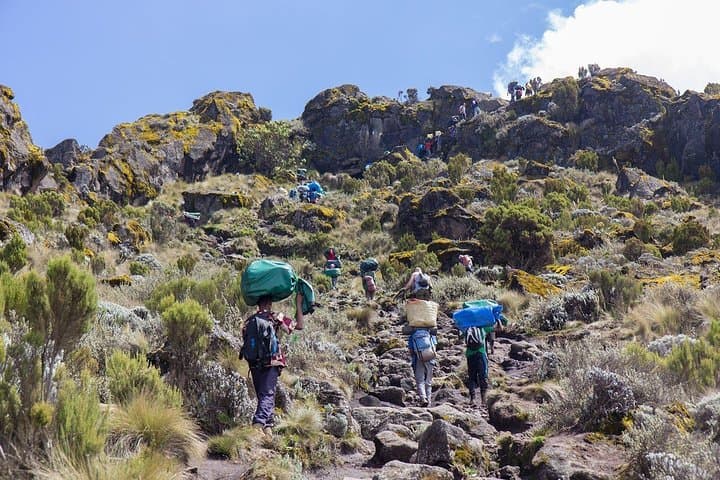
A highland dawn breaks over Moshi as porters shoulder wooden crates and the first breaths of hikers fog the cool air. The Marangu Route climbs steadily from rainforest into moorland and then into a raw, lunar plateau where wind and stone take the lead. On this five-day itinerary climbers move through vegetation zones with a clarity that reads like a geological cross-section: verdant canopy, heather and giant lobelia, then the scree and ice near Kibo.
A highland dawn breaks over Moshi as porters shoulder wooden crates and the first breaths of hikers fog the cool air. The Marangu Route climbs steadily from rainforest into moorland and then into a raw, lunar plateau where wind and stone take the lead. On this five-day itinerary climbers move through vegetation zones with a clarity that reads like a geological cross-section: verdant canopy, heather and giant lobelia, then the scree and ice near Kibo.
The route carries history—Chagga villages ring the mountain’s lower slopes, and the first recorded European ascent at the end of the 19th century cemented Kilimanjaro’s place in mountaineering lore. Geologically, Kilimanjaro is a dormant stratovolcano with three volcanic cones; the route approaches Kibo, the highest cone whose summit, Uhuru Peak, offers sunrise views that orient you to the continent.
Expect communal hut nights, steady mileage (8–20 km daily), and a summit push that begins around midnight for a sunrise arrival. Altitude, not technical rock, is the chief challenge: acclimatize on the way up, pace conservatively, and listen to guides. Cultural exchanges with Chagga guides and porters are part of the rhythm—respectful conversation and tipping are customary.
Practical notes: pack layered insulation, sturdy boots with good ankle support, and a reliable headlamp for summit hours. Hydration and electrolyte replacement reduce the risk of acute mountain sickness; use the walking poles provided or bring your own. With proper prep, the Marangu Route delivers one of Africa’s most direct, accessible summit experiences—and a climb that rewards persistence with a sunrise from the Roof of Africa.