THE ADVENTURE COLLECTIVE® · Independent discovery and booking for outdoor travel

Take a two-day circuit from Hanoi to Sapa that mixes a cultural valley walk with a cable car ascent to Fansipan, Indochina’s roof. Expect village visits, summit stairs, and dramatic cloudscapes with all transfers and one night’s hotel included.
Take a two-day circuit from Hanoi to Sapa that mixes a cultural valley walk with a cable car ascent to Fansipan, Indochina’s roof. Expect village visits, summit stairs, and dramatic cloudscapes with all transfers and one night’s hotel included.
You step off the sleeper bus into a cool, thin air that smells of wet earth and pine; Sapa’s ridgelines slice the sky and clouds drift low, daring you to climb higher.
Verified experiences and guided adventures in the surrounding area.
Operated by Local Tours SAPA · Sapa, Lao Cai
You step off the sleeper bus into a cool, thin air that smells of wet earth and pine; Sapa’s ridgelines slice the sky and clouds drift low, daring you to climb higher.
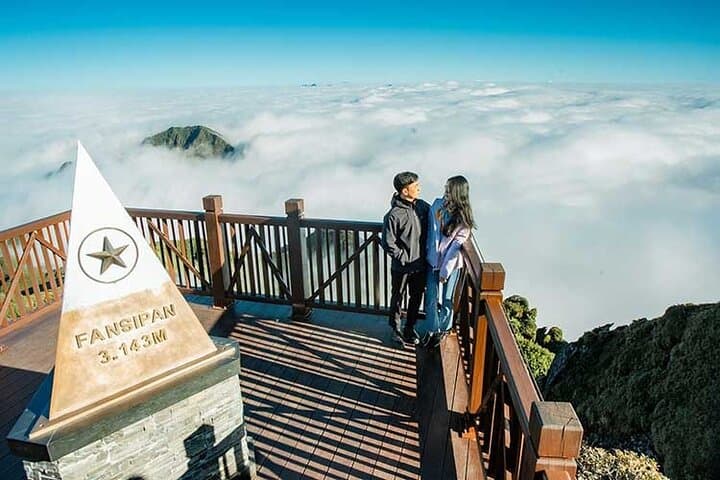
This two-day tour pairs an easy valley hike with the engineered sweep of the Fansipan cable car to reach Indochina’s highest point (3,143 m). On day one the trail drops from Sapa town down to Muong Hoa Valley and Cat Cat village, where Black H’mong stilt houses, hand-weaving looms and a plunging waterfall stitch human history into the landscape. The next morning, a short transfer takes you to the cable car station that surges up the Hoang Lien range — the system climbs to roughly 2,800 m; from there a stepped route of about 600 stone stairs leads to the summit platform and a panorama of karst peaks and cloud seas.
Geologically, Fansipan is part of the Hoang Lien Massif, where tectonic uplift and monsoon erosion carve deep valleys and steep ridges. Culturally, the area is home to H’mong, Dao and Tay communities whose crafts and markets animate Sapa town. Expect misty mornings, sudden sun, and cooler air at altitude; the cable car minimizes technical climbing but altitude and stair-climbing require steady breathing and good footwear.
Practical guidance: bring layers, a light rain shell, and comfortable shoes with grip; hydrate and pace yourself on the summit stairs; allow time to explore Sapa market between transfers. The itinerary includes roundtrip sleeper bus from Hanoi, cable car tickets, a guided Cat Cat walk, and one night in a 3–4 star hotel in Sapa.
moderate.
2 days.
Suitable for travelers in average fitness able to walk 1–3 hours, handle stairs and short uphill sections at altitude.
The cable car takes you most of the way; the final ascent is about 600 stone steps — physical but short, suitable for most people who can handle stair climbing.
The itinerary includes one night in a 3–4 star hotel in Sapa town, with pickup and drop-off in the Old Quarter area of Hanoi via sleeper bus.
Yes — the schedule includes free time in the afternoon upon arrival and after the summit visit for shopping and exploring Sapa’s market and cafés.
Altitude at the summit can cause mild symptoms for some; stay hydrated, ascend slowly on the stairs, and sit out if you feel unwell — severe cases are rare given the short exposure.
Sapa developed as a hill station under French colonial rule and is a cultural crossroads for ethnic minorities such as the H’mong and Dao, whose textiles and traditions remain central to local life.
Rapid tourism growth pressures trails and water resources; stick to marked paths, avoid single-use plastics, and buy textiles directly from makers to support local livelihoods.
Local Tours SAPA operates guided outdoor trips and adventures with an emphasis on safety, stewardship, and memorable experiences.



You step off the sleeper bus into a cool, thin air that smells of wet earth and pine; Sapa’s ridgelines slice the sky and clouds drift low, daring you to climb higher.
You step off the sleeper bus into a cool, thin air that smells of wet earth and pine; Sapa’s ridgelines slice the sky and clouds drift low, daring you to climb higher.
This two-day tour pairs an easy valley hike with the engineered sweep of the Fansipan cable car to reach Indochina’s highest point (3,143 m). On day one the trail drops from Sapa town down to Muong Hoa Valley and Cat Cat village, where Black H’mong stilt houses, hand-weaving looms and a plunging waterfall stitch human history into the landscape. The next morning, a short transfer takes you to the cable car station that surges up the Hoang Lien range — the system climbs to roughly 2,800 m; from there a stepped route of about 600 stone stairs leads to the summit platform and a panorama of karst peaks and cloud seas.
Geologically, Fansipan is part of the Hoang Lien Massif, where tectonic uplift and monsoon erosion carve deep valleys and steep ridges. Culturally, the area is home to H’mong, Dao and Tay communities whose crafts and markets animate Sapa town. Expect misty mornings, sudden sun, and cooler air at altitude; the cable car minimizes technical climbing but altitude and stair-climbing require steady breathing and good footwear.
Practical guidance: bring layers, a light rain shell, and comfortable shoes with grip; hydrate and pace yourself on the summit stairs; allow time to explore Sapa market between transfers. The itinerary includes roundtrip sleeper bus from Hanoi, cable car tickets, a guided Cat Cat walk, and one night in a 3–4 star hotel in Sapa.