THE ADVENTURE COLLECTIVE® · Independent discovery and booking for outdoor travel

This two-day expedition turns the remote slopes of Chachani into a doable, high-altitude objective: long 4x4 approaches, a cold night at 5,163 m, then a focused 900 m summit push. Expect thin air, big views of Arequipa and Andean wildlife along the way.
This two-day expedition turns the remote slopes of Chachani into a doable, high-altitude objective: long 4x4 approaches, a cold night at 5,163 m, then a focused 900 m summit push. Expect thin air, big views of Arequipa and Andean wildlife along the way.
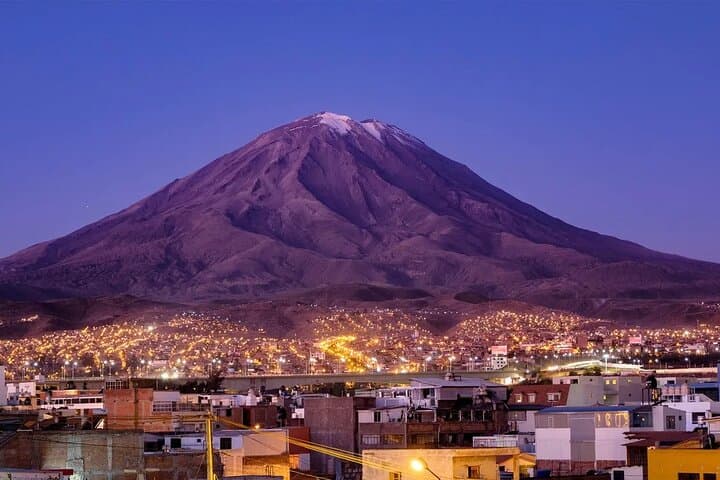
At 2 a.m. the air in base camp tastes like thin metal and boiled coca leaves. Headlamps bob like slow fireflies as the group straps on packs and breathes into wool gloves. Behind you the lights of Arequipa hang in the valley; ahead, the volcano’s flank rises into the black, its slopes a mix of pumice, scree and wind-polished rock that will test lungs more than legs.
Verified experiences and guided adventures in the surrounding area.
Operated by Peru Expeditions Tours · Arequipa, Arequipa
At 2 a.m. the air in base camp tastes like thin metal and boiled coca leaves. Headlamps bob like slow fireflies as the group straps on packs and breathes into wool gloves. Behind you the lights of Arequipa hang in the valley; ahead, the volcano’s flank rises into the black, its slopes a mix of pumice, scree and wind-polished rock that will test lungs more than legs.
Chachani is less a single mountain than a long, composite volcano—a cluster of domes and cones hewn by repeated eruptions over hundreds of thousands of years. The summit (around 6,075 m) sits above the high Andean plateau where pre-Inca and Inca peoples once traversed these passes. Today, the route threads past crumbling stone outposts and the rolling pampas of the Aguada Blanca and Salinas National Reserve, where vicuñas pick at the sparse grasses and Andean foxes shade themselves in rock hollows.
Geology and human history collide here: volcanic rock gives way to glacially-scraped cirques, and at lower elevations the colonial city of Arequipa—built of white volcanic sillar—appears like a deliberate mirror of the peaks that surround it. That contrast makes Chachani a compact, educational climb: you move from city to páramo to alpine desert in the span of a single day.
The tour is tightly practical. Day one is a long 4x4 approach, an off-road climb to El Collado at about 5,100 m, then a steady hike to base camp at 5,163 m where tents and a hot dinner await. Expect thin air and cold nights; the operator includes hot coca tea, cooking gear, and a guide-certified team. Summit day begins pre-dawn with a 900 m push over 4–6 hours—rock, loose scree and possible snow—then a descent back to base camp and a return to Arequipa. Roughly 80 percent of climbers reach the top.
Practical edge: acclimatize in Arequipa for at least 24–48 hours, carry layered insulation and crampon-ready boots if you visit in the wetter months, and be honest with guides about any symptoms of altitude sickness. The operator provides ropes when there's snow and an oxygen bottle in the vehicle, but personal fitness and respect for altitude are the deciding factors.
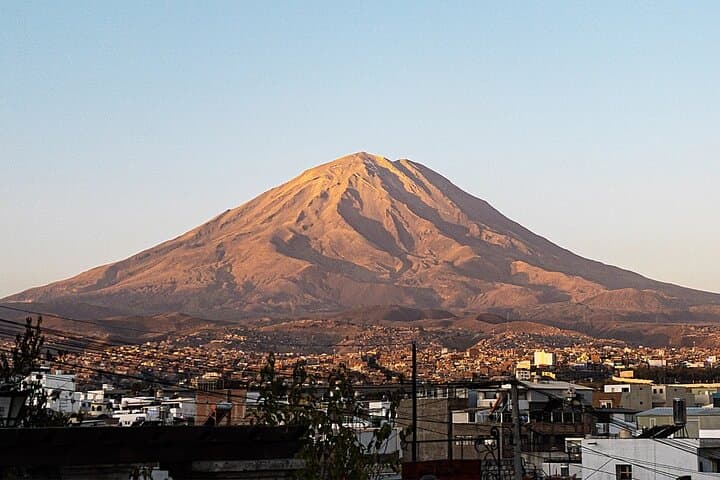
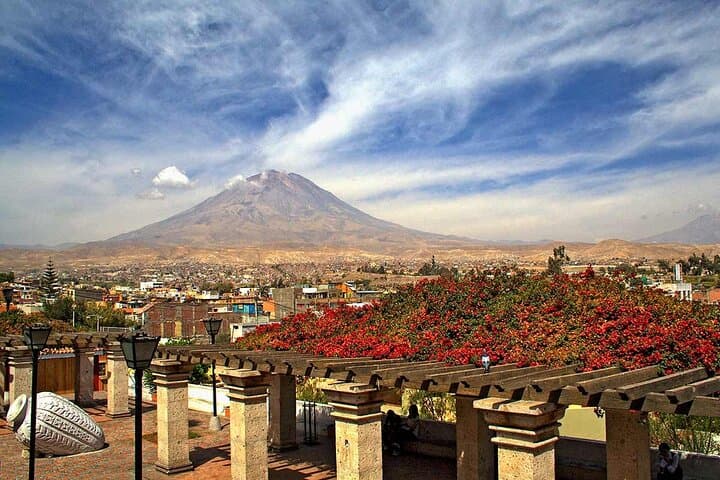
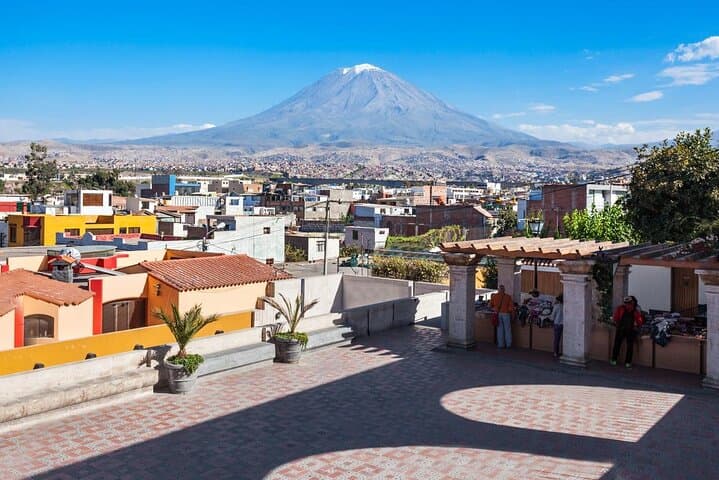
If you go, plan for two compact but intense days. Hydrate days ahead, sleep well at lower altitude the night before, and pack for sun, wind and temperatures that can swing from mild to well below freezing in hours. The reward—panoramic views of Misti, Pichu Pichu and a braided network of highland valleys—makes an early alarm and raw lungs entirely worth it.
challenging.
2 days.
Good aerobic fitness with prior high-altitude trekking experience; able to handle sustained uphill hiking carrying a 6–10 kg pack.
The short schedule makes acclimatization the limiting factor—spend at least one night in Arequipa before the trip and monitor symptoms; guides may advise slower pacing or additional rest.
Guides provide ropes if snow is present; participants should bring crampon-capable boots, and may need crampons/ice axe depending on conditions—confirm with the operator before departure.
About 80% according to the operator, but success depends on prior acclimatization, weather, and individual response to altitude.
Yes—mountain meals (lunch, hot dinner, hot breakfast), tents for two, sleeping mattresses, and cooking equipment are included.
Not recommended for pregnant travelers or those with serious cardiovascular or spinal issues; participants should have moderate to high fitness and disclose medical history when booking.
The tour includes private 4x4 transport from Arequipa; pickup can usually be arranged from central hotels—confirm your pickup point when booking.
Chachani’s flanks have been used for pastoralism for centuries and contain archaeological traces of pre-Inca and Inca occupation tied to high-altitude travel routes.
Much of the approach crosses the Aguada Blanca and Salinas Reserve—stick to trails, pack out waste, and avoid disturbing wildlife to protect fragile highland ecosystems.
Peru Expeditions Tours operates guided outdoor trips and adventures with an emphasis on safety, stewardship, and memorable experiences.
At 2 a.m. the air in base camp tastes like thin metal and boiled coca leaves. Headlamps bob like slow fireflies as the group straps on packs and breathes into wool gloves. Behind you the lights of Arequipa hang in the valley; ahead, the volcano’s flank rises into the black, its slopes a mix of pumice, scree and wind-polished rock that will test lungs more than legs.
At 2 a.m. the air in base camp tastes like thin metal and boiled coca leaves. Headlamps bob like slow fireflies as the group straps on packs and breathes into wool gloves. Behind you the lights of Arequipa hang in the valley; ahead, the volcano’s flank rises into the black, its slopes a mix of pumice, scree and wind-polished rock that will test lungs more than legs.
Chachani is less a single mountain than a long, composite volcano—a cluster of domes and cones hewn by repeated eruptions over hundreds of thousands of years. The summit (around 6,075 m) sits above the high Andean plateau where pre-Inca and Inca peoples once traversed these passes. Today, the route threads past crumbling stone outposts and the rolling pampas of the Aguada Blanca and Salinas National Reserve, where vicuñas pick at the sparse grasses and Andean foxes shade themselves in rock hollows.
Geology and human history collide here: volcanic rock gives way to glacially-scraped cirques, and at lower elevations the colonial city of Arequipa—built of white volcanic sillar—appears like a deliberate mirror of the peaks that surround it. That contrast makes Chachani a compact, educational climb: you move from city to páramo to alpine desert in the span of a single day.
The tour is tightly practical. Day one is a long 4x4 approach, an off-road climb to El Collado at about 5,100 m, then a steady hike to base camp at 5,163 m where tents and a hot dinner await. Expect thin air and cold nights; the operator includes hot coca tea, cooking gear, and a guide-certified team. Summit day begins pre-dawn with a 900 m push over 4–6 hours—rock, loose scree and possible snow—then a descent back to base camp and a return to Arequipa. Roughly 80 percent of climbers reach the top.
Practical edge: acclimatize in Arequipa for at least 24–48 hours, carry layered insulation and crampon-ready boots if you visit in the wetter months, and be honest with guides about any symptoms of altitude sickness. The operator provides ropes when there's snow and an oxygen bottle in the vehicle, but personal fitness and respect for altitude are the deciding factors.
If you go, plan for two compact but intense days. Hydrate days ahead, sleep well at lower altitude the night before, and pack for sun, wind and temperatures that can swing from mild to well below freezing in hours. The reward—panoramic views of Misti, Pichu Pichu and a braided network of highland valleys—makes an early alarm and raw lungs entirely worth it.